
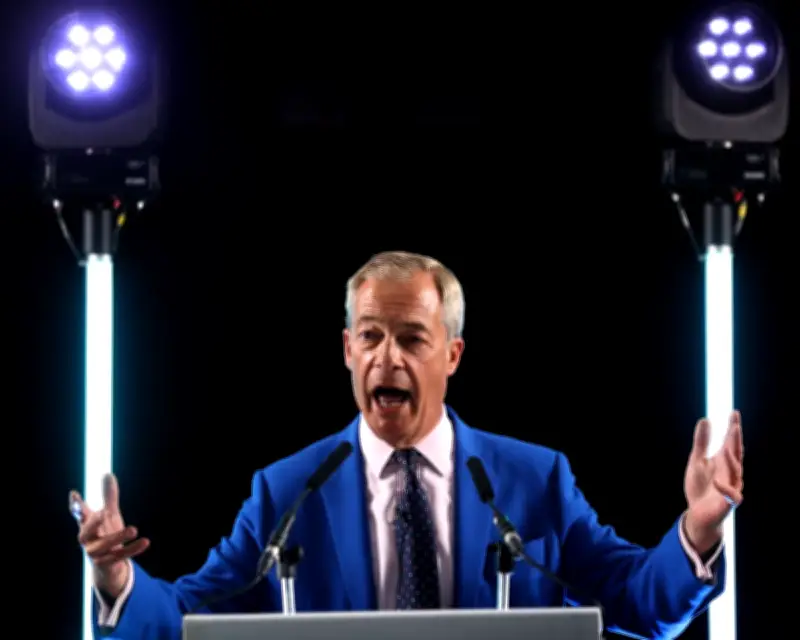
Political leaders across Ireland, Northern Ireland, Scotland, and Wales are preparing for the potential breakup of the United Kingdom if Nigel Farage's Reform UK party gains significant influence in the next general election. The possibility of Farage becoming prime minister or official leader of the opposition has prompted both unionists and nationalists to brace for constitutional turmoil.
Leaders Fear Rushed Referendum and Anti-Immigration Crackdowns
Representatives from both sides believe a Farage-led government could trigger a hasty referendum on Irish unification and implement Trump-style anti-immigration measures that alienate the Celtic nations. Mark Drakeford, former first minister of Wales, warned that in just a few years, people in Ireland might see a UK where snatch squads arrest people off the streets, referring to US Immigration and Customs Enforcement (ICE) agencies. Drakeford, who supports retaining the union, fears that if Farage reaches Downing Street or Reform significantly increases its parliamentary seats from the current eight, there may not be time for a considered debate about the UK's future.
Drakeford's Warning at SDLP Conference
Speaking at a conference in Belfast organised by the Social Democratic and Labour Party (SDLP), Drakeford described the UK as a voluntary association of four nations, where choices must exist to stay or leave. He warned that English nationalism could push out Scotland and Northern Ireland, leaving Wales as a 'progressive pimple' in a rump UK. Drakeford suggested that under such a scenario, Wales could associate with Ireland and Scotland in a new Celtic union modelled on the Nordic Council.
Irish Leaders Call for Preparation
Ireland's justice minister, Jim O'Callaghan, stated that Dublin should begin preparing for unification rather than waiting for English nationalism to set the timetable. He warned that the future may not follow a predictable pathway of discussions and harmony. Irish leaders believe the UK's annual subvention for Northern Ireland, estimated between £6 billion and £20 billion, could become a rallying cry for Farage, similar to the Brexit-era claim that the EU cost Britain £350 million every week.
SDLP Leader Highlights Constitutional Risks
Claire Hanna, SDLP leader, noted that Brexit was a lesson in how not to do constitutional change and that British politics has changed structurally. She described the Nigel Farage phenomenon as a permanent feature of UK politics, making it prudent for Northern Ireland to consider its own constitutional future. Hanna warned that if English nationalists scrutinise the resources Northern Ireland requires, it could become a political football.
Sinn Féin Urges Groundwork for Referendum
Conor Murphy, a former Stormont finance minister and now Irish senator, urged Dublin to engage with UK counterparts while sensible officials remain in Whitehall to clarify the terms and conditions of a referendum. He estimated the subvention for Northern Ireland is lower than £6 billion but said Farage could weaponise the £20 billion estimate, potentially saying the UK could save money by letting Ireland go. Murphy described such policies as Trump-like and unpredictable.
Fine Gael to Publish Unification Blueprint
Fine Gael, part of Ireland's ruling coalition, recently announced it would publish a blueprint for a unified Ireland at its annual conference in November. Former Taoiseach Leo Varadkar said he did not think a Farage-led government was likely, but if it occurred, Ireland could be 'bounced' into a border poll. He argued that a Reform-led government might double down on Brexit, seeking a harder separation from the EU and reopening questions around the European Convention on Human Rights (ECHR).
Farage's Stance on ECHR and Good Friday Agreement
Farage has expressed a desire to leave the ECHR and renegotiate the Good Friday Agreement, which the convention underpins, in an attempt to stop small boat crossings to England. A survey by Queen's University Belfast professors Katy Hayward and David Phinnemore found support for removing the ECHR in Northern Ireland at 36%, higher than the wider UK's 29%. Among Democratic Unionist Party (DUP) voters, support rises to 77%, and among Traditional Unionist Voice (TUV) voters, it reaches 93%, with whom Farage had an electoral pact.
Unionist Concerns and National Security
Jon Burrows, leader of Northern Ireland's Ulster Unionist Party (UUP), expressed concern that Farage's English nationalism might galvanise nationalism in Northern Ireland, Scotland, and Wales, creating fertile ground for those who want to tear apart the UK. He emphasised the need to promote the economic and national security advantages of the UK, noting that control of seas and underwater cables is vital to national security. Burrows highlighted that Northern Ireland has 3% of the UK's population but produces 10% of its food, arguing that unionists should make the case for the union.
Scottish Perspective on Constitutional Future
Stephen Gethin, a Scottish National Party MSP, noted a lack of engagement in England regarding the UK's constitutional future and called for bringing English people into the conversation. He stressed that England is an important part of the shared islands.
Drakeford's Warning on First-Past-the-Post System
Drakeford warned that Reform may not win a majority of votes but could still gain power due to the first-past-the-post system, which allowed the current government to secure a large majority with just 34% of the vote. He concluded that Wales might find the UK has changed so radically that its component parts may be better off elsewhere, leading to a scenario where the UK leaves Wales rather than Wales choosing to leave the UK.




