
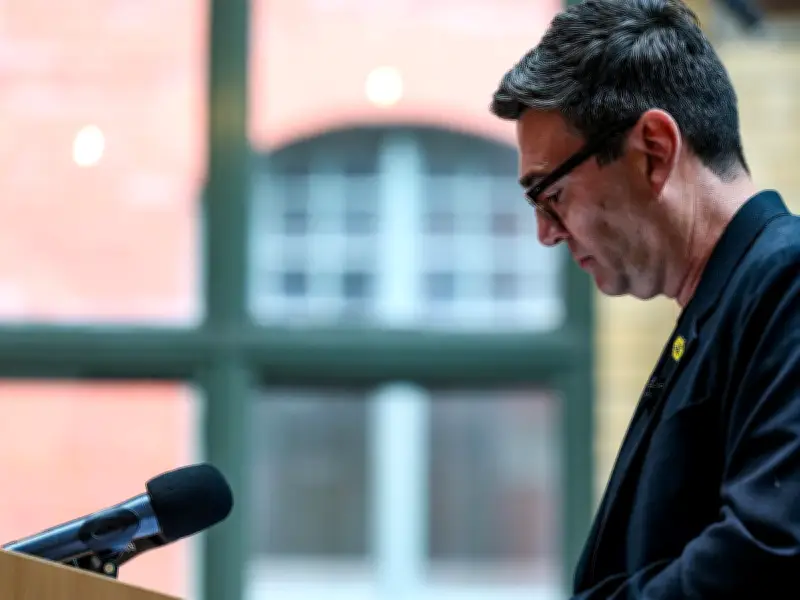
Andy Burnham chose the People's History Museum in Manchester for his first major speech since winning the Makerfield by-election, a location steeped in symbolism. The former Greater Manchester mayor described it as his 'favourite place in the world', stating, 'These galleries tell the story of our country better than anywhere else. How through time it has not been run in the interests of the many. And how ordinary people have fought to change that status quo and make it fairer.'
Key Proposals: A 'No. 10 North' and Massive Council House Building
Burnham outlined several bold initiatives, including establishing a 'No. 10 North' in Manchester, the largest council house building programme since the post-war era, devolving power from Whitehall to England's regions, and elevating technical education to equal status with universities. Each announcement was significant in its own right, but the speech was more than a policy manifesto—it represented an attempt to redefine how Britain is governed.
The Irony of Burnham's Journey
There was a notable irony: a decade ago, Burnham left Westminster believing he could achieve more as Mayor of Greater Manchester than as a cabinet minister. Now, he argues that the rest of Britain should learn from his adopted city. This reversal underscores his central argument: Britain's economic problems—stagnant productivity, declining living standards—stem not just from poor policy but from a state that is too centralised, fragmented, and disconnected from the regions it governs.
From Northern Powerhouse to 'Rewired Britain'
Burnham's vision builds on previous devolution efforts, including Tony Blair's failed regional assemblies, George Osborne's Northern Powerhouse, and Boris Johnson's Levelling Up agenda. However, Burnham's proposal goes further, aiming to redesign the machinery of the British state. He argues that Whitehall culture is the villain, with departments competing rather than collaborating, the Treasury hoarding power, and councils unable to even repair roads. 'The state isn't too big or too small, but it is in the wrong place,' he said.
Manchesterism: A Made-in-Manchester Solution
Burnham's 'Manchesterism' concept seeks to shift power from Whitehall to where it can be most effective, drawing inspiration from Germany's federal system, which ensures equivalent living conditions across regions. The symbolism of a 'No. 10 North' challenges centuries of governance from London, proposing a model closer to European federal traditions.
Critical Questions and Political Feasibility
While the speech was bold, it lacked granular detail, and Burnham's refusal to take questions afterward drew criticism. Key questions remain: Is Britain's problem truly institutional design, or deeper issues that centralism reflects? Are these aims politically achievable given Whitehall's entrenched power? What are the spending implications, and who is accountable when things go wrong? Some argue Burnham's focus is too Northern, but Noah Law, Labour MP for St Austell and Newquay, said, 'I think this is a message that will resonate with people right across the country.'
A New Constitutional Vision for England
Unlike typical leadership speeches, Burnham's was not about promising more money but redefining government machinery. Whether one agrees or not, it felt different—and continuity Labour will not deliver the change voters seek. This was the clearest articulation yet of a new constitutional vision for England, moving beyond the Northern Powerhouse and Levelling Up towards a 'rewired Britain'. Whether Britain is ready for that rewiring remains the defining political question.




