
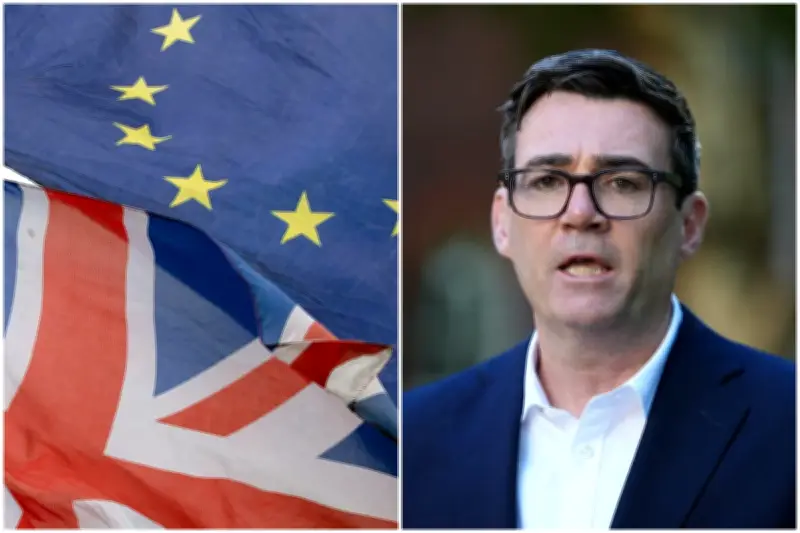
Andy Burnham faces a “big gamble” to reverse the damage of Brexit inflicted on London, according to a leading expert. Charles Grant, Director of the Centre for European Reform, said that to significantly undo the harm to the capital of quitting the EU, the new Prime Minister would have to take Britain back into the Single Market or fully back into the European bloc.
“It would be a big gamble, but he seems to be someone who is willing to take risks. So I think there's a chance,” he told The Standard.
Brexit reversal prospects raised
At Labour’s annual conference in Liverpool, Mr Burnham raised the prospect of reversing Brexit and returning to the European Union. The Prime Minister said Brexit had done “more harm than good,” promising to set out the options for future ties with the Continent around the time of a UK-EU summit later this year.
Mr Grant detailed the likely benefits for London and the wider UK of returning to the Single Market or similar ties with the EU. These include an “economic boom” boosting tax revenues for the Treasury as the economy grows quickly, which could lead to tax cuts for millions of people and businesses. Some bankers, including from US banks, who were part of a Brexit “exodus” from the City to other financial centres could return. Investment into London and other regions would jump.
Potential gains for the capital
More European workers would return to London to work in coffee shops and other businesses if the UK rejoined the Single Market. This would create a new “buzz” in London as more European workers head to the city. Coffee shops and other businesses would find it easier to recruit staff. Billions more would go into Government coffers to spend on improving public services such as schools and hospitals. Britain would regain political clout on the global stage.
London Mayor Lord Sadiq Khan is leading the charge for the UK to rejoin the EU, given the clear benefits for the capital, which voted 60/40 to Remain. The UK’s economic watchdog, the Office for Budget Responsibility, says splintering away from the European Union has wiped billions off the economy.
Mr Grant explained how Britain’s GDP had taken a hit of between 5% and 8% from Brexit. “That means everybody is paying more tax. There's less money for public spending,” he said. “If you rejoin the European Union, there'll be an economic boom.”
Impact on the City and beyond
Specifically on the City, he said there had been a “bit of an exodus” due to Brexit, particularly linked to European trades, but not on the scale as feared. “Quite a lot of American investment banks shifted people from London to Paris, Amsterdam, Dublin, Frankfurt and other European financial centres,” he said. “So some of those jobs would probably come back.”
Rejoining the Customs Union would benefit the North and the Midlands, he explained, as it would boost trade in manufactured and other goods. But the far bigger economic prize would be a return to the Single Market, for example through a Norway-style model, which is likely to include a return to freedom of movement of workers. This would also probably mean Britain having to be a rule taker, accepting directives from Brussels with limited or no say over them. Such an arrangement would be politically difficult to persuade the country to adopt.
The Government is already seeking to rebuild ties with the European bloc, including through a youth mobility scheme which could help London’s coffee shops and other businesses recruit workers. A move to rejoin the Single Market would significantly increase this labour force. Mr Grant added: “It'll be more of a buzz in London because probably more people coming in from EU countries.”
The City of London Corporation backed Mr Burnham’s move towards closer EU ties, stressing the need for a greater focus on regulatory cooperation and market access, including mutual recognition of professional qualifications, extending adequacy arrangements, and bringing down barriers to investment in defence, tech and net-zero.




