
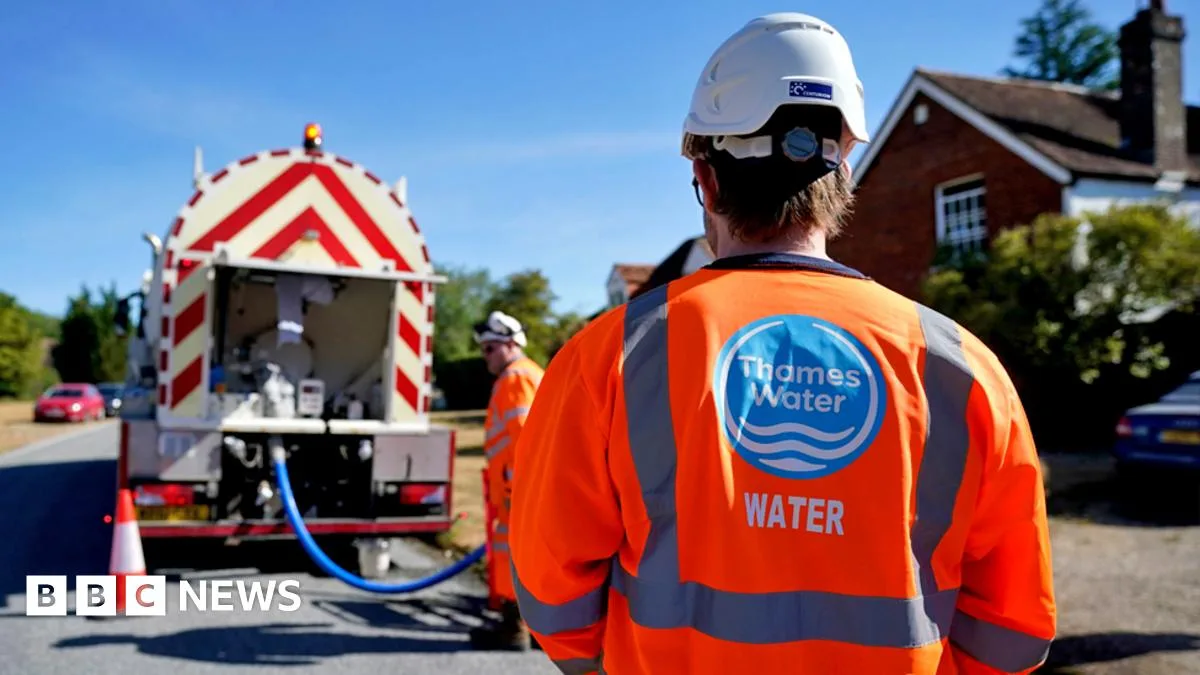
Thames Water, the UK's largest water company serving a quarter of the population, is in urgent talks to secure additional funding as concerns grow over its financial stability. The government has indicated it is ready to act in a worst-case scenario, with a process in place to step in if necessary. However, water supplies are expected to continue as normal regardless of the outcome.
The company, which has faced heavy criticism over sewage discharges and leaks, is struggling with a debt pile of around £14bn. Interest payments on more than half of its debt are linked to inflation, which has soared over the past year. Chief executive Sarah Bentley resigned unexpectedly on Tuesday after just two years in the role, following pressure to forgo her bonus over the company's handling of sewage spills.
If Thames Water cannot secure additional funding, it could be temporarily taken over by the government under a special administration regime (SAR), similar to the process used for energy supplier Bulb. Environment minister Rebecca Pow told Parliament that water firms were 'considered resilient', while Business Secretary Kemi Badenoch said she was 'very concerned' and stressed the need for Thames Water to survive.
Thames Water's owners, a consortium of institutional investors, injected £500m into the business last year and pledged a further £1bn, but the firm is still struggling to raise the remaining cash needed to service its debt. Professor David Hall of the University of Greenwich noted that this was the first time investors had put their own cash into the company since privatisation in 1989, with previous investment funded through customer bills.
The company leaks more water than any other in the UK, losing the equivalent of up to 250 Olympic-sized swimming pools every day. Other water firms, including Yorkshire Water, SES Water, and Portsmouth Water, are facing similar pressures due to higher interest payments and rising costs. Water bills have already risen, with the average household in England and Wales paying £448 per year from April, and further increases are expected in 2025.




