
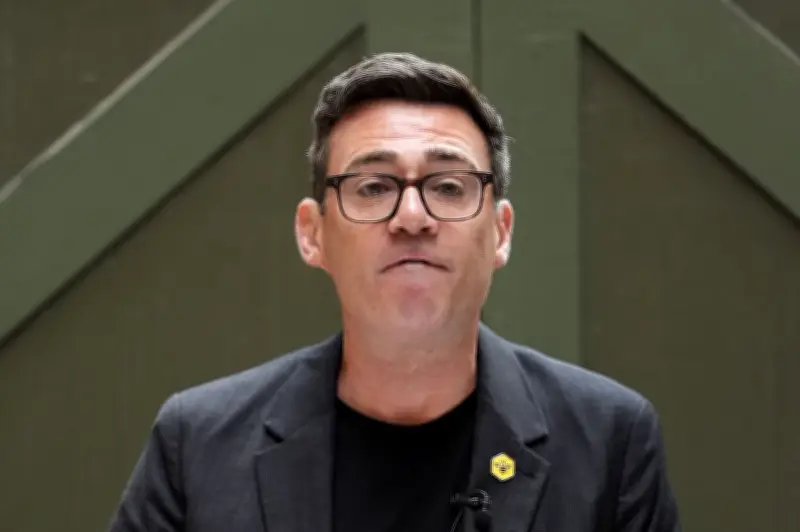
Andy Burnham only found out about the £4.7 billion black hole in the plan to raise defence spending on the day it was published, a defence minister has suggested. Sir Keir Starmer announced £15 billion of spending over the next four years to support the Defence Investment Plan (Dip), but the Treasury put off setting out full details of how it would fund the increase.
Funding Gap Raises Questions
Defence Secretary Dan Jarvis is facing questions over the funding gap and whether Mr Burnham, who is expected to replace Sir Keir as Prime Minister, was blindsided by the need to plug it in his first budget. Defence minister Luke Pollard, speaking to broadcasters on Wednesday morning, said he believed No 10 told the Makerfield MP yesterday.
He told Sky News: “Downing Street have a close dialogue with Andy’s team … I understand they’ve been keeping him close to the process, and told him yesterday when the Treasury published the statement and the breakdown of the financial costs.”
Minister's Knowledge
Pollard said he only saw the breakdown from the Treasury himself when the defence investment plan was published on Tuesday. “So I saw the breakdown of the £15 billion for the first time yesterday when it was published by the Treasury, I understand that Downing Street are keeping Andy’s team involved with the process.” He later declined to answer questions on when Mr Burnham had been told of the financial details, saying: “I’m not involved with those conversations” in an interview with BBC Radio 4’s Today programme.
Defence Investment Plan Details
The long-delayed plan to fund the armed forces was published on Tuesday, including the £15 billion boost to spending. In a written statement to Parliament, Chancellor Rachel Reeves said only two-thirds of the sum – £10.3 billion – had been identified, while the remaining £4.7 billion would be “confirmed at Budget 2026, in a fair and balanced way”.
Prospective prime minister Mr Burnham was briefed on the Dip before its publication, but it is understood he was not told about the need to find an additional tranche of funding in his first budget.
Defence Secretary's Response
Mr Jarvis has denied the funding gap was a hand grenade for the Makerfield MP – Sir Keir’s likely successor – and his new chancellor, insisting it was “absolutely the opposite”. He sidestepped repeated questions on whether it had been made clear to Mr Burnham that he was being left with a funding gap. “Of course we’ve been talking to Andy Burnham and his team about this plan,” the new Defence Secretary told BBC Newsnight, pointing to Sir Keir’s focus on a “smooth transition” of power. “Andy Burnham has an absolute commitment to safeguarding our nation and ensuring that we’ve got the resources in place to defend our nation in the way that we think is necessary.”
Spending Commitments
Mr Jarvis told Sky News that given the “massive expenditure” required to meet the commitment to increasing defence spending to 3.5% of gross domestic product by 2035, it was “not unreasonable” that “those kinds of decisions are done in the context of a spending review”. The Defence Secretary also said the Dip was “an important signal of our intent”, as he acknowledged the UK would need to spend more on defence to meet its commitments.
Mr Jarvis, who succeeded John Healey after his resignation in June in a row over the funding, will likely field further media questions about the costings at a Wednesday visit to a manufacturing facility.
Treasury's Approach
Ms Reeves said the Treasury would focus on finding “efficiencies” and cancelling or delaying “lower priority programmes”, while emphasising the Government would not cut day-to-day spending to pay for defence. The plans include billions more for the next generation of stealth jets, the largest ever investment in drone warfare and confirmation that the UK will buy F-35A planes capable of carrying nuclear bombs. But older equipment, including two Type 23 frigates and older Chinook and Wildcat helicopters, will be retired.
The Dip was originally due to be published last year, but was delayed in part due to bitter Whitehall wrangling over money. The funding in the Dip comes on top of the £270 billion promised for defence from 2025/26 to 2028/29.
Expert Analysis
Max Werner, senior research economist at the Institute for Fiscal Studies, said the decision to leave almost a third of the extra funding to be set out at the next budget meant there would be “further impacts on other areas of spending, tax or borrowing on top of those set out in today’s announcements – implying one key early decision for the next prime minister”.
Writing in The Telegraph, Mr Jarvis said: “By the end of the decade, spending will be 27% higher in real terms than at the start of this parliament, with defence’s share of GDP at a 30-year high. This sustained increase will strengthen our Armed Forces after a period of overstretched programmes and provide a clear path to meeting the UK’s Nato commitments while maintaining leadership within the alliance.”




