
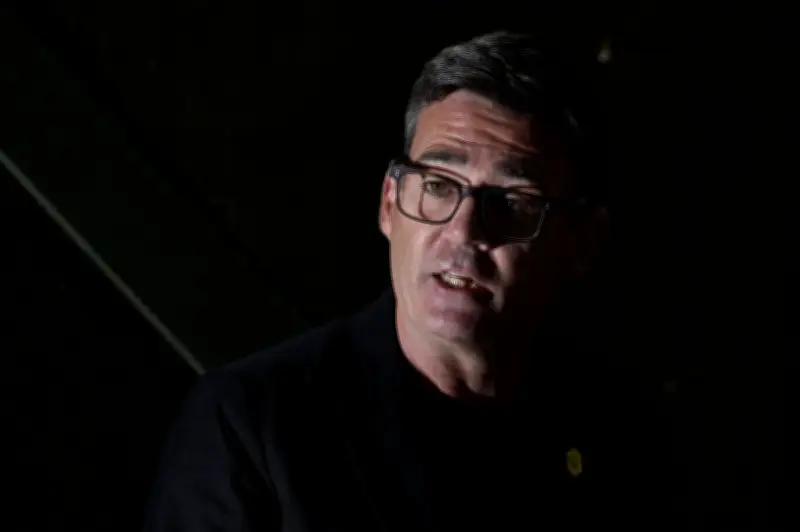
Andy Burnham, the prospective Labour leader and former Greater Manchester mayor, has announced a decade-long plan to transform Britain by moving power out of Whitehall and giving regions control over utilities, transport, and housing. In his first major speech since Sir Keir Starmer announced his departure, Burnham promised to set a 'new direction' for the UK, establishing a No 10 North outpost in Manchester to drive his agenda.
Key Proposals
The Makerfield MP, who returned to Parliament in a by-election earlier this month, described the Westminster system as 'broken' and 'stuck in a rut'. His plans include:
- A No 10 North operation serving as the 'nerve centre of a rewired Britain' to redistribute power and resources.
- The biggest council house building programme since the post-war period.
- Allowing regions to take greater public control of essential services such as water, energy, and transport.
Burnham pledged to overcome Whitehall's resistance, stating, 'The days of Whitehall fighting the devolution of power into the regions and nations are over for good.'
Economic and Fiscal Stance
To reassure markets, Burnham promised his measures would be based on 'sound public finances' and 'the discipline of our current fiscal rules'. However, he acknowledged that taxpayer-funded support would be needed to address cost-of-living pressures. 'Ours is a 10-year mission to raise people’s living standards,' he said, adding that he would seek to give Britain 'breathing space' without risking public finances.
Procurement and Reindustrialisation
Burnham pledged to support reindustrialisation by ordering Whitehall to back British firms bidding for public contracts, even if it costs taxpayers more. He criticised current procurement policy for 'chasing cut-price deals around the world' instead of supporting British suppliers.
Political Context and Criticism
Under pressure to seek a general election mandate, Burnham insisted his plans align with Labour's 2024 manifesto, despite being 'the biggest change in our lifetimes to the way the country is run'. He also called for cross-party unity to replace the 'fragmented, disjointed' political environment in Westminster.
Burnham, dressed casually in a dark t-shirt and jacket, did not take questions from journalists, drawing criticism from Tory leader Kemi Badenoch, who said, 'He needs to come to Parliament, tell us what he wants to do and face some questions from MPs.' Unless challenged, Burnham will become prime minister on July 20, when Parliament is on summer break.




