

Forgotten 1935 Legal Rule Could Unlock High Court Ruling on Indigenous Sovereignty
A landmark legal discovery has upended decades of belief that Australia's High Court lacks the power to decide on Indigenous sovereignty, potentially opening the door for First Nations communities to seek a definitive ruling. Research by Melbourne Law School's Associate Professor Olivia Barr has uncovered a long-forgotten 1935 legal rule that she argues creates an 'open door' for the court to engage with this fundamental constitutional question.
Historical Stalemate Overturned by Archival Discovery
The issue traces back to the 1970s case Coe v Commonwealth, where four High Court judges split two-two on whether the court should allow a trial on sovereignty claims. Because the vote resulted in a procedural stalemate, the case never proceeded to trial, and a widespread assumption took hold that the High Court lacked jurisdiction over such matters.
Associate Professor Barr's research challenges this assumption by highlighting the 1935 case Tasmania v Victoria, which established that split-court decisions do not create binding legal precedent. "This means it is as if the Coe case never happened," Barr explained. "Consequently, it is entirely open to the High Court to agree to hear any future case on Aboriginal sovereignty that is properly presented."

High-Risk Opportunity for Legal and Social Transformation
The discovery presents Indigenous communities and leaders with a critical decision: whether to pursue a test case despite significant risks. "It's high risk," Barr cautioned. "It could lead to massive legal change, it could lead to massive legal regression, or it could simply maintain the status quo."
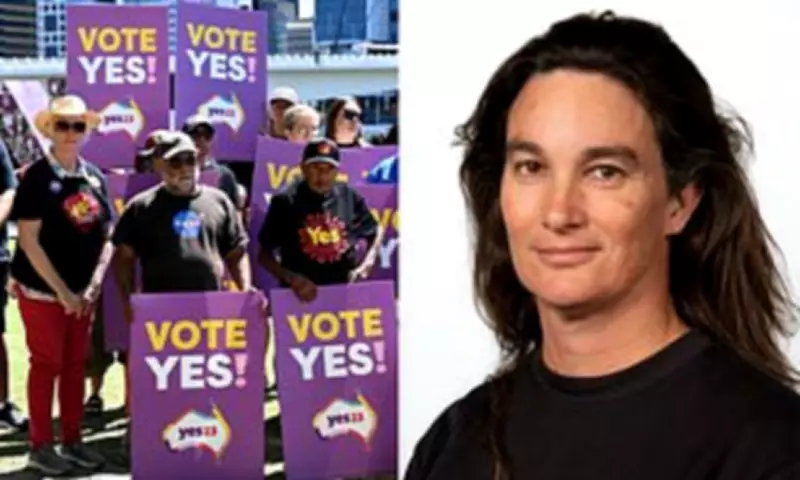
University of Melbourne Deputy Vice-Chancellor (Indigenous) Professor Barry Judd noted that, following the heightened racism experienced after the Voice referendum, Indigenous leaders would likely engage in private, careful discussions about this development. "I think there'll be a time of deep thinking and consideration about whether it's the right time to put our heads up, or whether we might hold and think about it for longer," he said.
Contextualising the Discovery Within Australia's Legal History
Professor Judd emphasised that this research must be considered alongside the High Court's historic 1992 Mabo decision, which overturned the doctrine of terra nullius and recognised Indigenous land rights. "This research potentially gives the Australian legal system, through the High Court, an opportunity to revisit history and to revisit those questions of truth which were partially answered by Mabo, but not fully," he stated.
He further argued that it raises profound questions about Australians taking responsibility for historical falsehoods and "the untruths we've lived by" since colonisation began in 1788.
Potential Outcomes and International Comparisons
Associate Professor Barr suggested that High Court recognition of Indigenous sovereignty could trigger transformative benefits, including broader treaty-making processes. Australia remains the only Commonwealth nation that has not signed a national treaty with its Indigenous peoples—a document that formally acknowledges the sovereignty, authority, and decision-making power of original inhabitants.
However, Barr warned of the devastating impact a negative or status quo ruling could have, particularly following the Voice referendum result. "So Aboriginal and Torres Strait Islander communities need to have conversations, because it's not without risk," she stressed.
Professor Judd offered a measured perspective on potential outcomes, suggesting that recognising sovereignty would not cause societal collapse. "It would simply bring Australia into line with just about every other like contemporary society that was a part of the former British Empire," he observed.
Associate Professor Barr's groundbreaking research is published in the latest edition of the University of New South Wales Law Journal, inviting renewed legal and public debate on one of Australia's most enduring constitutional questions.






