
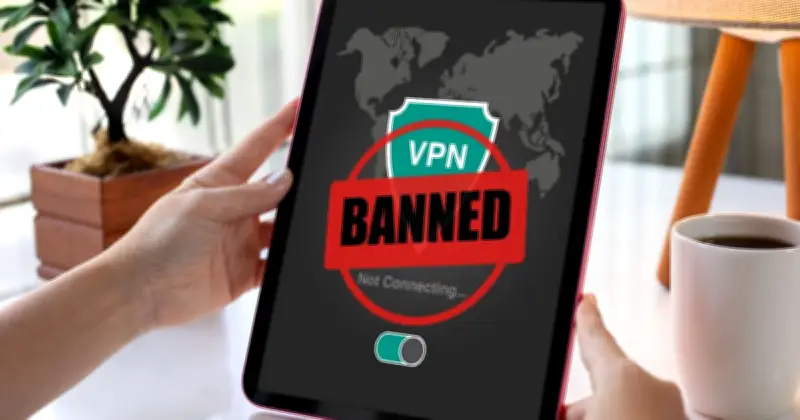
A VPN ban could be on the table as part of the ongoing internet safety crackdown, which has already seen the Government announce a social media ban for under-16s.
Social Media Ban Announced
On Monday, Technology Secretary Liz Kendall announced a law change, set to be put in place by 2027, which will ban children from social media and AI chatbots as well as introduce ‘curfews’ to stop ‘doomscrolling’. The ban was announced in response to concerns that social media is unsafe, making children miserable, and could cause lasting damage to their mental health.
VPN Restrictions Hinted
On Tuesday morning, Ms Kendall hinted that further restrictions could be introduced on Virtual Private Networks (VPNs). VPNs have become increasingly popular in the UK since the Online Safety Act was enacted. Often used by employers to create a network to share resources, VPNs can also be used to spoof or hide your browsing location, thereby sidestepping geographical restrictions.
A VPN is a system which connects somebody’s device – normally a computer or smartphone – to a server in a different location. This means that the websites that person visits cannot see their IP address. It is used by many people for privacy or to get around restrictions that websites place on who can visit a page. It can also be useful for allowing people to work from home and still access their workplace’s resources.
Further Measures Expected
Speaking on BBC Breakfast on Tuesday, Ms Kendall said: “I said I’d come back in July with a further statement around VPN but also additional measures we want to look at, further restrictions on AI chatbots that parents have found very worrying, more overnight curfews or breaks in doomscrolling for 16 and 17 year olds.
“So yesterday’s announcement was the first of the measures and the reason we have done that is the sooner we make a decision on the main question of the ban, the sooner we can get it through Parliament and the sooner it will come into practice.
“Because many families are desperate for this to happen and I listen particularly to bereaved families that say the longer we delay this, the more children are put at risk. And I took that very seriously.”
Timeline and Enforcement
The restrictions already announced are to be passed by Christmas and in place by spring next year. They will leave technology firms, rather than children, liable for enforcement action if they fail to comply. There will also be measures to prevent children from chatting with adults on gaming and livestreaming platforms.
The Government is also looking at potential overnight curfews and breaks in infinite scrolling for under-18s, with more details expected next month. Artificial intelligence (AI) “romantic companion” chatbots designed to simulate sexual relationships with users will have a minimum age of 18, while more general AI tools will have similar functions restricted for children.
Reaction from Bereaved Parents
Ellen Roome, whose son Jools Sweeney was 14 when he took his own life in 2022 in an incident she believes could have been linked to an online challenge gone wrong, said it was an emotional moment hearing the PM announce the ban. She said: “Sitting with the other bereaved parents, we all did shed a tear.” She said it was “heartbreaking” that the change is coming “too late” for their own children, but that she and others are “desperately trying to make a difference for the rest of the children in the UK”.
Prime Minister's Statement
At a Downing Street press conference, Sir Keir said the ban was a “big moment for our country” and that he was clear “that a full ban is the right choice”. The Prime Minister, father of two teenagers, said “every parent can see it with their own eyes” that “social media is making children unhappy”. He said social media was “making it easier for bullies to harass and abuse” children and “could even be harming their mental health – exposing them to content that is dangerous, because that’s what grabs the attention”.
The ban is expected to cover platforms like Snapchat, TikTok, YouTube, Instagram, Facebook and X but not messaging services like WhatsApp and Signal.




