
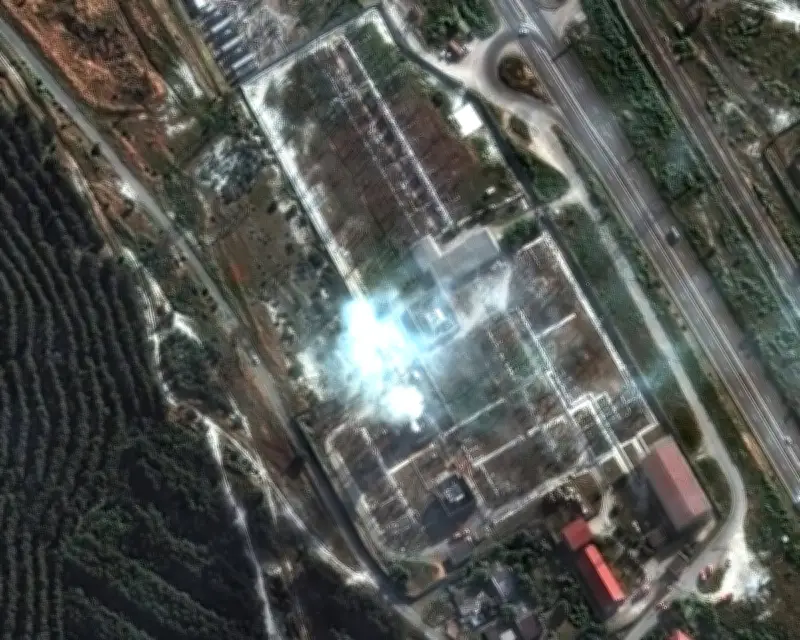
Ukrainian President Volodymyr Zelenskyy announced on Thursday that he had authorised a 40-day operation against Russian targets, aiming to “influence the aggressor state in order to press for an end to the war.” The declaration followed consultations with the head of the Ukrainian security service. Zelenskyy stated that Kyiv’s forces struck two more Russian oil refineries in Ufa, 1,500 km (930 miles) from the frontline, and an oil depot in the Krasnodar region, 300 km (180 miles) from Ukraine. Aleksandr Kharitonov, head of the Krasnoarmeysk district in Krasnodar Krai, confirmed that an oil depot at Poltavskaya was hit.
Crimea Faces Power Outages and Gasoline Shortages
Authorities in illegally occupied Crimea will impose more power outages, the region’s Russian-appointed governor said on Thursday. A day earlier, Ukrainian strikes blacked out Sevastopol, Crimea’s largest city. The blackout comes as the peninsula grapples with gasoline shortages that have led to a complete ban on sales to the general public. Power was fully or partially cut off across the Russian-held part of Ukraine’s Kherson region bordering Crimea, Moscow-installed governor Vladimir Saldo said early on Friday. Meanwhile, the number of trains to Crimea, a popular summer destination for Russian tourists, is being cut back, Crimea’s Russia-installed governor, Sergei Aksyonov, said on Thursday.
Belarus Relay Stations Silenced; Lukashenko Accuses Ukraine
Zelenskyy said on Thursday that Russian relay stations in Belarus used for attacks on Ukraine have been switched off. Last week, he warned neighbouring President Alexander Lukashenko to remove them “or we will do it.” Ukrainian intelligence confirmed the repeaters were off. However, Zelenskyy noted that “along our state border, Belarus is completing the construction of road infrastructure and storage facilities for ammunition and fuel, which have no purpose other than military use. Belarus knows what steps are needed on its part for peace. The development of border infrastructure for aggression from Belarus must be stopped.” For his part, Lukashenko on Thursday accused Ukraine of trying to drag his country into the war, while also stating he “stands with Russia” and calling for a “substantive” agreement, declaring Belarus had no desire to fight Ukrainians. The Institute for the Study of War, a Washington-based thinktank, said Lukashenko is walking a fine line, “continuing to stall and deflect the Kremlin’s intensified attempts to drag Belarus into the war in Ukraine while maintaining relatively neutral rhetoric towards Ukraine.”
Evacuations and Air Defence Movements
Ukrainian military officials on Wednesday ordered a mandatory evacuation for approximately 1,000 people still in the Chernihiv region bordering Russia and Belarus, starting on 1 July. Zelenskyy said Russia was moving air defences to protect key targets like Moscow from Ukrainian drones, potentially leaving other areas vulnerable. Air defences were also shifted to protect President Vladimir Putin’s palatial residence at Valdai, about 500 km (300 miles) north-west of Moscow. Zelenskyy added that the Kerch Bridge, connecting Crimea with the Russian mainland, is being prioritised for air defence.
Ukrainian Army Suspends Commander Over Alleged Abuse
The Ukrainian army said on Thursday that a unit commander was suspended over a probe into alleged abuse of soldiers, following a media report that found alleged non-military deaths in the regiment’s training camps. Lieutenant Colonel Yurii Garkavyi, commander of the 425th separate assault brigade known as Skelia, is under scrutiny after an investigation by media outlet Babel. “From June 24, for the duration of the inspections and investigations, the regiment commander was suspended from duty,” said the Ukrainian army’s media service, adding that anyone committing criminal offences would be “held accountable in accordance with the law.” The Babel report alleged 26 deaths in Skelia’s training camps over the past six months, as well as cases of abuse and torture of conscripts, citing relatives’ testimony. Ukraine’s state bureau of investigations said it had opened an inquiry. In a statement on Wednesday, the regiment said the investigation raised “serious issues” requiring “verification,” and attributed 18 of the 26 deaths to “illnesses or poor health” among mobilised soldiers, noting they occurred in hospital or en route.
Russian Attacks and Oil Refinery Suspension
An air raid alert was declared for Kyiv late on Thursday night, with witnesses reporting missiles being intercepted. Earlier, Russia attacked three rail locomotives, killing one driver, and hit two petrol stations across Ukraine, officials said. One strike hit a locomotive in the north-east Sumy region, and the others, including the fatal one, were in Zaporizhzhia region in the south, said Oleksandr Pertsovskyi, CEO of state rail group Ukrzaliznytsia. Local officials said Russia also attacked petrol stations in Zaporizhzhia and Sumy. Norsi, Russia’s fourth-largest oil refinery and second-largest gasoline producer, suspended operations on Wednesday after a Ukrainian drone attack, two industry sources told Reuters. The attack damaged a primary refining unit. Lukoil, which owns the refinery, did not reply to a request for comment. The governor of Nizhny Novgorod region, where the refinery is located, confirmed a drone attack.
French Navy Intercepts Shadow Fleet Tanker
The French navy intercepted an oil tanker in the Mediterranean suspected of being part of the “shadow fleet” shipping Russian oil in breach of sanctions. The Deliver, sailing under the flag of Cameroon, had departed from the Russian port of Primorsk, authorities said.
Ukraine’s Fire Point Accelerates Missile Defence Plans
Ukraine’s Fire Point, maker of the Flamingo cruise missile and other airborne weapons, is accelerating plans to develop a European missile defence system after an agreement with German radar maker Hensoldt. Fire Point hopes to have its first interceptors ready by the end of the year. The company is using its own FP-7X rocket as the interceptor and signed a memorandum of understanding with Munich-based Hensoldt, which will provide its TRML-4D radar. Denys Shtilierman, Fire Point’s co-founder and chief designer, said it is also signing an agreement with a European defence firm for an imaging infrared (IIR) homing device for the interceptor missile, and talks are under way with another European firm for a radio frequency (RF) seeker that homes in on electromagnetic signals. Fire Point aims to test its new FP-9 ballistic missile, capable of carrying an 800 kg warhead up to 850 km, over the summer.




