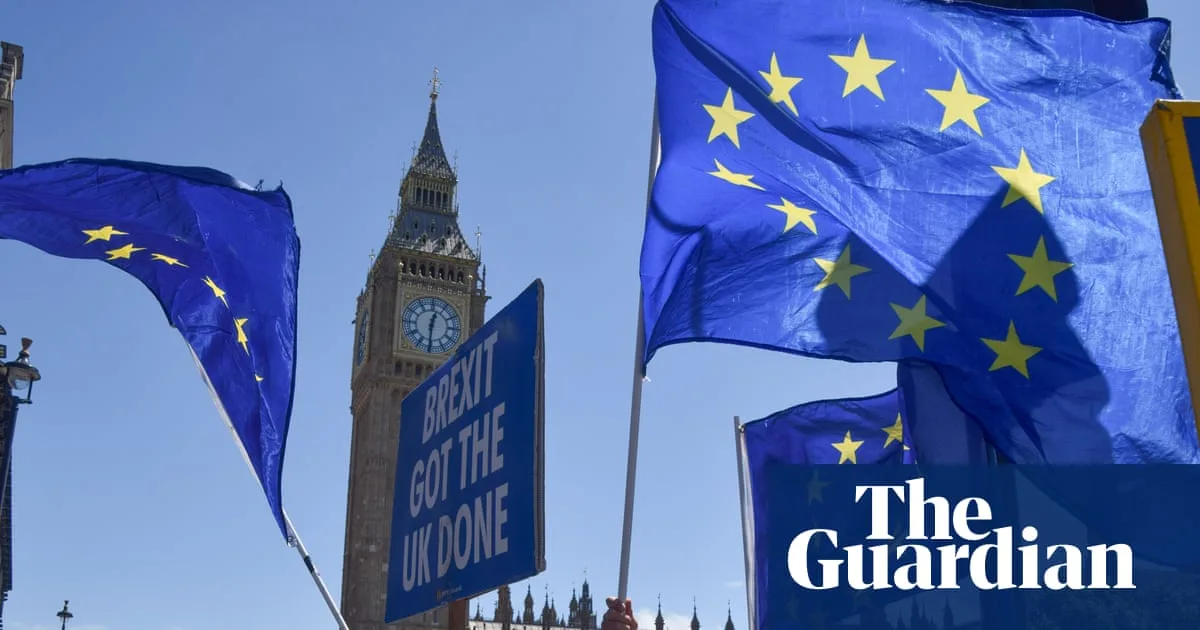
Majority of UK Voters Now Support Rejoining the EU, Poll Reveals
UK Voters Back EU Rejoining, Study Finds

Over Half of UK Voters Support Rejoining EU, Major Study Discovers

New research has revealed that a majority of British voters now support fully rejoining the European Union, with enthusiasm for complete membership surpassing interest in partial alternatives like single market access or a customs union. The comprehensive study from the pro-EU campaign group Best for Britain indicates a significant shift in public opinion regarding Britain's relationship with Europe.

Clear Preference for Full Membership Over 'Halfway House' Approaches

Polling conducted by YouGov demonstrates that 53 percent of respondents favour the UK becoming an EU member again, with only 32 percent opposed to such a move. This contrasts with 49 percent support for a customs union arrangement and 46 percent backing for single market entry alone. The findings suggest that British voters have little appetite for what campaigners describe as "halfway house" approaches to European relations.

Naomi Smith, chief executive of Best for Britain, stated that the research makes it "plain to see little appetite exists for the halfway houses of a customs union or single market entry." She emphasised that while all options involve lengthy negotiations, only full membership provides both the economic benefits and political safety net necessary to address sovereignty concerns that have been exploited by political opponents.

Wide Pickt banner — collaborative shopping lists app for Telegram, phone mockup with grocery list

Strong Support for Government's Current 'Reset' Approach

The study also found substantial backing for the government's current diplomatic strategy, with 61 percent of people supporting efforts to "reset" relations with the EU and build closer ties. This indicates public approval for the prime minister's pledge to rebuild connections with Brussels that were damaged during previous Conservative administrations.

Tom Brufatto, lead author of the report and executive director of policy at Best for Britain, argued that the findings demonstrate the government revisiting its approach to Europe is "essential." He asserted that "pushing for UK membership is the most sustainable policy option available – not only would it create the most growth, it would also galvanise support from progressives across the UK."

Significant Political Divides in Support Levels

The research reveals substantial variation in support for rejoining the EU across different political affiliations. Support is strongest among opposition party supporters, with 83 percent of Labour voters, 84 percent of Liberal Democrat supporters, and 82 percent of Green Party backers favouring renewed membership.

Conversely, support is markedly lower among right-wing voters, with only 39 percent of Conservative supporters and 18 percent of Reform UK voters backing the policy position. This political divide highlights the continuing contentious nature of Britain's relationship with Europe across the political spectrum.

Political Leaders Emphasise European Security and Economic Ties

Former Labour leader and European Commission vice-president Neil Kinnock argued that it is "now more obvious than ever" that the UK must strengthen relations with the EU, particularly given international security concerns. He specifically referenced the geopolitical situation involving former US President Donald Trump, stating that "with an erratic US President playing war-games with all our lives, as he launches inflation-spiking conflict across the globe, it is now more obvious than ever that our 'special relationship' has to be with our neighbours in our continent."

Sir Keir Starmer recently warned Parliament that the need to reverse parts of Brexit has been demonstrated by international crises, including conflicts involving Iran. The Labour leader emphasised that "Brexit did deep damage to the economy and the opportunities we now have to strengthen our security and cut the cost of living," making the case for closer economic relationships with European allies.

The research findings emerge as political leaders increasingly emphasise the importance of European partnerships for both economic security and international influence, suggesting that Britain's post-Brexit relationship with the EU remains a central political issue with evolving public opinion.

Pickt after-article banner — collaborative shopping lists app with family illustration




