UK Must Not Import Putin's 'Blood Oil' Despite Economic Pressure
UK Must Not Import Putin's 'Blood Oil' Despite Costs

The Independent View

Putin’s ‘blood oil’ must not find its way into British petrol pumps – whatever the cost

Editorial: The chancellor must seek other ways to ease the burden on struggling British consumers and businesses than lifting sanctions on Russia’s war machine

Wednesday 20 May 2026 20:32 BST

Wide Pickt banner — collaborative shopping lists app for Telegram, phone mockup with grocery list

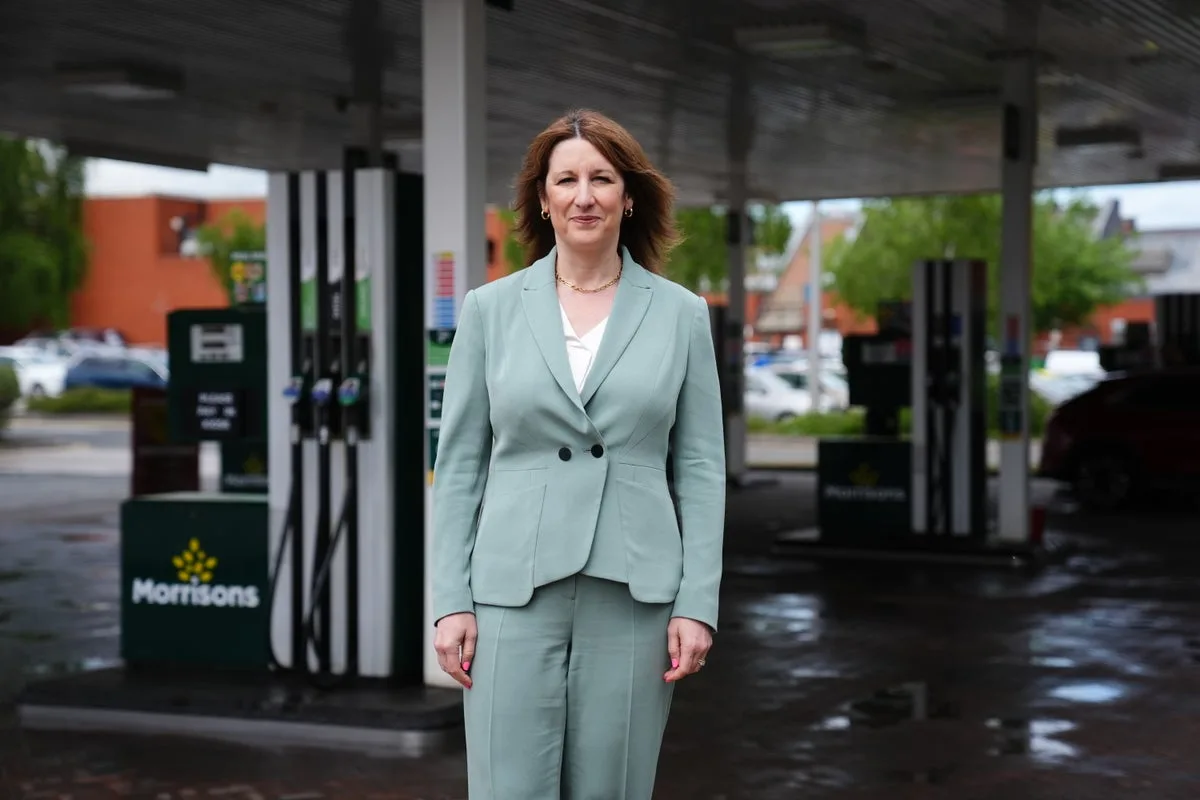
Emily Thornberry takes a strong line on the oil sanctions

Strip away the camouflage about tougher sanctions packages, making Ukrainian drones in the UK, and intercepting Russia’s “shadow fleet” of oil tankers – albeit these measures are extremely welcome – and the fact is that the UK will be buying more Russian oil than it was before the government’s decision to relax sanctions. It is a shameful move, not so much because of the boost it will give to the Russian economy and its war machine – which will, in itself, be relatively trivial – but because of the miserable message it sends to our valiant allies in Ukraine, to whom Britain has thus far been the staunchest of friends. It smells of betrayal. At a stroke, it reverses four and a half years of policy painstakingly coordinated with our international allies to turn the screw on Vladimir Putin’s war. The shadow business secretary Andrew Griffith spoke for many when he said: “The British people don’t want to fly on planes fuelled by ‘blood oil’ that funds Putin’s killing of Ukrainians.”

The symbolism is deeply dispiriting to those who hoped that – at least in this case – the Labour government, despite all its setbacks and visible flaws, would honour its best traditions, as well as Britain’s promises to Volodymyr Zelensky – and would protect the UK’s national interest.

The symbolism also matters abroad. How can a British minister or diplomat hold their head high and make the case to other nations for punitive sanctions on Russia, when the British government is itself softening its policy? If it was wrong for the Trump administration to suspend restrictions on trade in Russian oil in March, why is it acceptable for the UK to do similar now? If Britain is to import refined Russian fossil fuels from Turkey and India, why should Ankara or Delhi themselves stop buying Putin’s most lucrative export? As the chair of the Foreign Affairs Committee, Dame Emily Thornberry, remarked, more in sorrow than anger: “Just because other countries are behaving in the wrong way does not mean that we should join them ... We are Britain, and we are one of Ukraine’s strongest allies; we have led the fight against Russia on this ... and we’re proud of it.”

It raises the question of why Sir Keir Starmer and his colleagues have decided to do it. The prime minister insisted in the House of Commons today that the new sanctions go “beyond” the existing ones, and accused the opposition of playing “party politics” on the topic of Ukraine. Being generous, it is possible to believe that he is acting with the best of motives – to protect the British people from the newly intensified cost-of-living crisis, and the coming rise in inflation, despite a blip downwards last month. There is no doubt that many families are finding it more difficult to make ends meet, let alone to live a little; the cost of a holiday abroad will inevitably rise because of the war in Iran, and there may even be shortages of fuel that place trips already paid for in jeopardy. People’s frustrations have already been vented forcefully in the elections on 7 May, with the consequences still reverberating through the political system. Any government that fails to do what it can to help people get away for their summer break will face a backlash.

However, the irony may be that for all the damage buying Russian oil will do to the cause of Ukraine and the credibility of our Russia-related foreign policy, it will have little real effect on the availability of flights or the price of a litre of diesel. Even if it wanted to, the Exchequer lacks the funds to subsidise fuel costs to any significant degree. The extension of the 5p cut in fuel duty, dating back to Rishi Sunak’s time in office, was widely expected and will no doubt ease the pressure on household budgets and business a little; but, like the short-term help with some domestic and industrial energy bills, it is at the limits of what the Treasury can – or should – do.

Pickt after-article banner — collaborative shopping lists app with family illustration

The reality is that no government can insulate its people entirely from an energy shock. Just as the British government has no magic money tree to turn to, it has no secret oil reserves to drain. Kemi Badenoch’s call to drill more hydrocarbons out of the heavily depleted North Sea oil fields may have its merits, but it would not noticeably cut the global price of oil, or the price of fuel at the pumps. Indeed, there is a broader case for allowing the price mechanism to operate more or less freely, so that consumers and businesses adapt to the reality of higher fossil-fuel costs and change their behaviour accordingly. This is, in fact, what has followed every previous energy shock, from the 1956 oil crisis onwards, and long before the existential challenge of climate change. More fuel-efficient cars and trucks, more use of public transport, better-insulated homes, the rise of cheaper green energy technologies, and energy-efficient industrial processes have all been driven by the long-term depletion of fossil fuels and their rising cost, only partly offset by the US fracking industry. Such arguments can come and go. At this moment, we cannot avoid a moral choice, and that means understanding that it is simply wrong for British consumers and businesses to be paying for Russian forces to kill Ukrainian citizens. Russia must be deterred and defeated. The sanctions – all of them – should be maintained.




