

UK Trade Minister Dismisses Trump's China Warning as 'Absolutely Bonkers'
In a robust defence of the UK's foreign policy, Trade Minister Sir Chris Bryant has labelled former US President Donald Trump's criticism of Britain's engagement with China as "absolutely bonkers". The minister's comments come after Trump described Prime Minister Keir Starmer's efforts to strengthen ties with Beijing as "very dangerous".
Minister Challenges Trump's Position on BBC Breakfast
Speaking to BBC Breakfast, Sir Chris directly contradicted Trump's assessment. "Yes, he is wrong," the minister stated, highlighting what he called a contradiction in Trump's own position. "I say this precisely because, apart from anything else, he himself said in his own statement that he is a friend with President Xi, and as I understand it, President Trump is going to China himself in April."
The minister elaborated on Sky News, acknowledging the need for a clear-eyed approach while emphasising China's global significance. "I agree that you of course you have to go into your relationship with China with your eyes wide open. You have to challenge China on the issues where we disagree with them," he said. "But you have to face the fact that China is a major power in the world. It's the second largest economy in the world, and it's our fourth largest export market. So it would be absolutely bonkers for the UK not to engage with China."

Trump's Criticism During Starmer's Three-Day Visit
The diplomatic row erupted as Prime Minister Starmer continued his three-day visit to China, where he held warm talks with President Xi Jinping. Both leaders agreed to deepen their alliance, but Trump voiced his disapproval to reporters at the premiere of the Melanie movie.
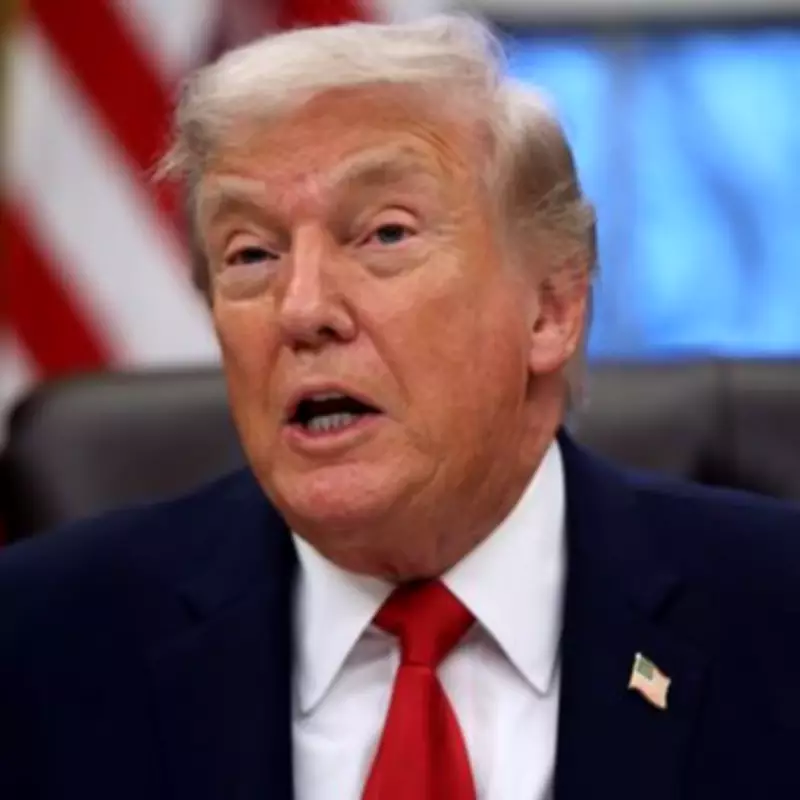
"Well, it's very dangerous for them to do that, and it's even more dangerous, I think, for Canada to get into business with China," Trump remarked. "Canada is not doing well. They're doing very poorly, and you can't look at China as the answer. I know China very well. I know President Xi is a friend of mine. I know him very well. But that's a, that's a big hurdle to go over when you get Canada."
The former president has previously threatened Canada with 100% tariffs over potential trade deals with China, adding geopolitical tension to his comments.
Substantial Agreements Secured During Diplomatic Trip
Prime Minister Starmer's visit has yielded several significant agreements that underscore the practical benefits of UK-China engagement:
- A new visa-free travel arrangement allowing British citizens to visit China for up to 30 days without a visa.
- A reduction in tariffs on Scotch whisky from 10% to 5%, projected to boost the industry by approximately £250 million over five years. China represents Scotland's tenth largest market for whisky exports.
- Commitment to work towards a services agreement establishing clearer rules for UK businesses operating in China.
- A border security deal involving joint UK-Chinese law enforcement action to disrupt people smuggling gangs, specifically targeting the supply of small boat parts used by traffickers crossing the Channel.
Minister Highlights Inescapable Economic Reality
Sir Chris Bryant emphasised the pervasive nature of China's role in everyday British life, arguing this makes engagement essential. "I defy anybody in the world, certainly in the UK, to spend an hour of their day without some involvement with China," he asserted. "Whether it's your phone, it's your Fitbit, it's the clothes you wear, the makeup brushes you use, the light fittings, whatever it may be. China is just a part of our life, and we need to deal with our eyes wide open."
The minister pointed to the new security agreement as evidence of productive engagement. "That's why I'm really glad we've managed, first of all, to get a really good deal on security. So that's not only dealing with Chinese gangs that are passing through fake opioids, but it's also making sure that some of the kit that is used by the small boats that cross from France into the UK, 60% of that has come from China."

This public disagreement between a UK government minister and the former US president highlights the complex balancing act facing Western nations as they navigate economic dependencies and strategic concerns regarding China.





