
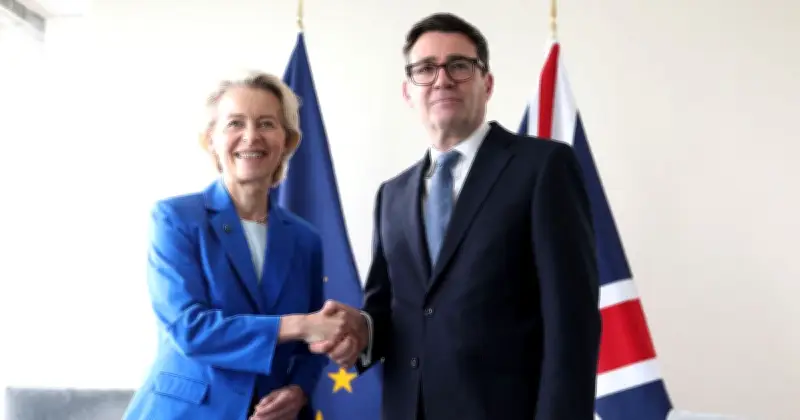
Britain has struck a monumental draft deal with Brussels to axe post-Brexit red tape on food and farming exports, sparking fresh fury among Brexiteers that the UK is being dragged straight back into the EU's orbit.
A huge 200-page draft text on sanitary and phytosanitary (SPS) rules has been circulated among EU nations ahead of a high-stakes UK-EU summit later this month. The blockbuster agreement marks the most drastic step yet in Andy Burnham's aggressive post-Brexit "reset". Unlike his predecessor Sir Keir Starmer, who insisted the UK would not rejoin the bloc in his premiership, Mr Burnham has made no secret of his long-term ambition to drag Britain back into the EU.
Key concessions in the draft pact
Under the controversial terms of the draft pact, the UK is set to surrender key post-Brexit powers in exchange for axing red tape, including £200 Export Health Certificates, £25 Phytosanitary fees, and border inspections. While ministers boast the compromise will restore exports of British sausages, burgers and shellfish to the bloc, bring back pet passports and ease the hated Irish Sea border, critics warn the promised £5.1billion economic boost is nothing more than a smokescreen.
However, the major concessions will sound alarm bells across Westminster, with Britain signing up to "dynamic alignment" - meaning the UK will automatically shadow Brussels' rulebook on animal, plant and food trade standards. To cement the shift, the Government has already unveiled a new European Partnerships Bill, creating a legal mechanism to directly incorporate incoming EU regulations into UK law.
Brexiteers condemn the surrender of sovereignty
Pro-Brexit campaigners have fiercely condemned the surrender of hard-won British regulatory sovereignty. Boris Johnson's landmark trade treaty explicitly walked away from EU standards to guarantee Britain's freedom to set its own laws and diverge on key policies such as precision breeding and gene editing.
Yet business lobby groups have insisted the compromise is essential. British Chambers of Commerce (BCC) trade chief William Bain argued that accepting common rules is a "price worth paying" to escape the supply-chain gridlock, noting that health certificates alone slap thousands of pounds in costs onto every single lorry bound for the Channel.
Shevaun Havilland, Director General of the BCC, backed the move, declaring: "The evidence from businesses suggests that the Prime Minister is right to have initiated a conversation on our future relationship with Europe, and he deserves real credit for having done so."
Beyond food: wider EU cooperation
The draft package goes far beyond food. Brussels diplomats meeting on Wednesday are also examining draft proposals to link carbon emissions trading markets, introduce a youth work and travel scheme, re-engage on defence cooperation, and reconnect vital law enforcement databases.




