

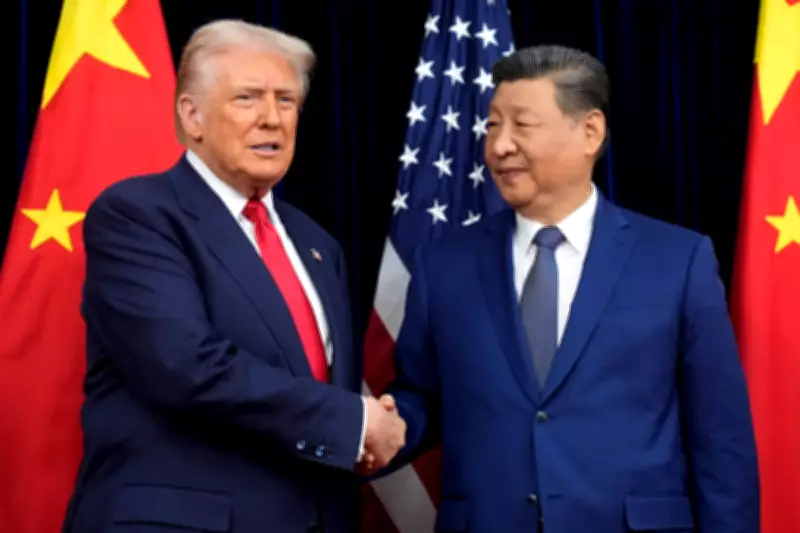
Donald Trump's presidency, marked by an "America First" agenda, has paradoxically contributed to China's growing global stature, according to recent analyses. While Trump aimed to bolster the United States, his policies have often undermined its competitive edge and strained international relationships, to Beijing's advantage.
Strategic Missteps and Global Perceptions
Trump's approach to China, treating it as a strategic rival, has been criticised for lacking long-term vision. His administration highlighted concerns over China challenging American power, yet actions during his first year back in office have arguably facilitated China's rise. A survey by the European Council of Foreign Relations, involving 26,000 people across 21 countries, indicates that Trump's policies are perceived as enhancing China's greatness. The poll suggests traditional US adversaries fear America less, while allies feel more distant.
Economic and Trade Implications
In the trade arena, Trump's tariffs initially targeted China but backfired, with Beijing retaliating by restricting rare earth exports and soybean imports. This led to a rollback of tariffs, showcasing China's ability to withstand pressure. Notably, China's global trade surplus surged by 20% to a record $1.2 trillion in 2025, even as US-China trade volume declined, indicating resilience and growth post-confrontation.

Furthermore, a Pew Research Center survey across 23 countries revealed a shift in perception: for the first time, more respondents viewed China as the world's top economic power compared to the US, with 41% versus 39%. This reflects a decline in US economic prestige under Trump's leadership.
Technological and Diplomatic Shifts
Trump's reversal of Biden-era restrictions on AI chip sales to China, influenced by Silicon Valley donors, has raised national security concerns. Critics argue this move hands technological advantages to Beijing, weakening US military and economic edges. Simultaneously, diplomatic realignments have occurred, with allies like Canada, South Korea, and the UK strengthening ties with China in response to Trump's unpredictability and trade disputes.
Canada's prime minister, Mark Carney, cited a need to adapt to "new global realities" amid US hostility, forging a strategic partnership with China. Similar moves by other nations highlight a rupture in the Western alliance, as described by Carney, further eroding US influence.
Impact on US Global Standing
Trump's policies have not only affected economic and diplomatic spheres but also tarnished America's image abroad. The US tourism industry and universities report declines due to negative perceptions under Trump's administration. Additionally, his National Security Strategy has downplayed China as a rival, despite evidence of its growing military and cyber capabilities, including nuclear expansion and exercises near Taiwan.
By cozying up to autocrats like Vladimir Putin and Xi Jinping while alienating European leaders, Trump has made it harder for the US to champion democracy globally. This loss of trust among allies and diminished respect worldwide contradicts his goal of making America great again.
Future Outlook and Recommendations
To reverse these trends, experts suggest Trump needs to mend relations with allies, end inflammatory rhetoric, and reinvest in research and democracy promotion. However, given his preference for authoritarian leanings and impulsive governance, such changes seem unlikely. Consequently, Trump's tenure may continue to facilitate China's ascent while diminishing US greatness.
In summary, while Trump vowed to prioritise America, his short-sighted actions have inadvertently empowered China, highlighting a complex dynamic in global politics that could have lasting implications for US competitiveness and alliances.






