

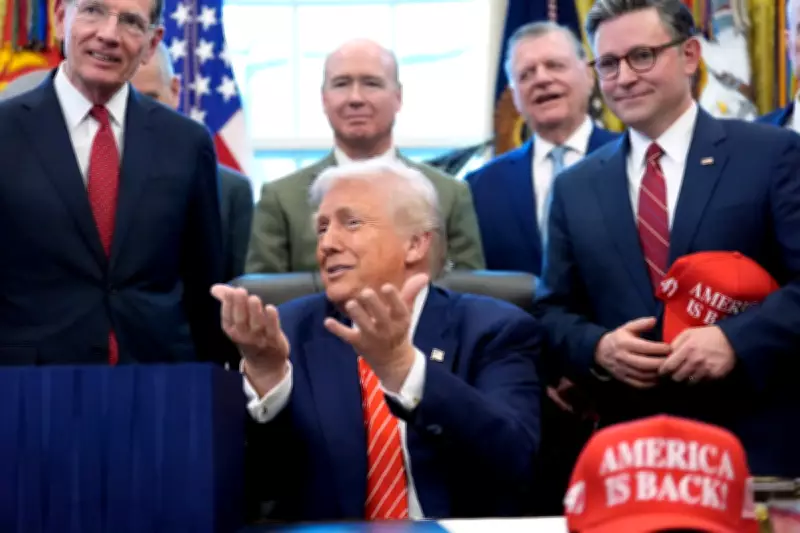
Former President Donald Trump has once again amplified his contentious call for the federal government to nationalise elections across the United States, asserting that certain states are too corrupt to manage their own voting processes independently.
Targeting Democratic Strongholds
In his latest remarks, Trump specifically singled out major urban centres that voted Democrat in the 2020 presidential election, including Detroit, Philadelphia, and Atlanta. He argued that these cities exemplify locations where election integrity has been severely compromised, though he provided no substantiated evidence to support these claims.
Historical Context and Legal Background
This suggestion builds upon previous comments from Trump, where he urged Republican officials to take over voting procedures in as many as 15 states. It is important to note that numerous legal challenges to the 2020 election outcome were filed, but none succeeded in court, with judges consistently dismissing them due to lack of credible evidence.

Democratic Backlash and Constitutional Concerns
Prominent Democrats have reacted swiftly and forcefully to Trump's proposal. Senator Chuck Schumer and Senator Bernie Sanders have both condemned the idea, labelling it as unconstitutional and a direct threat to the foundations of American democracy. They argue that such a move would centralise power in a manner inconsistent with the nation's federalist principles.
Republican Responses and Internal Divisions
Within Republican ranks, responses have been mixed. House Speaker Mike Johnson suggested that Trump was merely expressing his frustration with the current electoral system. However, both Johnson and Senate Majority Leader John Thune have publicly stated that they do not support the federalisation of elections, indicating a potential rift within the party over this issue.
The debate over election integrity and federal oversight continues to simmer, with Trump's latest comments likely to fuel further political divisions as the United States approaches future electoral cycles.






