

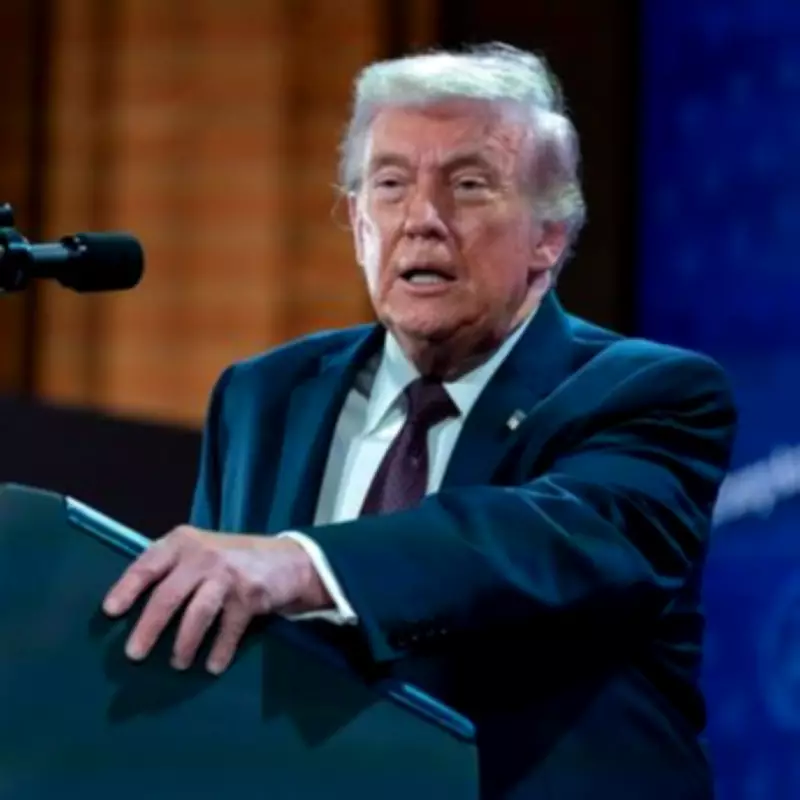
In a revealing interview that has sparked widespread controversy, former President Donald Trump has made the startling admission that he feels worse about the killing of Renee Good by Immigration and Customs Enforcement (ICE) agents specifically because her parents were ardent supporters of his political movement.
A Shift in Tone Based on Political Allegiance
The second year of Trump's second presidential term has been heavily dominated by his administration's aggressive immigration crackdown in Minneapolis, Minnesota. This operation has resulted in two fatal shootings by ICE agents: the death of mother-of-three Renee Good and intensive care nurse Alex Pretti. While Trump initially praised the agents involved as patriots and officials defended the actions without remorse, his recent comments indicate a significant, though politically charged, change in perspective.
Fox News Interview Reveals Personal Calculation
Speaking to Fox News host Will Cain on January 27 ahead of a campaign event in Iowa, Trump addressed both shootings, calling them terrible. However, he explicitly suggested that Ms. Good's death troubled him more due to her family's political leanings. Trump stated: "Both of 'em were terrible. The other was terrible too. And I'm not sure about his parents, but I know her parents were big Trump fans. Makes me feel bad anyway. But I mean, I guess you could say even worse, they were tremendous Trump people."

This admission follows earlier remarks where Trump labeled the killing a tragedy, but consistently linked that characterization to the father's support. During an address marking his first year back in office, he elaborated: "I felt horribly when I was told that the young woman who had the tragedy. It's a tragedy. It's a horrible thing... But when I learned that her parents, and her father in particular... was a tremendous Trump fan. He was all for Trump. Loved Trump, and it's terrible."
From Accusations to Acknowledgment
Trump's current comments represent a dramatic reversal from his initial response to the shooting. Shortly after the incident, he publicly accused Ms. Good of being a "professional agitator," a claim that intensified the political firestorm surrounding the ICE operations in Minneapolis. The administration has also made operational changes in response to the escalating public fury, replacing controversial Border Patrol senior official Gregory Bovino with border czar Tom Homan.
Political Fallout and Public Opinion
The political ramifications of the Minneapolis ICE deployment and subsequent shootings have been substantial. Recent polling data reveals a significant decline in public approval of Trump's immigration policies, which were a central pillar of his successful re-election campaign. Currently, only 39 percent of Americans approve of his administration's handling of immigration, while a substantial 53 percent disapprove.
This represents an almost complete reversal from figures recorded just after his second inauguration. In February of the previous year, one month after he was sworn into office, 50 percent of Americans approved of his immigration strategy, with 41 percent disapproving. The dramatic shift underscores how the Minneapolis incidents have damaged his political standing as midterm elections approach.
A Controversial Framework for Empathy
Trump's repeated emphasis on the victim's family's political allegiance as a factor in his emotional response has generated intense criticism. His focus during the Oval Office address remained fixed on this aspect, as he expressed hope that the father still supported him despite the tragedy: "I was told that by a lot of people... They said, 'Oh, he loves you' ... I hope he still feels that way."
The revelation that personal political support influences his perception of tragic events has raised profound questions about the administration's approach to law enforcement and immigration policy. As Minneapolis continues to experience turmoil following the ICE deployments, Trump's comments have added another layer of complexity to an already volatile national conversation about border security, enforcement methods, and political accountability.






