
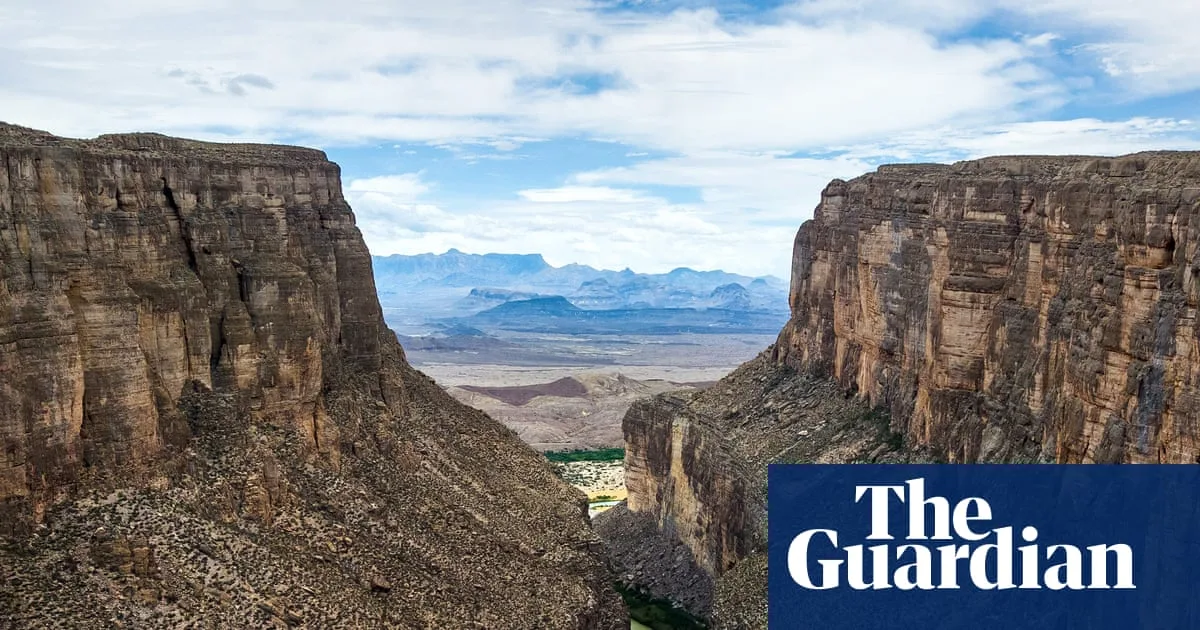
The Trump administration has waived a raft of environmental and historical preservation laws to expedite construction of a border wall through Big Bend national park, a vast protected wilderness in south Texas. The waiver, published in the Federal Register by the Department of Homeland Security, overrides protections in the National Environmental Policy Act, the Endangered Species Act, the Clean Water Act, and the Native American Graves Protection and Repatriation Act, among others.
Congress allocated $46.5bn for border wall construction last year, intensifying efforts to seal the southern border. The longest unwalled stretches lie along a roughly 500-mile section of west Texas known as the Big Bend sector, which includes Big Bend national park, Big Bend Ranch state park, and Black Gap wildlife management area – some of the largest chunks of protected land in a state that is 95% privately owned.
The prospect of marring these landscapes has provoked fierce backlash from a bipartisan group of local leaders and public land users. Big Bend national park, an 800,000-acre expanse of Chihuahuan desert punctuated by the Chisos mountain range, attracts half a million visitors each year for hiking, camping, stargazing, and floating the Rio Grande.
Customs and Border Protection (CBP) has sent mixed signals about its intentions. An interactive map updated in February initially showed a steel bollard wall along the park's river frontage, but was later changed to indicate only detection technology. The current iteration shows plans for new roads along the southern border, plus four separate 4–6ft-tall barriers intended to stop incoming vehicles, along with utility poles, lighting, and surveillance cameras.
Bob Krumenaker, former superintendent of the park, denounced the proposals as “massive destruction”, noting they would affect some of the most remote parts of a remote national park. The area is home to endangered species, a struggling population of bighorn sheep, and a significant concentration of Native rock art and petroglyphs, all of which could be imperilled by construction.
Lloyd Doggett, the Democratic US representative for the region, called the move “ludicrous” given that illegal crossings in the area account for under half a percentage point of all such crossings nationwide. “Billions of taxpayer dollars are being wasted on this unnecessary project,” he said, highlighting the rugged mountains that already make unauthorised crossings nearly impossible.




