Starmer's EU Negotiator Defends Brexit 'Reset' Amid Criticism
Starmer's EU Negotiator Defends Brexit 'Reset' Plan

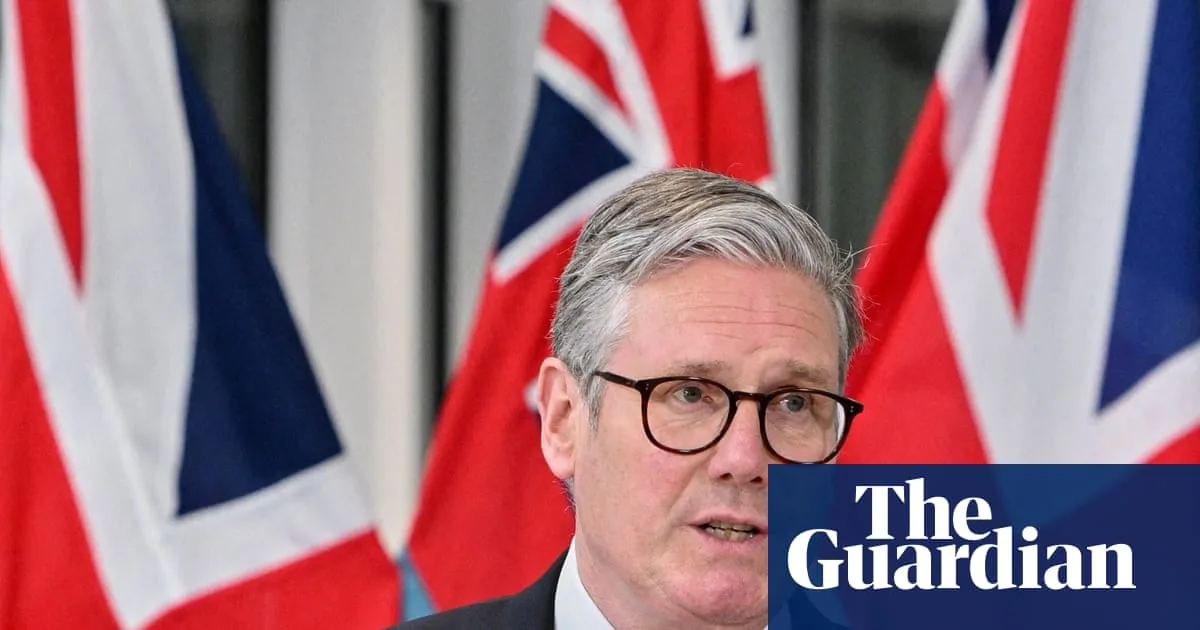
Keir Starmer's top negotiator has defended the Prime Minister's efforts to sign Britain back up to EU rules as part of his Brexit 'reset' plan. Nick Thomas-Symonds, the EU relations minister, insisted 'alignment' with Brussels 'is not a dirty word' as he dismissed criticism of the UK moving back towards the EU.

Both the Prime Minister and Chancellor Rachel Reeves have made clear their wish to forge closer ties with the bloc as they scramble to boost economic growth. Labour is planning to introduce legislation that would allow ministers to sign the UK up to EU single market rules without a full vote in Parliament. The plans to ease 'dynamic alignment' with EU rules would happen using secondary legislation under so-called 'Henry VIII' powers.

A new bill, designed to bring a proposed UK-EU deal on food and drink into force, will mean that once an agreement is reached with the bloc, any further EU changes deemed in the national interest can be waved through without an official vote by MPs. Brexiteers have slammed the plans as 'exactly what the country rejected' at the EU referendum almost a decade ago, while some Labour figures have urged Sir Keir to go further and campaign to fully rejoin the bloc.

Wide Pickt banner — collaborative shopping lists app for Telegram, phone mockup with grocery list

Mr Thomas-Symonds acknowledged Sir Keir's Brexit 'reset' would be a 'central issue' ahead of the next general election, scheduled for 2029, as he attacked Reform UK's Nigel Farage, Tory leader Kemi Badenoch, and Green Party boss Zack Polanksi. Speaking to Italian newspaper La Repubblica, Mr Thomas-Symonds claimed the Government was not seeking to return 'to the debates of the past' as he dismissed London mayor Sadiq Khan's call for Labour to campaign to rejoin the EU.

'I don't think we should be going back to the debates of the past, but I certainly believe that the UK-EU relationship, what this Government has achieved and what it will achieve, absolutely that's going to be an election issue,' he said. 'Look at the difference. I don't think Nigel Farage believes in having any trading relationship with the EU at all. While we take all that red tape and costs away from businesses, Nigel Farage and Kemi Badenoch want to put it all back. But then you look at Zack Polanski, who on the one hand is telling you that the Green Party wants a closer EU relationship, but on the other is telling you that he apparently wants to leave the fundamental security alliance NATO. So it makes no sense whatsoever. I'm not sure he's realised that 23 of the EU member states are also members of NATO. That's just complete fantasy. So absolutely, this is going to be a central issue.'

Mr Thomas-Symonds also rejected a suggestion that Britain would have to copy either a Swiss-style or Norway-style agreement with Brussels in order to achieve Sir Keir's wish for greater access to the single market. During the original Brexit negotiations, the EU was always wary of Britain 'cherry-picking' which advantages and obligations it would remain signed up to, as Brussels officials pushed the UK to replicate the relationships of other third party nations. But Mr Thomas-Symonds said: 'Too often in this debate, I've always been given other countries as apparent models what the UK relationship should be. The truth is, we have, at the moment, a UK model, and what we will always have is a distinct UK-EU model, because of the very distinct nature of our relationship with the EU.'

He added: 'It is now about looking at those areas, those sectors, where the UK and the EU following common standards is in our mutual interest and our mutual benefit. This is an extraordinarily deep and wide trading relationship, and reducing those trade barriers in key sectors is absolutely critical for resilience, particularly when we face the same economic challenges. But let me also say this. This argument around alignment, as I've said, is not a dirty word. I have been making, and will be making, the case this year that the UK is taking a sovereign choice to align with European rules, and it is so important because it means that we can reduce business costs, and it means easier trade on both sides of the Channel. It is in the interest of resilience across our continent.'

Pickt after-article banner — collaborative shopping lists app with family illustration




