
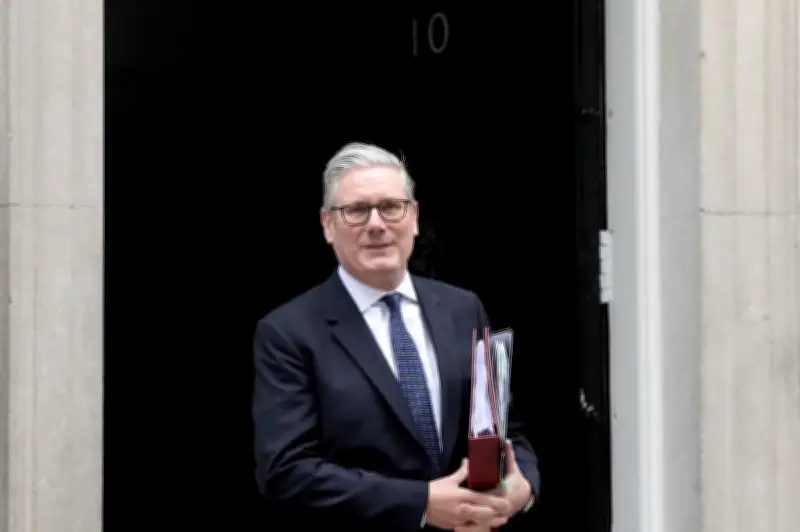
Sir Keir Starmer has admitted he needs to "turn things around" if he is to remain Prime Minister and lead Labour into the next general election, following a damaging row over defence funding that led to the resignations of defence secretary John Healey and armed forces minister Al Carns.
Resignations Over Defence Investment Plan
John Healey resigned as defence secretary on Thursday, citing the Prime Minister's inability and the Treasury's unwillingness to provide adequate funding for the long-delayed defence investment plan (Dip). Armed forces minister Al Carns also stepped down, along with two ministerial aides. The Dip promised £13.5 billion, of which only £10 billion was new cash, with defence sources claiming the remaining £3.5 billion came from expected efficiency savings or cuts. Healey complained the extra support was "backloaded" to later years, despite urgent needs.
Starmer's Response
Sir Keir insisted defence spending remains a priority and he has made "difficult decisions" to keep the country safe. Speaking to the BBC, he said: "I don't think we should plunge the country into the chaos of a leadership election," but added he would fight any challenge. "That's not about personal vanity, it's not about stubbornness. It's out of a very deep sense of duty," he said. Regarding leading Labour into the next election, expected in 2029, he said: "Well, that's what I want to do. I recognise that I've got to turn things around. We had a very bad set of elections."
Leadership Challenges
The resignations come at a precarious time for Sir Keir, whose premiership has looked fragile since May's election results across England, Wales, and Scotland. Andy Burnham, who hopes to return to Westminster in next week's Makerfield by-election, has not hidden his Labour leadership ambitions, while former health secretary Wes Streeting will also run in any contest. Streeting criticised the Prime Minister's decision-making, writing on X: "The failure to make the right choices on the defence investment plan is just a symptom of the indecision at the heart of this Government." He also questioned the announcement of £4.5 billion for walking and cycling the day after Healey's resignation, calling it "bad policy" and "bad politics."
Alternative Funding Proposals
Streeting suggested inheritance tax-free defence bonds could help fund military spending, pointing to a Canadian-led initiative. Burnham, meanwhile, proposed freeing up money for defence from welfare, but not through "just crude cuts." He told The Times: "It is actually going to do things that will reduce the benefits bill, moving towards a more preventative state."
New Appointments
On Friday evening, North East Derbyshire MP Louise Sandher-Jones was confirmed as armed forces minister, taking over from Carns. Her role as veterans minister will be taken by Leyton and Wanstead MP Calvin Bailey, while Wallasey MP Angela Eagle will become security minister, replacing Dan Jarvis after he was made Defence Secretary. Jarvis visited No 10 for talks on Friday morning, alongside Chief of the Defence Staff Air Chief Marshal Sir Richard Knighton.
Carns' Concerns
Carns, a highly-decorated Royal Marines officer, said the funding plan lacked money and was not "transformational" in addressing modern warfare challenges, such as drones in the Ukraine conflict. He urged Starmer to stay to "steady the ship," but did not rule out a future leadership bid. "I want to see a higher percentage for uncrewed systems, AI, data – data is the new gunpowder," he told GB News.
Defence Investment Plan Delay
The Dip was originally due in autumn 2025 but has been delayed by Whitehall battles over funding. The new deadline is July's Nato summit. While the Government has committed to spending 3.5% of GDP on defence by 2035, Healey said the plan moved too slowly, with defence spending rising to just 2.68% in 2030 after hitting 2.6% next year. Sources said the Treasury deal did not set a date for reaching 3% and tried to force the MoD to plan for 2034/35.




