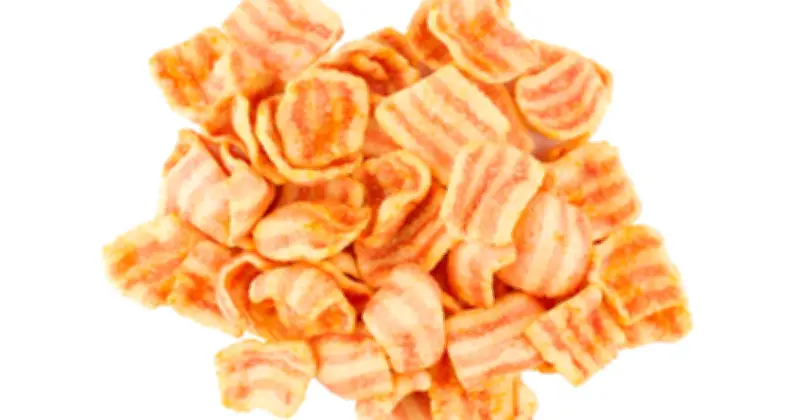
Smoky bacon crisps could disappear from British supermarket shelves under Andy Burnham's Brexit reset deal, with meat-free products potentially forced to abandon some of their most familiar names.
Vegetarian crisps flavoured with bacon, chicken-flavoured snacks and meat-free Pot Noodles could all fall foul of new European Union labelling rules that Britain has agreed to follow. The proposed regulations would prohibit manufacturers from using certain meat-related terms to describe plant-based foods, including bacon, beef, chicken, steak and ribs.
What the new rules would mean for manufacturers
Almost all smoky bacon crisps are made using flavourings rather than actual meat, meaning products sold under the familiar name could be caught by the restrictions. Manufacturers such as Walkers could face a choice between changing the names of established products or altering their recipes to include real meat.
Adding beef or pork extracts would increase production costs, shorten shelf life and mean the crisps could no longer be marketed as vegetarian.
Part of the Brexit reset agreement
The restrictions form part of a wider EU crackdown on meat-related descriptions for plant-based foods, which is expected to come into force in three years. Under the agreement negotiated as part of Mr Burnham's post-Brexit reset, Britain has committed to aligning with Brussels on plant and animal health regulations, including food labelling.
The move is intended to reduce border checks, paperwork and other barriers to trade between Britain and the EU. However, it also means the UK will have to change its domestic legislation to match European rules over time, despite having no say in how those regulations are drawn up. Britain would effectively become a rule-taker, adopting Brussels' standards rather than negotiating them as a member state.
Reaction from critics and industry
Mark Francois, chairman of the European Research Group of Tory Brexiteers, told The Telegraph: "Yet again, we see the practical drawbacks of Labour's cosying up to the EU.
"When 17.4 million UK citizens voted to leave the EU, it wasn't so they could subsequently tell us what to put in a Walkers crisp packet.
"Why on Earth is Andy Burnham so desperate to rejoin an organisation that wants to dictate to us like this, whenever they get the chance?"
The EU's list of 31 prohibited terms, drawn up following pressure from the agricultural industry, includes references to specific cuts of meat and animal species. Vegetarian products described as steak, fillet, ribs, chicken, beef and bacon are among those potentially affected. However, vegetarian burgers and vegan sausage rolls are expected to escape the restrictions after EU lawmakers agreed a compromise, arguing that the terms described a shape rather than a specific animal or cut of meat.
The proposals have also attracted criticism from animal rights campaigners. Dawn Carr, of People for the Ethical Treatment of Animals (PETA), said: "If lawmakers were not kowtowing to industry but being serious about truthful food labels, they'd require dairy milk to be labelled 'cow lactation fluid', eggs 'chicken ova', and meat 'flesh'."
The Food and Drink Federation (FDF), which represents British food and drink manufacturers, backed the wider agreement because it could reduce trade barriers and red tape. However, its chief scientific officer Kate Halliwell warned the new arrangements would leave businesses having to comply with European legislation introduced since Brexit, despite Britain having no involvement in its development.
She said: "There's a risk this specific policy could stifle growth in the UK's plant-based sector, while bringing little benefit for consumers."
A Government spokesman said: "We will not comment on hypothetical scenarios or speculation. A food and drink deal could deliver up to £5.1bn a year for the UK economy, slashing the costly red tape that only helps drive up supermarket prices and stifle trade."
The UK and EU are expected to discuss the wider reset at a summit in Brussels on November 20.