
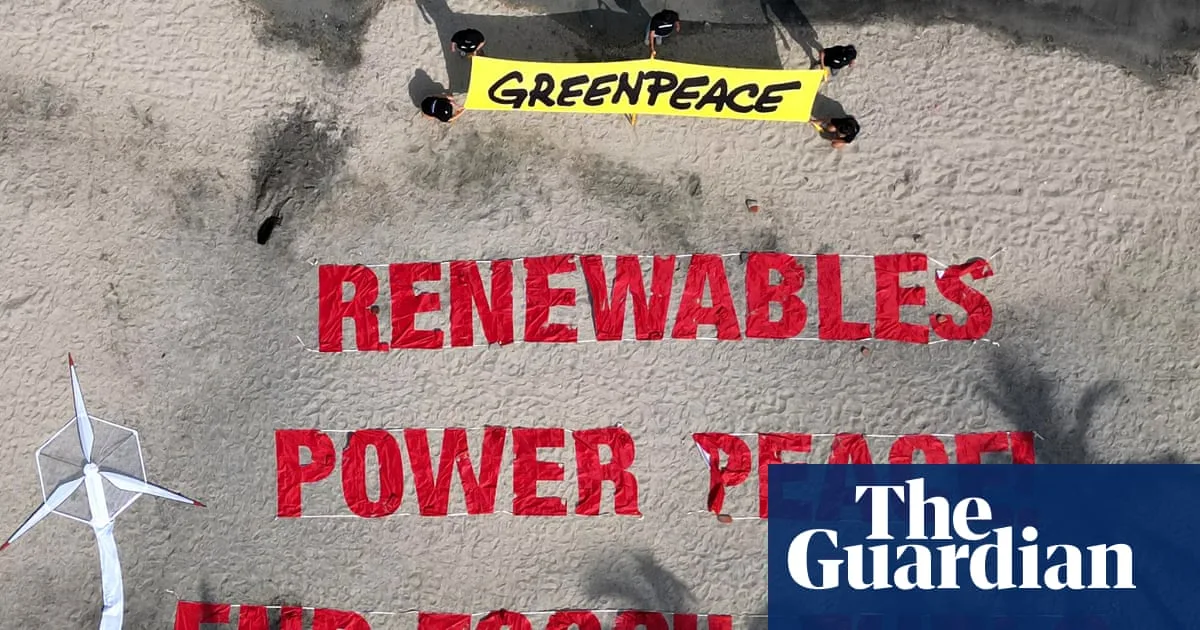
Almost 60 governments met in Santa Marta, Colombia, last week for the world's first conference on transitioning away from fossil fuels. The summit, organised jointly with the Netherlands, aimed to build momentum for a post-fossil fuel future amid rising oil prices and geopolitical tensions. Each country agreed to develop roadmaps on how to move away from fossil fuel dependency.
The conference comes as the climate crisis has largely disappeared from the global agenda under Donald Trump's second presidency. The US has left the Paris agreement, withdrawn from the UN convention on climate change, and defunded projects improving resilience and adaptation. However, the UN's climate chief Simon Stiell noted an "immense irony" as the war in Iran has supercharged the boom in renewable power, with rocketing oil prices driving governments, businesses and households towards solar and wind energy.
Fatih Birol, executive director of the International Energy Agency, told the Guardian that the war has shattered the fossil fuel industry's image of reliability and boosted nuclear power and renewables. "The vase is broken, the damage is done – it will be very difficult to put the pieces back together," he said, adding that this will have permanent consequences for global energy markets.
The summit arose from frustration with the UN climate process. It is voluntary and lacks attendance from most of the world's biggest emitters, but maintains momentum on efforts to avert extreme temperature rises during a historic political low for the climate movement. The Guardian's environment editor Fiona Harvey, who was in Colombia, said the summit cannot solve the world's problems but can help address current challenges.




