

Brexit Reset May Force Marmalade Name Change to 'Citrus Marmalade'
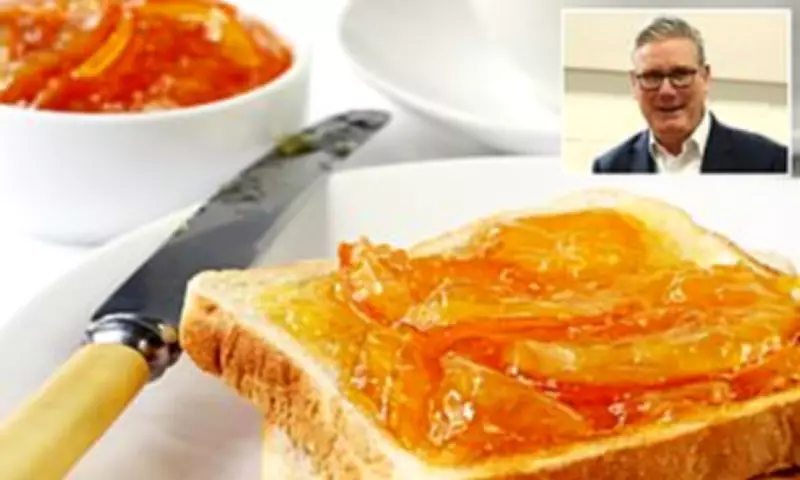
It is adored by Paddington Bear and has long been a fixture on British breakfast tables, but this cherished spread might soon require a new label: 'citrus marmalade'. This potential shift stems from Prime Minister Keir Starmer's Brexit 'reset' and a planned food agreement with the European Union.
EU Rule Changes and the SPS Agreement
Producers of fruit spreads have been alerted that the Government's proposed sanitary and phytosanitary (SPS) agreement with the EU could mandate a renaming of what Britons simply call 'marmalade'. Currently under negotiation between the UK and Brussels, this deal would see Britain readopt numerous EU regulations.
The Government contends that the agreement, a key part of Starmer's strategy to strengthen ties with the bloc, will lower supermarket prices by eliminating trade barriers. However, it has now emerged that the deal might also necessitate relabelling traditional marmalade.

Since the UK's departure from the EU, Brussels officials have updated bloc regulations. They now permit the term 'marmalade' to describe spreads made from fruits beyond citrus. This adjustment reflects practices in several EU nations where 'marmalade' and 'jam' are used interchangeably for various fruit preserves.
Historical Context and New Labelling Requirements
Prior to the 2024 rule revision, the EU only allowed spreads containing exclusively citrus fruit to be marketed as 'marmalade'. Interestingly, the original EU regulation reportedly originated from UK lobbying in the 1970s, which sought special commercial status for marmalade made from bitter Seville oranges. This specific spread has become synonymous with British breakfast culture.
The updated EU directive on fruit jams, jellies, and marmalades, enacted in May 2024, now stipulates that jars must be sold under the legal name 'citrus marmalade' to prevent consumer confusion. The revised rule also recommends labels such as 'orange marmalade' or 'lemon marmalade' to differentiate these products from what were previously classified solely as jams.
Impact on UK Manufacturers and Government Stance
The Department for Environment, Food and Rural Affairs (DEFRA) recently disclosed that UK companies will need to adjust their product labelling to comply with the updated EU directive if the SPS agreement proceeds. This is among seventy-six revised EU food rules that would apply in the UK upon the deal's conclusion.
DEFRA officials emphasized that UK manufacturers have already begun, or are preparing, to implement these changes to maintain access to the EU market, irrespective of the SPS deal. They added that the proposed agreement would facilitate the sale of British-produced marmalade, along with other breakfast classics like Cumberland sausages and Scottish smoked salmon, across the bloc.
A Whitehall source stated the Government is 'making a sovereign choice in the national interest' to align with EU rules 'in some areas where it makes sense to do so'. 'The details remain subject to ongoing negotiations,' they noted. 'The UK will have the ability to shape EU decision-making on areas within the scope of the agreement.'
Cultural Resistance and Industry Response
Despite these potential changes, Dalemain Mansion in Cumbria, home to the World Marmalade Awards since 2005, has announced it will continue to reserve its competition for citrus-based spreads, regardless of any relaxation in UK naming rules.
Beatrice McCosh, director of the awards, asserted that the competition aims to uphold the standard for 'rock solid British standard marmalade, the type which has been eaten for centuries from Elizabeth I to James Bond'. This stance highlights the cultural significance and enduring tradition associated with the classic citrus marmalade in British heritage.






