

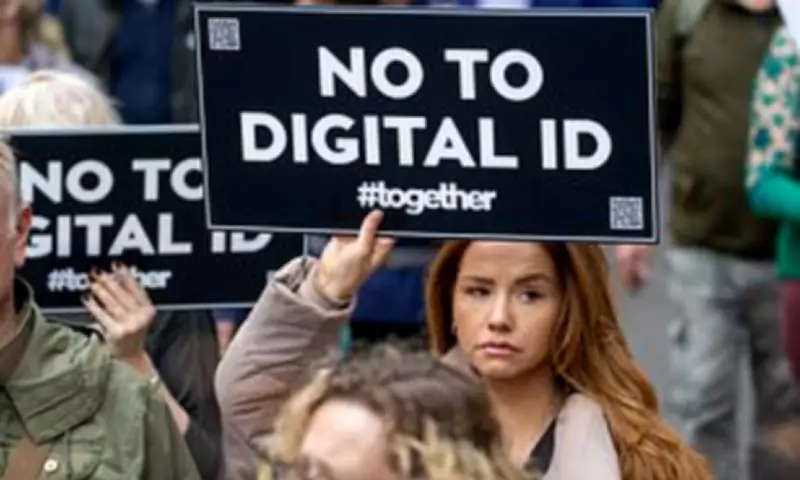
Labour's Digital Identity Proposals Ignite Sovereignty Debate
Sir Keir Starmer is reportedly planning a fresh 'surrender' to Brussels over the implementation of digital identity documents, according to critics. A survey commissioned by Labour and quietly published last week has backed the 'cross-border use of digital identities and credentials', with industry leaders urging ministers to 'prioritise relationships with Europe'. This move has sparked significant concerns among Brexiteer MPs and campaigners.
Brexit Sovereignty Under Threat
Brexiteer MPs have warned that Eurocrats would demand full alignment with the European Union's rules as the price for closer ties, potentially undermining UK sovereignty. Campaigners have also raised privacy concerns, suggesting that such alignment could grant Brussels access to Britons' personal data. Sir Keir Starmer has already committed to following Brussels' rules on animal and plant health, electricity, and carbon pricing as part of his post-Brexit 'reset' in relations with the bloc.
While the Prime Minister has reversed plans for mandatory ID cards proving the right to work in the UK, the survey proposed creating 'identity wallets' which Britons can use abroad. Ministers have vowed to take these proposals forward, despite the controversy.

EU Digital Wallet and Privacy Fears
The European Union launched its own 'digital wallet' earlier this year, which can store driving licences and other documents on phones and devices. Critics have expressed concerns that this could create a centralised 'honeypot' for hackers and that Eurocrats might use it to spy on citizens. There are fears that Labour will offer to sign up to Brussels rules to participate in this or similar schemes as part of Sir Keir's ongoing 'reset'.
Tory MP Mark Francois commented on the situation, stating, 'This is yet another example of Labour looking at how it can salami slice our sovereignty and then hand it back to Brussels, piece by piece - all clearly against the spirit of the EU Referendum, when we voted to Leave.' He added, 'If Labour thinks that surrendering our freedoms back to the EU will somehow save them from a drubbing in the May elections they are delusional.'
Industry Consultation and Regulatory Alignment
The survey, conducted by the Office for Digital Identities (OfDIA) - part of the science and technology department - was described as the 'next step in an open conversation' about 'how the government could enable the cross-border use of digital identities and credentials'. It consulted 39 firms providing e-services, such as digital identity wallets, right to work checks, and background screening.
Most respondents indicated that 'regulatory diversity between countries' was a major barrier to using digital IDs abroad and that there needed to be 'alignment of legal and regulatory frameworks' with other nations. This raises the prospect of the UK signing up to Brussels rules to facilitate interoperability.
Critics Voice Strong Opposition
Reform UK MP Andrew Rosindell added, 'Labour's "reset" with Brussels looks more like a quiet surrender. The British people voted to take back control - certainly not to be dragged into EU digital ID schemes by the back door.' He emphasised, 'Aligning with Brussels on digital identity wallets raises serious concerns about privacy, security and also our sovereignty. Our data laws must be made in Westminster, accountable to the British people - not dictated by Eurocrats.'
Josie Appleton, director of the Campaign for Freedom in Everyday Life, warned, 'This consultation appears to be a thinly disguised justification for aligning the UK digital ID with the EU Digital Identity Wallet. The language in the consultation document - about 'harmonising' and 'aligning' standards - especially the EU, is identical to EU reports on the subject.' She highlighted potential risks, noting, 'It's telling that the inspiration for the EU Digital Identity Wallet came from [Covid-19] vaccine passports, which were used to block unvaccinated people from travelling or going to cafes across Europe, and even barred them from many jobs.'

Government Response and Future Plans
Last month, Sir Keir dropped plans to make digital ID cards mandatory. Instead, a consultation on a voluntary scheme will be launched this year. The government also intends to advance plans for Britons to use more forms of digital ID abroad. A Government spokesman clarified, 'This report is not about the UK's national digital ID scheme – it is about existing private sector digital verification schemes and whether there are benefits to them working abroad. This survey is about exploring what would be needed to make that happen with countries around the world.'
Frank Furedi, head of the think tank MCC Brussels, concluded, 'We in Brussels have seen this movie before: 'alignment' starts as technical convenience and ends as political submission. Britain did not leave the EU to become a passive rule-taker in digital identity. Interoperability is sensible; regulatory absorption is not.' The debate continues as Labour's proposals face mounting scrutiny from opponents concerned about sovereignty and privacy in the digital age.





