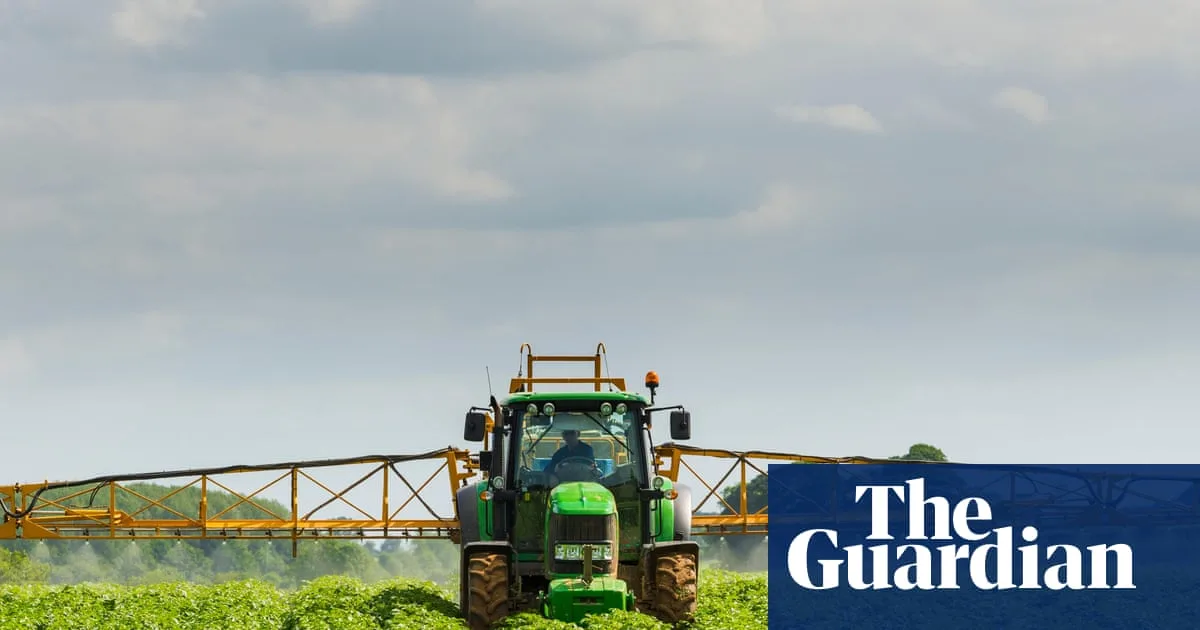
Food Industry Urges Transition Period for Post-Brexit Rules Reset
British food sector representatives have issued a stark warning to the government, calling for the implementation of a substantial transition period should the UK agree to realign post-Brexit agriculture regulations with the European Union. Industry groups caution that aligning standards overnight would create a damaging "cliff edge" scenario, potentially costing UK businesses between £500 million and £810 million annually.
Divergence Creates Costly Complications
The significant divergence in approvals for pesticides and herbicides between the UK and EU since Brexit has complicated any potential rapid realignment of agricultural rules. This regulatory split means that British farmers have been operating under different standards for several years, making immediate harmonisation both complex and expensive.
David Bench, chief executive of Croplife, the trade organisation representing the agrichemical sector, emphasised the potential consequences, stating: "If we do not have a transition period, it would have very damaging consequences for British agriculture and the wider food supply chain."
Specific Threats to British Produce
The National Farmers' Union (NFU) has highlighted specific concerns, noting that British oats used in numerous products including cereals, snack bars, and meat alternatives could become unsellable in EU markets. This stems from British farmers having used certain fungicides over the past five years that remain unapproved by European regulators.
This situation illustrates the practical challenges of regulatory divergence. For instance, if a new sanitary and phytosanitary (SPS) agreement were to take effect on 1 January 2027, crops grown in 2026 under British rules but still stored in grain facilities in 2027 would immediately become ineligible for EU markets.
The Economic Impact of Brexit Paperwork
The parliamentary trade select committee has quantified the broader economic impact of post-Brexit trade barriers, estimating that additional red tape has cost the UK economy an extra £8.4 billion. Goods trade has declined by 18% compared to five years ago, with food and drink exports suffering a particularly sharp 24% decrease.
Transport industry representatives have described the Brexit paperwork requirements as "pure hell," with one notable case involving a truck being held for 27 days at Calais due to incorrect certification for a frozen beef shipment.
Technical Talks and Industry Concerns
Concerns are mounting as the EU and UK commence technical discussions on a new SPS agreement, one of the key objectives established during the reset summit between Prime Minister Keir Starmer and European Commission President Ursula von der Leyen last May.
Industry representatives have expressed frustration about what they perceive as insufficient government engagement on these critical issues. There are growing fears within the farming community that the government has prioritised confidentiality over meaningful consultation with sector leaders.
Calls for Phased Implementation
Croplife and the NFU have jointly advocated for any regulatory realignment to be implemented gradually over at least one year, mirroring the approach taken during the initial Brexit transition, though ideally over an even longer timeframe.
Bench elaborated on the potential consequences, warning: "The impact of a 'cliff-edge scenario' on British growers could be devastating. At a time of increasing pressure on farm profitability, this could prove a tipping point for many farmers and growers across the country."
Scientific and Regulatory Context
According to analysis by The Andersons Centre, commissioned by Croplife to assess the costs of realignment, the UK has largely maintained equivalent legal, scientific, and technical standards to the EU, having adopted EU legislation wholesale following departure.
However, decisions regarding plant protection products have notably diverged. Britain has approved four new pesticides and herbicides for agricultural use that remain in the approval process within the European Union, creating significant regulatory misalignment that would require careful management during any harmonisation process.




