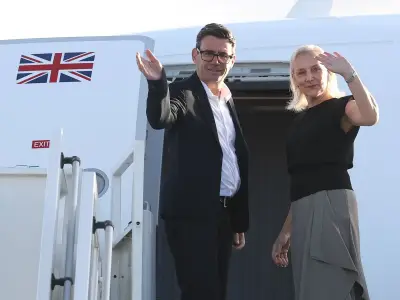
Andy Burnham is unknown in Brussels, but that will soon change. In his schedule for the autumn is an EU-UK summit that may underscore the same dilemmas that have confronted previous British prime ministers in the relationship with Europe.
EU Leaders Extend Congratulations
EU leaders were quick to offer congratulations to Britain's prime minister, the seventh since the 2016 Brexit referendum. The European Commission president, Ursula von der Leyen, said she looked forward to strengthening the EU-UK partnership “for the security of our shared continent” and “the prosperity of people on both sides of the Channel”. The German chancellor, Friedrich Merz, invited Burnham to visit Berlin “very soon”, noting that the UK and Germany's “deep connection is particularly evident in these times”.
Georg Riekeles, a former adviser on the commission's Brexit taskforce, told the Guardian: “People don't know what to expect. But he also starts with a blank sheet of paper … and that can be an advantage.” The main concern, said Riekeles, who is now an associate director at the European Policy Centre, was whether Burnham would be “on the same trajectory” in terms of defence and security cooperation, energy and the “very positive agenda” on economic issues.
Burnham's Stance on Brexit
One EU diplomat observed: “For a British prime minister it is not necessarily a bad thing to be little known. If you are well known it is probably because you were prominent on one side or the other of the Brexit debate.” Burnham's most notable statement on the EU was his wish to see Britain rejoin in his lifetime, while speaking to the Guardian at the Labour party conference in September 2025. But during campaigning in the leave-voting constituency of Makerfield, he made it clear reversing Brexit was not a priority, because “Britain would be stuck in a permanent rut if we are just constantly arguing”.
Michael Jacobs, who advised the former prime minister Gordon Brown, said Burnham's statement on rejoining “felt like it was from the heart” but was also politically astute. “It tells pro-Europeans that he is one of them. But it tells leave voters that it's not his political priority for now, and he is not going to relitigate the Brexit arguments.”
Key Appointments and Inherited Agenda
Among the first calls Burnham had after entering No 10 were with von der Leyen, Merz and the French leader, Emmanuel Macron. He has appointed Hamish Falconer as the Europe minister, replacing Nick Thomas-Symonds. The latter's departure is a blow to the UK-EU reset talks started by Starmer, but some claimed they had lost momentum and Falconer would bring fresh energy. Elected as an MP in 2024, Falconer brings a wealth of international experience, with a decade spent in the Foreign and Commonwealth Office, a stint in the National Crime Agency, and a career dealing with international terrorism, hostage recovery and countering human trafficking. He served as Middle East minister under Starmer.
The return of Johnny Reynolds, as business secretary, will help in talks aimed at protecting European trade from China, and tricky negotiations to scrap an upcoming 10% tariff on exports of British cars to the EU and vice versa.
Summit Agreements and Youth Mobility Deadlock
Under Starmer, the UK and EU signed a security and defence pact and cooperated closely on Ukraine. Despite failing to agree British participation in a €150bn EU defence loans scheme, the two sides moved on. In Starmer's final week in office the UK signed an agreement to participate in the EU's €90bn (£77bn) loan for Ukraine, meaning British companies can provide more weapons funded through the scheme. Now Burnham inherits the reset agenda launched by Starmer. The two sides are due to sign a trio of agreements at the summit: a deal to reduce paperwork and certification for fresh food in an effort to ease trade barriers for British exporters; linking emissions trading systems; and a youth exchange scheme enabling 18- to 30-year-olds to work, study, travel and volunteer in the EU and UK.
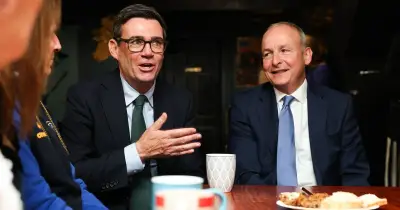
Ireland's Europe minister, Thomas Byrne, told reporters this month that he expected “positive continuity, at the very least”. Ireland, which holds the EU Council's rotating presidency until the end of the year, will be involved in the diplomatic preparations for the summit, the date of which is yet to be decided. “There are tricky issues there, and I think we can get them over the line,” Byrne said. Talks have been deadlocked over the youth mobility agreement. EU member states think the UK's proposed cap of 50,000 youth visas is too low and they oppose their nationals paying the NHS surcharge and higher rate of tuition fees for foreign students. But some diplomats see a middle ground whereby EU students get a discount on foreign fees but pay above the domestic rate.
Constraints on Economic Relationship
Jacobs suggested Burnham may raise the cap on numbers. “The idea that leave voters regard such a scheme as a form of immigration was always slightly absurd, and I think Burnham will see that as a relatively easy win to offer pro-Europeans.” But when it comes to the UK-EU economic relationship, Burnham will face the same constraints as Starmer. Earlier this year the EU rejected an attempt by Starmer to negotiate a single market for goods, minus the free movement of people. EU member states suggested the UK could join the European Economic Area, but that would require accepting the free movement of people and making payments to the EU budget with no voting rights in shaping new EU rules.
Jacobs said: “Given Burnham's sensitivity to the immigration concerns of his own Makerfield voters, and of many others, the idea that he would seek to re-enter the single market by allowing free movement and making a massive financial payment to the EU budget (which is what the EU would demand) seems implausible. On the substantive issues, I think he will do pretty much what Starmer has been trying to do with the so-called ‘reset’, and he will come up against the same barriers in Brussels.”