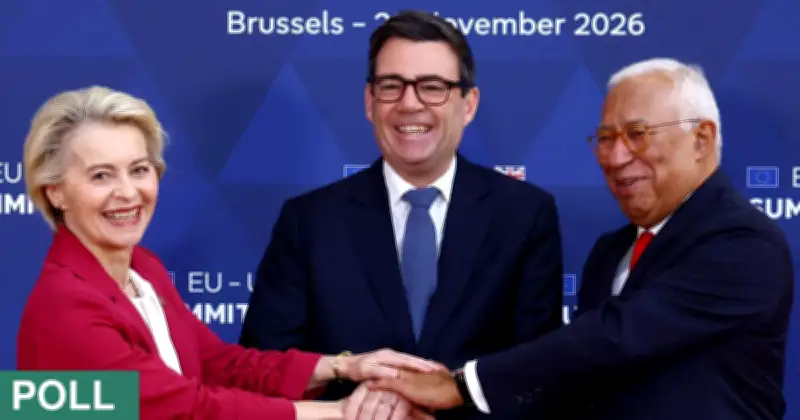
Prime Minister Andy Burnham's Brexit deal could be derailed by a dispute with the EU over university tuition fees, after the bloc demanded that students from member states studying at British universities pay the same fees as their UK counterparts.
At a joint summit in Brussels, Burnham struck agreements with the EU on food, emissions trading, and youth mobility. However, the EU's insistence on slashing tuition fees for EU students could block the deal from coming into effect.
Fee reduction demands
The proposed change would cut fees from up to £38,000 a year to £9,970, a reduction Britain has resisted due to the financial impact it would have on universities. A six-month deadline has been set for talks to reach a deal on fees, with the possibility that other parts of the agreement might not be implemented until a solution is found.
An EU official said the agreements would have to “come into force in a balanced way.” The source added: “I think this is an important element, so let’s hope that everything can go ahead.”
Political reaction
Reform UK leader Nigel Farage criticised the summit, saying the EU had used it to "strong-arm" the PM. He said: "Naive Andy Burnham has gone to Brussels and been hit by the stark reality I’ve warned about for decades. Flexibility is a fantasy."
Farage added: "They’ve used this moment to strong-arm the British prime minister over tuition fee cuts for hundreds of thousands of EU students, and have absolutely no concern for the impact it will have on Britain. It’s the same old game, and he’s fallen for it out of sheer inexperience."
A Government spokesman said: “The deal is done – negotiations have concluded. Now, both sides will work towards implementation of the youth mobility scheme, the SPS (sanitary and phytosanitary) deal and the emissions trading scheme. Both sides have agreed when these will come into force. Those dates are set out in the joint statement, which will be published in due course. As with all international agreements, there is a legal process in each respective country which will now take place. Talks will continue on some areas – these will be set out in the joint statement later.”