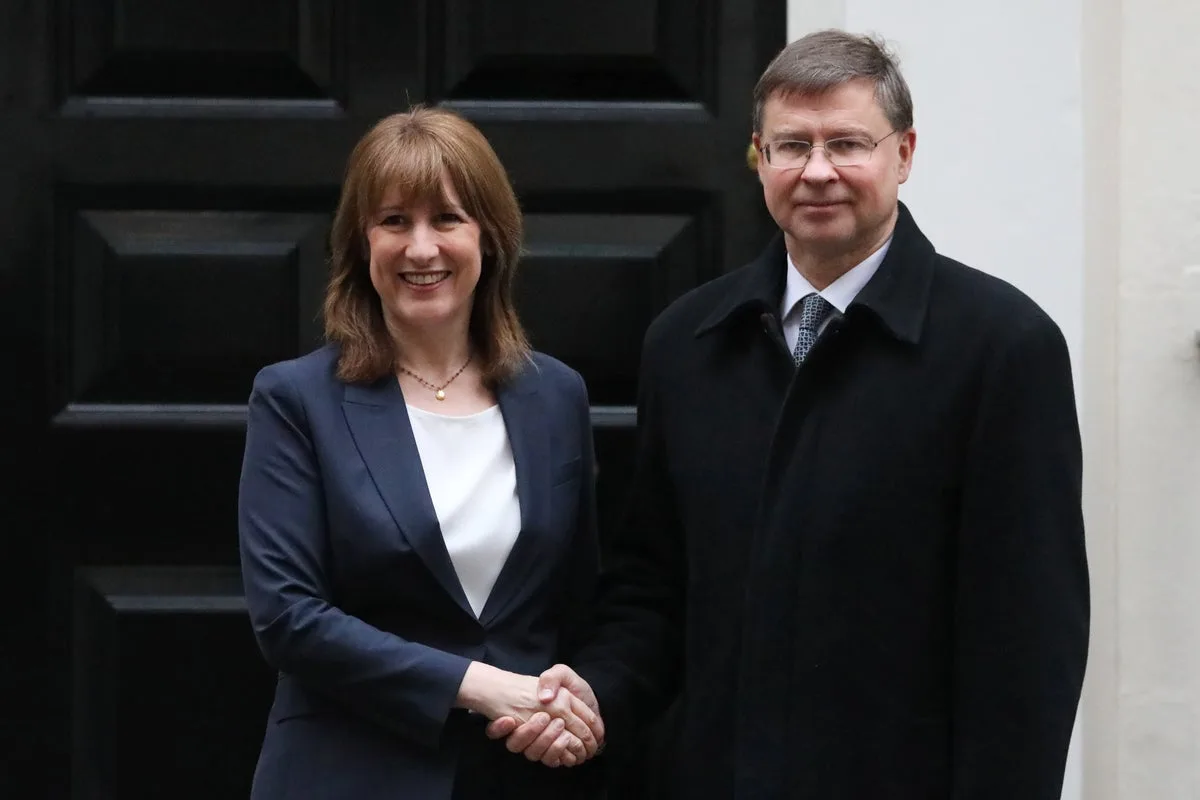
EU Finance Chief Signals Openness to UK Customs Union Return
EU Open to UK Customs Union Return, Finance Chief Says

The European Union's finance commissioner, Valdis Dombrovskis, has delivered a significant statement, suggesting the bloc is prepared to engage in talks should the United Kingdom express interest in rejoining the customs union. This development marks a notable shift in the post-Brexit dialogue, highlighting a potential divergence in policy stances between the EU and the current UK government.

Contrasting Positions on Customs Union Membership

Commissioner Dombrovskis emphasised that the EU remains "open-minded" and "ready to engage" if the UK wishes to explore the possibility of customs union membership. This stance directly contrasts with the repeated assertions from the UK government, which has consistently rejected the idea, labelling it a firm "red line" in post-Brexit arrangements.

Meanwhile, Sir Keir Starmer, the Leader of the Opposition, has advocated for closer ties and further agreements with the European Union, indicating a potential policy shift should there be a change in government. This creates a complex political landscape where future UK-EU relations could hinge significantly on domestic electoral outcomes.

Potential Benefits and Collaborative Schemes

Beyond the customs union, Dombrovskis outlined several areas for potential enhanced cooperation. He suggested that the UK and EU could work towards removing the majority of food checks, which would streamline trade and reduce bureaucratic hurdles for businesses on both sides.

Furthermore, he indicated that Britain could potentially join the EU's substantial €150 billion defence loans scheme. This move would represent a deepening of security and defence collaboration, aligning with broader geopolitical concerns.

Global Instability and the Push for Stronger Ties

Chancellor Rachel Reeves has underscored the growing importance of forging stronger ties with the European Union, particularly in light of global instability. She referenced specific threats from former US President Donald Trump regarding potential tariffs, highlighting how external pressures are making closer economic and political alignment with the EU a more pressing priority for the UK.

Ongoing Negotiations on Youth Mobility

Discussions are also actively underway regarding a proposed youth mobility scheme. Reports indicate that the European Union is pushing for an arrangement with no cap on participant numbers, aiming for maximum flexibility and exchange.

In contrast, Sir Keir Starmer has insisted on the implementation of a cap and a fixed duration for any such scheme, reflecting concerns over immigration levels and programme management. This point of negotiation illustrates the detailed and often contentious nature of ongoing UK-EU dialogue.

The remarks from Commissioner Dombrovskis open a new chapter in the post-Brexit relationship, suggesting that while the UK government currently maintains its red lines, the door for closer economic integration remains ajar, contingent on future political will and negotiation.




