
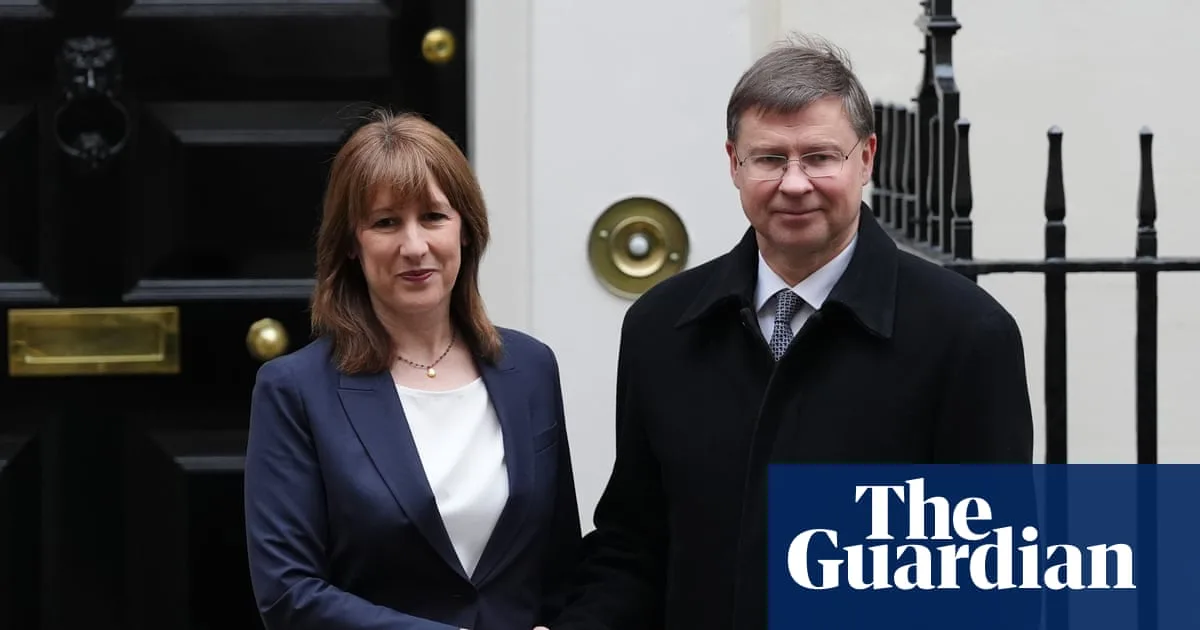
The European Commission is willing to discuss closer trade ties with the UK, including a customs union, according to EU economy commissioner Valdis Dombrovskis. In an interview with the BBC, Dombrovskis said the bloc is 'ready to engage with an open mind' on the matter, as UK ministers including Rachel Reeves held talks in London.
The comments come amid growing pressure within the Labour Party to pursue a customs union with the EU, despite Prime Minister Keir Starmer stating that such an arrangement 'doesn't now serve our purpose very well'. Starmer has instead indicated interest in deeper links with the single market, though Dombrovskis implied the UK cannot selectively align, as single market membership requires accepting the 'four freedoms', including freedom of movement.
European Parliament president Roberta Metsola echoed the warmer tone, stating on Tuesday that Europe and the UK 'need a new way of working together' on trade, customs, research, mobility, security, and defence. She called for resetting the partnership and exorcising 'the ghosts of the past'. EU chief spokesperson Paula Pinho described the single market as a 'jewel of the crown', adding that an EU-UK summit would be the occasion to discuss UK proposals.
Current talks between the EU and UK cover a veterinary agreement, a youth exchange programme, joining the EU's electricity market, and linking emissions trading systems. Cabinet Office minister Nick Thomas-Symonds wrote in the Financial Times that a 'ruthlessly pragmatic approach' is needed, noting that deals under discussion could be worth £9bn annually to the UK economy by 2040, while reiterating Labour's manifesto pledge not to rejoin the single market, customs union, or reintroduce freedom of movement.
The discussions coincide with EU efforts to revitalise the single market, following a 2024 report by former Italian PM Mario Draghi warning of Europe's slowing economic growth. EU leaders are set to meet next week for a special summit on strengthening the single market, which European Council president António Costa called a 'strategic imperative'.




