
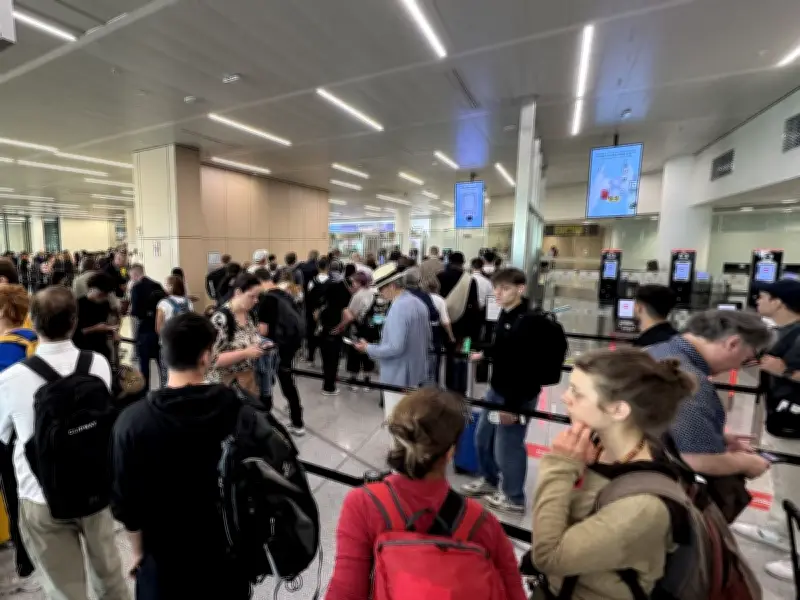
Aviation industry leaders have called for the suspension of new EU border checks that are causing delays of up to five hours at airports, just as the summer holiday season begins. The Entry Exit System (EES), fully rolled out in April, requires travellers from non-EU countries such as the UK to provide fingerprints and a photograph when entering the Schengen Area, which comprises 29 European countries.
Industry leaders warn of severe operational consequences
Senior figures from three major aviation bodies—Airlines for Europe, Airports Council International Europe, and the International Air Transport Association—sent a joint letter to European Commission President Ursula von der Leyen. They warned that EES implementation is creating “severe operational consequences disrupting passengers and putting border authorities, airports and airlines under unsustainable pressure”. The letter noted that waiting times have “increased significantly, now reaching up to five hours”, impacting millions of passengers.
Temporary flexibility insufficient
The letter stated that EU member states are making “extensive use” of a temporary flexibility allowing them to suspend biometric data collection during busy periods until September, but this has “not prevented excessive queues”. They called for countries to be allowed to “completely suspend EES preventively” when passenger numbers exceed border control capacity until the end of August, and sought a “permanent operational flexibility mechanism” for suspension under “clearly defined exceptional circumstances”.
“We are now entering the busiest period of the year,” the letter said. “During July and August alone, European airports are expected to handle approximately 40 million more passengers than during the previous two months. The commission and member states must take stock of the reality of the current situation and of what our air transport system will face over the coming weeks. Without additional flexibility, existing challenges will inevitably intensify.”
Worst-affected airports and incidents
Airports in Spain, Portugal, France, and Italy are among the worst affected by EES queues. In April, more than 100 easyJet passengers missed a flight from Milan Linate to Manchester due to delays at passport desks caused by the ramping up of EES. Luke Petherbridge, director of public affairs for travel trade organisation Abta, called on the European Commission to “act now”. He said five-hour delays are “the exception not the rule” but queues at some airports are “completely unacceptable”. He added: “Whilst the industry remains supportive of the longer-term objectives of EES, it is clear the system can no longer be delivered on the existing timeline.”
Public response and future outlook
A YouGov survey of 437 British adults planning to travel to Europe in the next 12 months found that 41% will allow more time for their journey because of EES. The poll was conducted on June 27. Approximately 1,700 border crossing points require use of EES, which was introduced to boost security and speed up checks by reducing passport stamping. Addressing an Abta summit in Westminster last month, Uku Sarekanno, deputy executive director of EU border agency Frontex, said it may take two years for EES to “stabilise”.




