

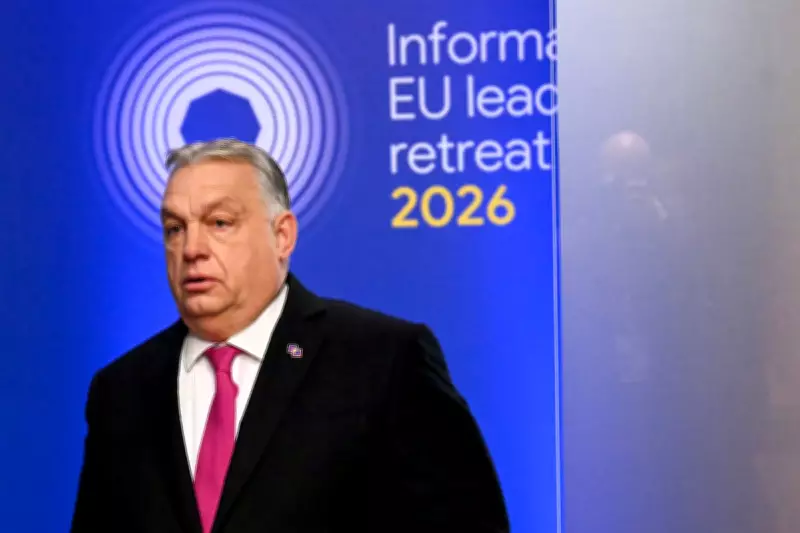
An advocate general for the European Union's highest court has urged the court to annul a 2023 decision by the European Commission to release billions of euros in funding to Hungary. The funds had been suspended over significant rule-of-law and corruption concerns.
Background of the Funding Suspension
The European Commission initially suspended the money to Budapest in 2022. This action was taken due to what the Commission described as democratic backsliding by Hungary's right-wing populist government. Specific issues included failures to tackle corruption effectively and ensure judicial independence.
Advocate General's Non-Binding Opinion
In a detailed opinion issued on Thursday, Advocate General Tamara Ćapeta stated that the Commission had incorrectly applied the requirements imposed on Hungary. She argued that the disbursement of approximately 10.2 billion euros, equivalent to $12.1 billion, was permitted without proper explanation. Crucially, this occurred before the necessary legislative reforms had entered into force or were being applied.

While such opinions are not legally binding, they are frequently followed by the European Court of Justice. The case was brought forward in 2024 by the European Parliament, which contended that the Commission committed errors in determining Hungary's eligibility for the funding.
Persistent Criticisms of Hungary
Hungary, a major net recipient of EU funds, has faced increasing criticism for veering away from democratic norms. For over a decade, the Commission has accused Hungarian Prime Minister Viktor Orbán of dismantling democratic institutions, taking control of the media, and infringing on minority rights. Orbán, who has been in office since 2010, consistently rejects these accusations, denouncing them as interference in Hungary's sovereignty.
Concerns Over Public Procurement
When suspending funds, the Commission expressed worries about public procurement processes. These involve purchases by the state of goods and services or projects using EU money. The bloc has feared that such contracts might allow Orbán's government to channel EU funding into businesses of politically connected insiders, exacerbating corruption concerns.
Economic and Political Implications
Billions in additional EU funding remain frozen to Hungary, contributing to years of economic stagnation due to budget shortfalls. Orbán, an advocate for greater authority for national governments within the EU's 27 member states, has accused the bloc of using fund distribution as a means of coercion and interfering in internal affairs.
Upcoming Electoral Challenge
The autocratic leader faces what is likely the biggest challenge of his 16 years in power during elections in April. A center-right challenger, Péter Magyar and his Tisza party, hold a substantial lead in most polls. Magyar has promised to restore Hungary's democratic institutions, pursue a more constructive relationship with the EU, and quickly bring home the frozen funds, highlighting the high stakes of this political and financial dispute.






