Julian Jessop, an economist and fellow of the Britain Unbound think tank, has challenged the economic case for the EU youth mobility agreement, questioning how allowing 100,000 Europeans into Britain annually would boost GDP.
Mr Jessop, who has four decades of experience in the public sector, financial sector and consultancy, raised concerns over whether the scheme would genuinely benefit Britain, particularly if more young Europeans travel here than Britons go in the opposite direction.
Compromise questioned
The deal would allow around 100,000 young Europeans to come to Britain temporarily for work, with the Government making concessions after initially pushing for a lower annual limit. Writing on X, Mr Jessop said the figure appeared to represent a compromise between competing demands, but questioned why Brussels had originally sought a much larger scheme.
Mr Jessop said: "Plausible - the EU originally wanted an uncapped 'youth experience scheme', then said 150k, the UK proposed 50k, so why not meet in the middle?"
However, he warned that the agreement raised "lots of other questions", particularly over whether the arrangement would genuinely be reciprocal. Mr Jessop said: "If this is a truly reciprocal scheme (where the number of EU citizens coming here is balanced by young Britons going there), why did the EU want it to be such much bigger, and how is it supposed to boost UK GDP?"
Reciprocity concerns
He also questioned whether the arrangement could result in a disproportionate number of young Europeans moving to Britain. Mr Jessop added: "Isn't the obvious answer that more young people are likely to come here than head in the other direction - as was the case before Brexit?"
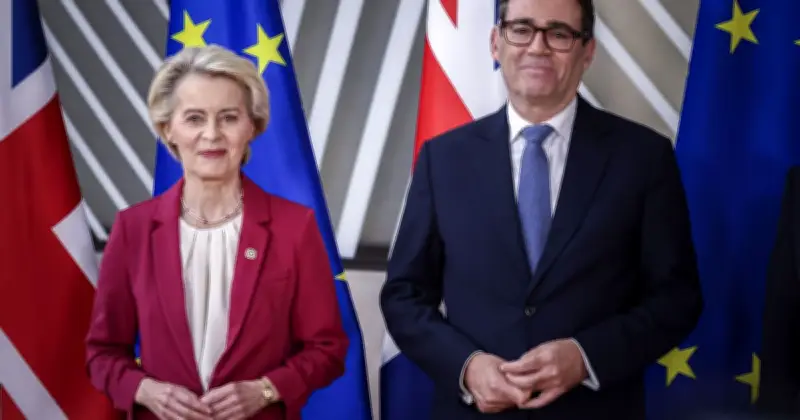
The intervention comes as Prime Minister Andy Burnham has travelled to Brussels to finalise agreements covering food and agriculture, emissions trading and youth mobility. Mr Burnham has defended the package as a way of improving living standards, cutting costs and creating opportunities for young people.
Speaking to business leaders in Brussels, Mr Burnham claimed Treasury analysis suggested the agreements could add 0.5% to gross domestic product (GDP). The Prime Minister said: "Treasury analysis out today is saying that now it's clear up to 0.5% on GDP as a result of the deal."
Contentious negotiations
He described it as the "single biggest growth intervention in this Parliament".
The youth mobility agreement has been among the most contentious elements of the negotiations, with the Government reportedly agreeing to the EU's demand for 100,000 work visas annually and raising the age limit to 31. The European Commission had initially sought an uncapped scheme before proposing a limit of 150,000, while British negotiators had pushed for a ceiling of 50,000.
Reform UK leader Nigel Farage has condemned the wider agreement as a "betrayal", arguing that Britain will increasingly be forced to follow European rules without having a say in how they are made. Mr Farage told BBC Radio 4's Today programme: "The Labour Party was elected, saying they would not rejoin the single market. Well, today we're rejoining a chunk of it."
The wider package also includes an agreement on food and agricultural standards, intended to reduce post-Brexit checks on British exports to the EU from March 2028. However, questions remain over how much influence Britain will have over future European regulations.
The Government is also facing pressure over a separate EU demand for lower university tuition fees for European students studying in Britain, with negotiations expected to continue over the coming six months. Mr Burnham is expected to open a wider discussion about Britain's future relationship with the bloc later this year, although he has ruled out returning to the customs union, single market or freedom of movement under Labour's 2024 manifesto commitments.