
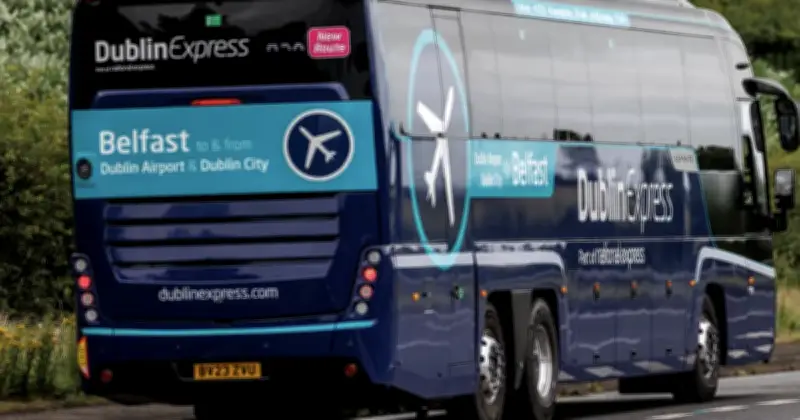
The bus route connecting Dublin and Belfast has become a focal point in discussions about UK border security after it emerged that a Sudanese national charged with attempted murder used it to enter Northern Ireland. The journey, which takes approximately two and a half hours, costs as little as €20 and sees over 50 services daily. Coaches travel 100 miles along the M1 motorway before crossing into the UK without routine passport or immigration checks, as passengers remain on board.
Renewed scrutiny after knife attack
The route has come under renewed scrutiny following the arrest of Hadi Alodid, a Sudanese national charged with attempted murder after an alleged knife attack in Belfast on Monday night. Alodid is believed to have entered Northern Ireland by bus after arriving in Dublin. He reportedly travelled from Sudan to France, then to Ireland, before crossing into the UK and claiming asylum. He was granted leave to remain by the Home Office in September 2023.
Common Travel Area and border concerns
The Common Travel Area allows British and Irish citizens to move freely between the UK and Ireland. Critics argue that the lack of a physical border has made it easier for migrants to enter Northern Ireland without routine immigration checks. The route gained importance after the collapse of the previous Conservative government's Rwanda deportation scheme, with Irish ministers noting that many asylum seekers crossed from Northern Ireland into the Republic to avoid removal from Britain. After Labour scrapped the policy last summer, some migrants reversed that journey, travelling back into the UK through Ireland's open land border.
Driver accounts and police checks
Drivers on the Dublin-to-Belfast route have reported seeing groups of migrants boarding coaches after being handed cash to buy tickets. Police immigration checks are extremely rare, with some buses reportedly travelling for months without being stopped. The service remains one of the cheapest and easiest ways to travel between the Republic and Northern Ireland. Campaigners say this reflects decades of cooperation under the Common Travel Area, but some maintain it has created what they describe as an 'invisible border' into the UK.




