
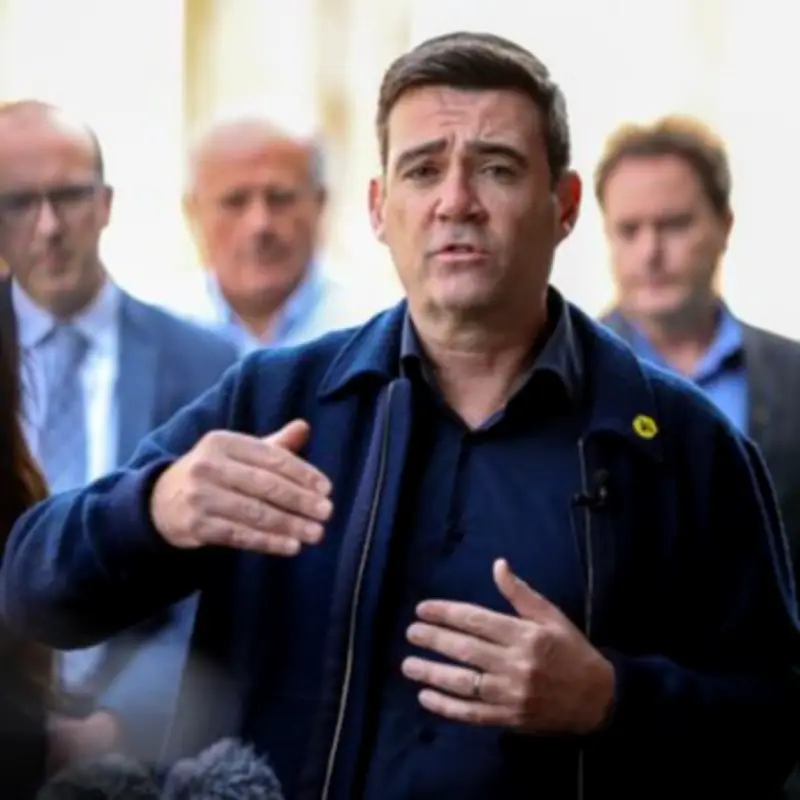
Andy Burnham has declared that he would revive the HS2 high-speed rail project if he became Prime Minister, using a funding model similar to London's Crossrail. The Greater Manchester Mayor and Labour candidate for the Makerfield by-election stated he would resurrect the northern leg between Birmingham and Manchester, asserting that inadequate rail infrastructure in the north hampers its economic potential.
Funding Strategy
Speaking to the i Paper, Burnham emphasized the transformative impact of infrastructure investment. "I am absolutely clear, I’ve seen it myself in terms of expansion of our travel system. If you put that infrastructure in, it lays the foundations for higher growth… The lack of high-quality rail infrastructure in the north of England holds back its growth potential," he said.
To fund the Manchester leg—originally estimated at £36bn before cancellation—Burnham proposed a 'Crossrail style' approach. He explained, "There’s a cleverer way of funding this. If you go back, I put the funding package together for Crossrail and it was actually a package that did have contributions from business and residents." He added that capturing increased land values from infrastructure projects could repay costs.
Devolved Governance
Burnham advocated for a more devolved model of government, stating, "You cannot get growth in a top-down, silo-driven model of government." His comments come amid reports that he plans to bring energy and water utilities under public control if he becomes PM. Sources close to him told The Guardian he is "serious" about taking over "essentials of life" in a decade-long project to reduce bills and improve performance.
Cost-of-Living Challenges
At a Manchester Evening News by-election hustings, Burnham addressed cost-of-living issues, calling for a "real rethink." He criticized the privatization of utilities in the 1980s, saying, "The economy basically doesn't work for the average person, it works for other people who are shareholders but it doesn't work for those who are paying those fares and paying those bills."
He cited his success in bringing buses under public control and lowering fares as a model for water, energy, and housing. "Water bills went up 23 per cent here last year and the profits of United Utilities doubled. You want the same principle there, the same with energy, the same with housing. Give people the ability to afford life in the way that they can't anymore," he added.




