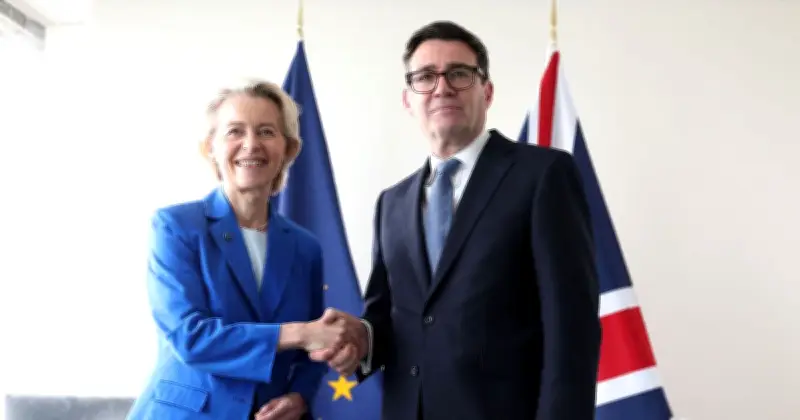
Andy Burnham's plan for an "EU reset" is a slow-motion surrender dressed up as diplomatic negotiation, according to an analysis in the Daily Express. The Labour leader is heading to Brussels next week to strike a new deal, but the piece argues the move is a step-by-step unraveling of Brexit.
Under the guise of easing cost-of-living pressures and cutting border red tape on food, agricultural products, and trade, the plan would sell out Britain's independence. What is pitched as practical deal-making ahead of upcoming summits is in reality a betrayal of the country's historic democratic vote.
Warnings from Brexiteers
Brexiteers including Nigel Farage and former cabinet ministers have sounded the alarm. Refusing to rule out taking Britain back into the bloc or binding the UK back to European regulations represents a direct betrayal of the democratic vote.
As Sir John Redwood recently warned, dragging Britain back into the orbit of the Brussels rulebook will bring higher taxes, slower economic growth, and an avalanche of unwanted foreign regulations that British voters explicitly rejected.
The cost of alignment
The analysis states that Brussels never hands out favours for free. EU negotiators, including former chief negotiator Michel Barnier, have repeatedly reminded everyone that there is no "cherry-picking" when it comes to European rules and single market access.
The four freedoms are indivisible. If Burnham agrees to dynamic alignment on food, farming, emissions trading, and youth mobility schemes, the UK will find itself under European legal oversight without any say over the laws being created. The piece calls this "dynamic submission" rather than negotiation.
Sovereignty at stake
To claim that accepting EU standards on food, agriculture, and mobility is simply about lower supermarket prices is an insult to the public's intelligence, the analysis argues. True national sovereignty means taking full control of laws, borders, and trade policy.
Surrendering regulatory autonomy back to unelected bureaucrats in Brussels under the guise of an "EU reset" forfeits the freedoms that Brexit secured. The piece concludes that Britain must stand firm, defend its sovereign rights, and reject this capitulation.