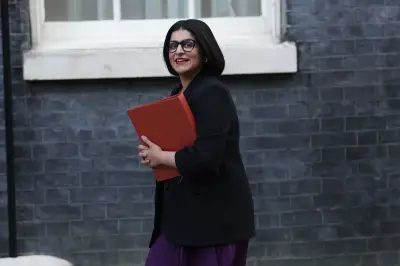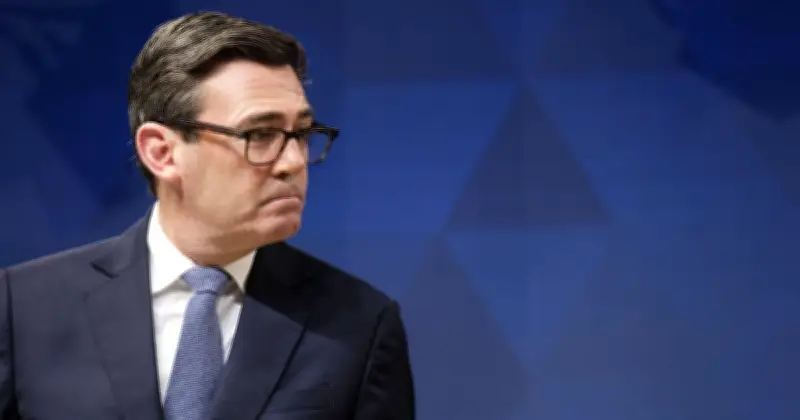
Prime Minister Andy Burnham has been denounced for "betrayal" after admitting that talks with the EU about reversing Brexit could begin in less than a year. The admission came as he attended a Brussels summit to sign a new trade deal, which he claimed would boost the UK's economy by £17 billion.
Reform UK leader Nigel Farage, who also travelled to Brussels, immediately condemned the announcement and vowed to defend Brexit. Farage said: "I'm afraid that the great Brexit debate has just started again."
Farage attacks Burnham over EU plans
Farage criticised the Prime Minister's approach, saying: "We don't need to be in political union of any kind at all to do business and have good relations with our neighbours. That's the betrayal that Burnham is committing today."
Burnham used the summit to outline plans for a national conversation about "options" for the future long-term relationship between the EU and the UK. While details will not be confirmed until a consultation is launched next month, options are expected to include joining the Single Market or reversing the 2016 referendum result and rejoining the EU entirely.
The Prime Minister said he would begin informal talks with the EU within months, telling a Brussels press conference: "What we will seek to do over the next year, before the next UK-EU summit perhaps, around this time next year, we will seek to conduct an informal brainstorming process with our colleagues here, to look at what those options are."
EU Commission welcomes new trade deal
EU Commission President Ursula von der Leyen, standing alongside Burnham, welcomed the announcement. Referring to the Prime Minister as "dear Andy", she said: "I very much welcome your willingness to have a broader debate about the future relationship. I can only say we are open for brainstorming and we welcome this brainstorming."
Burnham and EU officials agreed a new deal designed to remove red tape on exports of food and drink to EU nations, known officially as the Sanitary and Phytosanitary agreement. The deal was welcomed by British manufacturers but will require EU laws to be enforced across the UK once again.
The Government will present legislation to Parliament next week bringing EU regulations governing food and drink back into force. Treasury analysis suggested the deal would add up to 0.5% to gross domestic product by 2040, cut costs for business and help with "the cost of the weekly shop".
Youth scheme and carbon trading agreed
Burnham also agreed that the UK and EU would join a joint scheme to trade carbon emissions, which could lead to lower fuel bills. A new Youth Experience Scheme will allow those aged 18 to 31 to live, work, study and travel in Europe for up to three years, open to 100,000 Britons and the same number of EU citizens each year.
The summit was undermined by a row over tuition fees, with Brussels demanding the UK agree to cut fees charged to EU students at British universities, a move that could cost the UK up to £450 million. EU officials said agreement on this was essential within six months or the entire deal could fall apart. The UK insisted the deal was finalised and that talk about tuition fees was entirely separate.
Conservative leader Kemi Badenoch insisted the deal was unfair on the UK, saying: "I don't think it's fair because it means that more young people are coming here to compete with our young people who are struggling to get jobs. Up to 300,000 young people from the EU – I don't think that's fair at all."
She added: "I don't think it's fair that our farmers will now have rules made for them by people that they haven't democratically-elected. The EU will make all of the rules that all of our farmers have to follow, even if they don't export to the EU." Slamming proposals to cut fees for EU students, she said: "I don't think it is fair for EU students to be subsidised to study in the UK."
Burnham claims Brexit weakened the West
The Prime Minister doubled down on his claim that Brexit "has done more harm than good" and suggested Britain's enemies may deliberately have encouraged the UK to leave the EU to weaken the West and pave the way for Russia's invasion of Ukraine. He said: "I take the view that we need to now be really clear about what we've lived through, not just in the last 10 years, but the last 15 years."
He added: "I think our enemies developed a vision which was based around their own invasion plans, but also breaking apart the cohesion of like-minded countries, and particularly the EU, and they drove that quite hard, interfering in many ways, disrupting. That was all designed to weaken our ability to stop them in terms of what they were seeking to do, particularly in Ukraine." He said the plan had failed because the EU and UK had remained united in support of Ukraine.
Further talks planned on migration and energy
Other issues yet to be resolved include the UK's potential inclusion in the EU's electricity market, which would make the UK liable to pay millions into Brussels' cohesion fund. Burnham also hoped the UK would be included in a Made in Europe programme designed to protect EU firms from unfair competition from China and other nations with low labour costs.
The Prime Minister confirmed he is "interested" in joining the EU's pilot scheme to send rejected asylum seekers to Rwanda, saying ministers want to "get closer" to discussions "happening in Europe around third country returns". He said: "We would be interested in finding out where Europe is up to on that." The British government will also hold further talks with Brussels about working together to stop cross-Channel migrants.