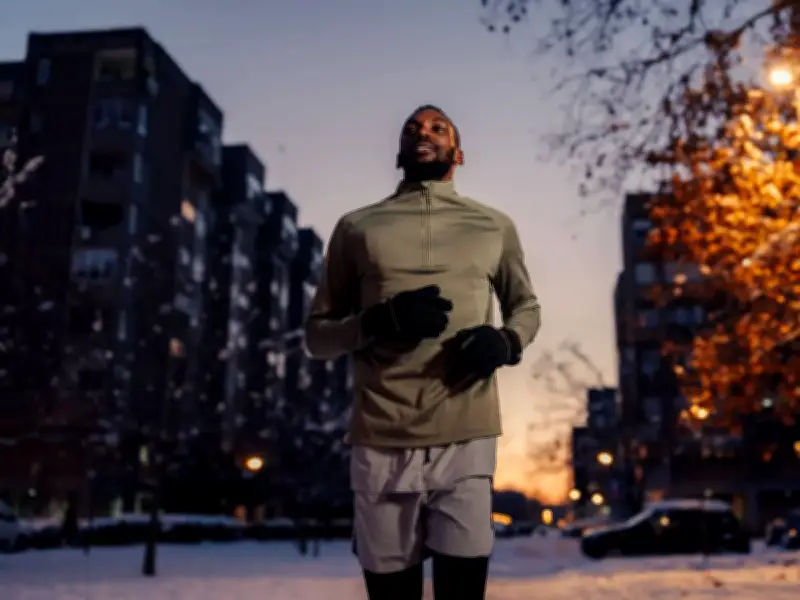
Two-thirds of runners admit to skipping reflective clothing when running in the dark, prioritising style over safety and making it harder for motorists to see them.
A survey of 1,000 regular runners found that 24% have left head torches at home to maintain a more stylish appearance, while one in six (17%) have ditched warm layers for the same reason.
Among those surveyed who drive, 25% have struggled to spot runners in the dark. Dark clothing (56%) and a lack of reflective gear (47%) were highlighted as the main reasons.
Style versus safety in running gear
The research was commissioned by Specsavers for Road Safety Week to help ensure runners remain visible when running in the dark. The optician has partnered with Anastasia Howard, founder of reflective accessories brand Staise, to create a limited-edition collection of high-vis accessories.
The range was revealed at a recent run club event in Manchester, backed by the opticians and Anastasia.
Anastasia Howard, owner of Staise, said: "The modern runner shouldn't have to pick between fashionable or functional sports gear. If we want to be safe, we are often left with the ugly choice, whether that's an ill-fitting hi-vis or leggings with the smallest reflective strip. Why can't we have both? I feel more confident when I'm wearing an outfit I love, and safety shouldn't come as an afterthought to that."
Running habits and visibility challenges
The survey found that runners generally manage three runs per week in the dark, with 38% taking on the challenge of cold and poor visibility during the autumn and winter period. Typically, morning runners begin their sessions at 6:30 am, while evening joggers usually start at 6:16 pm. Yet 23% pointed out that there are very few or no well-lit routes accessible in their neighbourhood.
A spokesperson for the high-street optician added: "Looking good and feeling confident when running shouldn't come at the expense of staying safe. Visibility plays an important role in helping runners stay safe during the darker months, when low-light conditions can make it harder for both runners and drivers to see clearly."
What's more, 33% of runners also admitted to turning their music up so loudly they can't hear what's happening around them, according to the survey carried out via OnePoll.com.
Winter obstacles and expert tips
Winter weather can also make running more challenging, with 38% of runners saying wet weather affects their vision, while 37% struggle with glare from headlights in low-light conditions. Others cited poorly lit streets (35%) and cold winds watering their eyes (32%) as significant winter obstacles.
The spokesperson from Specsavers continued: "It's also important to stay aware of what's happening around you. Whether that's wearing reflective accessories, keeping your music at a sensible volume, or choosing well-lit routes, small changes can make a big difference to your safety."
Nigel Best, an expert at Specsavers, shared his top five tips for running in the dark:
1. Always run facing oncoming traffic. Bright, low winter sun makes it difficult to see traffic and harder for drivers to see you whilst running at night. When visibility is reduced, spotting a runner can take longer than people realise.
2. Wear reflective gear to enhance visibility. Many runners avoid reflective gear because they feel it doesn't suit their personal style. But visibility isn't about standing out for the wrong reasons, it's about giving road users more time to see and react to you.
3. Consider contact lenses or prescription sports eyewear. If wearing glasses whilst running feels uncomfortable, consider trying contact lenses or prescription sports glasses as more secure and practical alternatives.
4. Keep headphones at a reasonable volume. While music enhances a workout, staying aware of surroundings is essential for safety. Lowering the volume allows you to hear approaching vehicles, cyclists, and environmental cues.
5. Use lubricating eye drops. Cold weather, wind and long runs can all contribute to dry eyes. To prevent discomfort, using lubricating eye drops before and after running can help soothe any irritation.