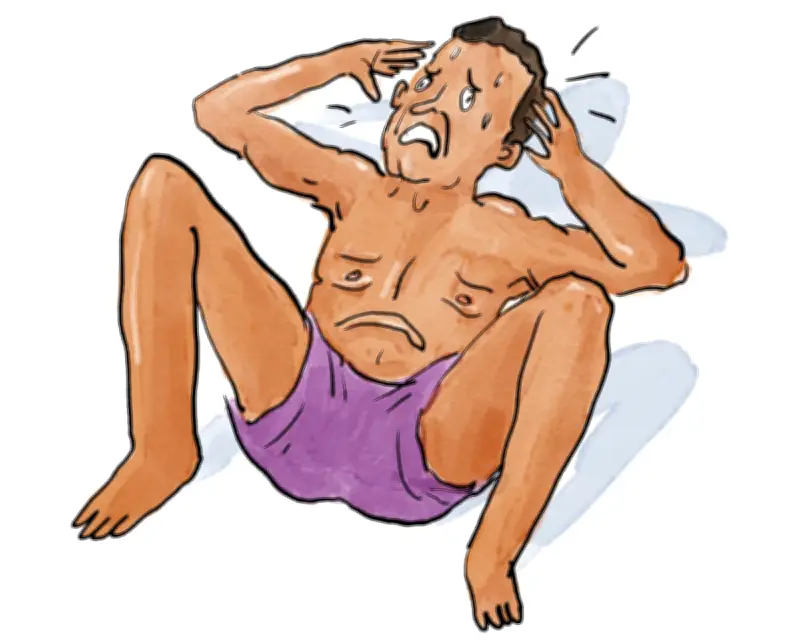
When a film or TV character wants a six-pack, they often drop to the floor for sit-ups. According to Dr Lee Brown, senior lecturer in strength and conditioning at the University of East London, that's more Hollywood than science.
“It’s embedded in the archaic practices of boxing coaches and therefore everyone seems to follow it,” he says. “But they’re far from the best exercise for training your core.”
How sit-ups work and why they fall short
A sit-up involves lying on your back with your knees bent, lifting your torso toward your thighs, and lowering again. While abdominal muscles are involved, Brown says much of the movement is driven by the hip flexors, especially the psoas major, meaning it doesn't isolate the abs as effectively as many think.
Risk of injury
Excessive sit-ups can cause lower back problems. “If you’re doing too many sit-ups, it can cause problems with the lower back,” Brown warns. “Overworking the hip flexors can make them hypertonic [stiff and tight]. Your torso leans forward because you have overly toned and tight hip flexors, creating an imbalance and a dumping ground for sheering forces in your lower back.”
Better exercises for core strength
Brown recommends planks, side planks, farmer’s carries (walking while holding a heavy weight in each hand), suitcase carries (walking with a weight in one hand to challenge stability), and bird dogs (lifting the opposite arm and leg from all fours). Pilates and yoga can also help build core strength.
“I worked with a sprinter who’d had a back injury and had been doing sit-ups for ever,” Brown says. “I asked him how long he could hold a plank for. He said less than 30 seconds. Six weeks later, he could hold one for seven minutes and his back pain had gone.”