
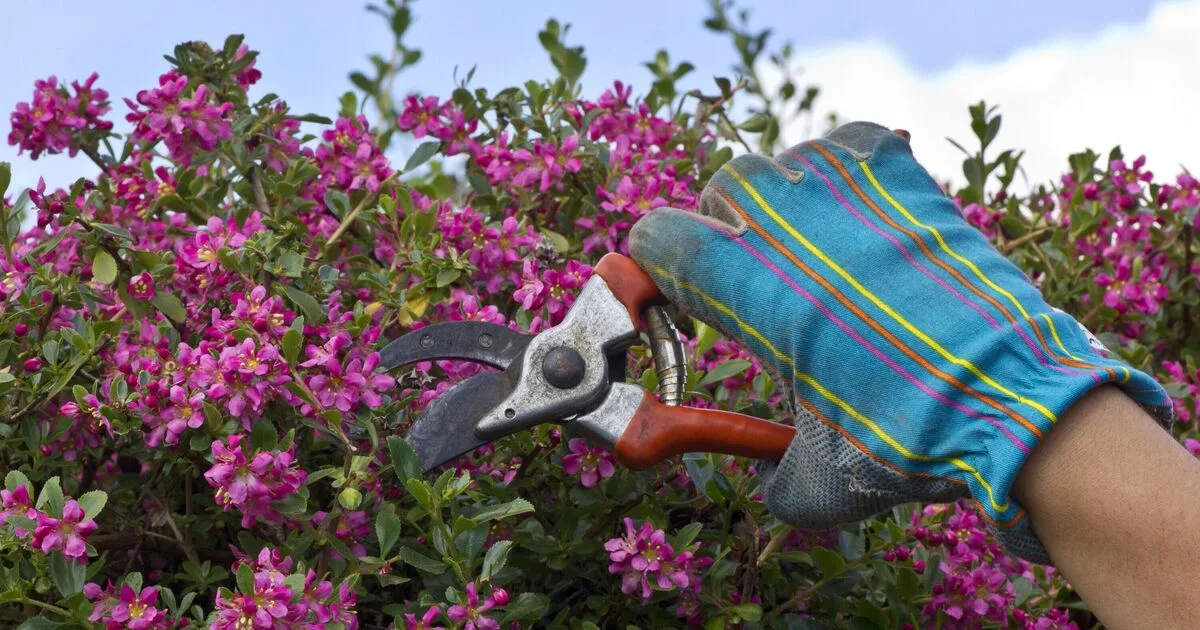
May is a critical month for gardeners who want to ensure vibrant summer blooms. While many plants begin flowering this month, expert gardeners advise that a careful pruning regime now can significantly improve shape and future growth.
Noah Mabey, senior gardener at Thornbridge Hall, explains that May is “the best time” to prune certain plants, but it must be done carefully. He recommends starting by deadheading spent flowers, then pruning about a third of the older woody stems to keep the plant healthy without overdoing it.
Key plants to prune now include ribes (flowering currant), forsythia, spiraea, and choisya. Once the risk of frost has passed, tender perennials such as penstemons, fuchsias, and salvias also benefit from a cut back. Mabey says this encourages strong new growth and better flowering later in the season.
For climbing plants like honeysuckle, tie in new stems and continue deadheading to extend flowering. Tying stems horizontally can encourage more flowering shoots and reduce wind damage. Also check plants growing against walls, such as fruit trees, roses, or climbers, and gently untuck any stems that have slipped behind wires while growth is still soft.
Rhododendrons, at their peak in May, should be deadheaded and lightly pruned once flowering finishes. This helps the plant put energy into next year’s blooms rather than seed production. Wisteria also needs attention after flowering: deadhead and shorten long shoots to encourage flowering spurs, and tie in new growth if still training the plant.




