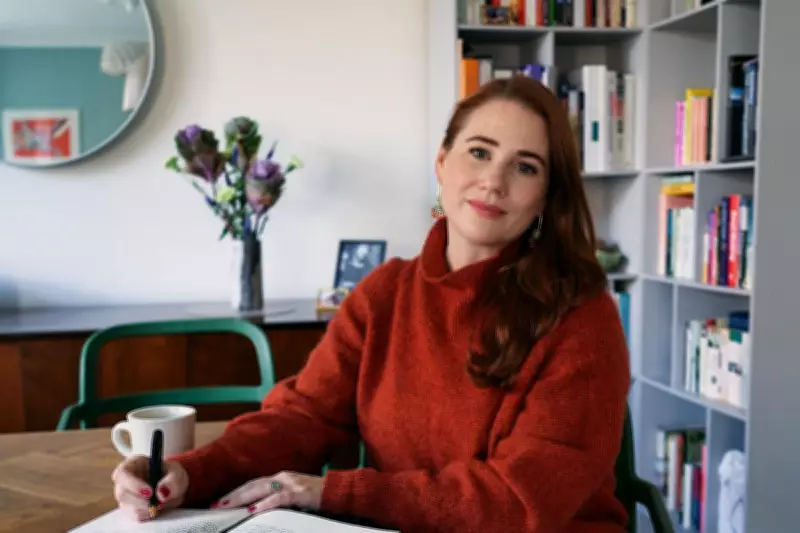
Katie McCrory, a renowned interiors and wellness expert, has dedicated her career to understanding what makes a house truly feel like home. As the Life at Home Leader at IKEA's global headquarters, McCrory has spearheaded the annual IKEA Life at Home Report since 2017, giving her unique insight into the emotional landscape of domestic spaces worldwide.
The Journey to Homemaking Transformation
"Being so close to research that really unveils what life at home looks like, and more importantly, feels like for people around the world... I think it unlocked something in me," explains McCrory, a 42-year-old mother of two. This profound understanding of what people seek when they desire to feel more at home has completely transformed her approach to homemaking.
McCrory began reflecting on her own experiences and how she found solutions in her way of living, even when practical elements of her environment couldn't be changed. This personal exploration, combined with her extensive research, compelled her to share her insights more broadly. "It felt like a calling," says the researcher and storyteller. "The idea just wouldn't leave me alone."

Where The Heart Is: A Guide to Home Rituals
The result is McCrory's first book, Where The Heart Is, which draws on her expertise to help readers feel more at home in their living spaces. Central to her philosophy is the concept of home rituals, which she distinguishes from mere routines through three essential components.
Clear Purpose: The Foundation of Meaningful Rituals
"Rituals have three parts," McCrory explains. "The first part is that a ritual must have a clear purpose. That's why it's different from a routine. A ritual asks us Why? Why are we doing this? What's it for?"
One exercise McCrory recommends involves imagining you have 24 uninterrupted hours at home with no distractions. "What would you do? It's an opportunity to fantasize. 'What would I do if I had 24 hours of pure time for me?'" she suggests. This exercise helps clarify motivation and intention through repeated questioning about why particular activities matter.
Enabling Behaviors: Transforming Daily Activities
The second component involves identifying enabling behaviors. "You need to be really specific. 'What is it I need to do in order for this to be a ritual, and for it to be effective?'" McCrory advises.
Rather than adding new routines, she suggests examining existing daily activities that could be reframed as rituals. "Think about the daily running of your day... having breakfast, getting dressed; could even be housework. Things you're already doing, and reframe it as a ritual."
McCrory recommends incorporating the five senses into these activities. For example, when getting ready for bed, one might light a scented candle, use ambient lighting, or play soft music to transform a mundane routine into a meaningful ritual.
The Right Environment and Boundaries: Creating Sanctuary
"The home is really well-designed to meet your ritual needs," McCrory highlights, emphasizing that domestic spaces should support self-care and self-expression. "The home allows us to see ourselves, it's also a safe space. In an ideal world, a sanctuary."
She recommends zoning your home to support specific rituals. "Think clearly about what you'd like to do. Maybe a bit of yoga or meditation; where you're going to do that, and do it in the same place every time." By storing relevant items like yoga mats, diffusers, or scented candles in these designated areas, the space becomes a visual reminder and positive trigger for maintaining rituals.
McCrory also stresses the importance of minimizing distractions, particularly from phones and screens. "It's about tending to yourself. I talk about self-care and self-expression, I think these are ways of talking about self-worth. Nurturing is about saying I'm worth this time, worth this space and the energy to do these things... the home is such an extraordinary place to do that."
Where The Heart Is by Katie McCrory is published in hardback by Torva, priced £16.99, and becomes available on February 19.