
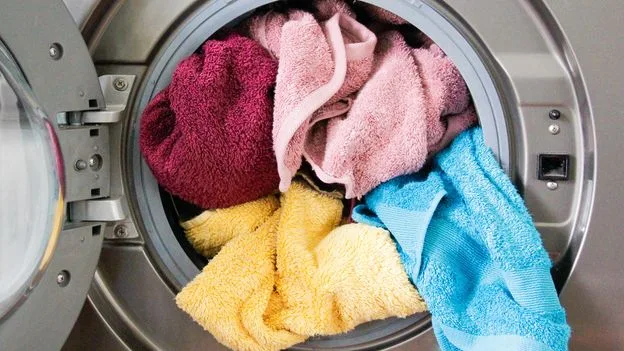
Towels are a breeding ground for millions of microbes, yet many people do not wash them frequently enough. A study of 100 people found that about a third wash their towels once a month, while a UK survey revealed some admit to doing so only once a year. Even after washing, our bodies transfer microbes onto towels, and airborne fungi and bacteria can settle on them while hanging.
In Japan, some households reuse leftover bathwater for laundry, which can transfer bacteria from the bathwater onto towels and clothing, according to a study by the University of Tokushima. Additionally, flushing the toilet can spray bacteria onto nearby towels, including specks of bodily waste.
Over time, microbes form biofilms on towels that can dull their appearance after two months, even with regular washing. Elizabeth Scott, a professor of biology at Simmons University, notes that harmful microbes on towels are likely to have come from humans. While most bacteria on our skin are beneficial, towels can harbour opportunistic pathogens like Staphylococcus, E. coli, Salmonella, and Shigella.
Our skin acts as a natural barrier against infection, but rubbing with a towel can disrupt this barrier. The biggest risk comes from transferring microbes to hands and then to the mouth, nose, or eyes. Kitchen towels, used on dishes and surfaces, are also a source of foodborne pathogens.




