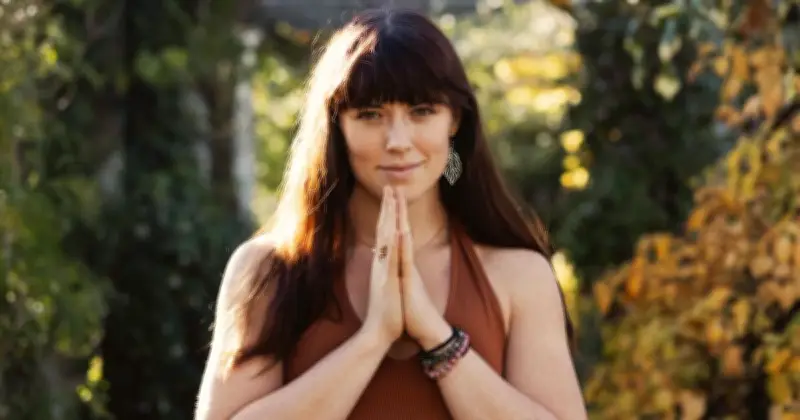
Breathwork specialist Jenny Haynes has shared a five-minute exercise that she says can transform your day by changing the way you inhale and exhale. The practice, which can be done anywhere from a morning commute to a desk, involves directing breath into the belly, ribs and chest, then slowing the exhale to promote relaxation.
What is breathwork?
Jenny Haynes, a yoga instructor and breath specialist, defines breathwork as “any practice where you're sitting down and exploring your inhale and exhale”. She explains that it can be used for functional goals, such as breathing better to feel better, perform better or sleep better on a day-to-day basis, as well as for specific aims like energy or anxiety relief.
More advanced practices, such as conscious connected breathwork and holotropic breathwork, can take the brain into altered states, similar to psychedelics, which Jenny says “can be beautiful for emotional processing”.
The science behind breathing
Jenny notes that people breathe, on average, about 22,000 times a day, and every breath sends a signal to the brain about how you're feeling. “If your breathing is really tense, shallow and harsh, that's signalling stress. Your brain is going to respond by feeling anxious,” she says, adding that anxiety and faster breathing feed into each other.
Tech safety campaigner Seyi Akiwowo, 37, says breathwork helped her cope with the mental strain of an online hate storm in 2017, when she was targeted by racist trolls after a video of her speech at a European parliament youth event went viral. She says the practice helped her manage stress and notice early signs of it, which she previously missed.
How to do the exercise
Jenny recommends finding a comfortable position, sitting or lying down with knees bent, and taking a minute to consider your breath and body. The exercise involves directing breath deep into the belly, then the ribs and chest, keeping the breath gentle and slow through the nose if possible.
She suggests counting to three on the inhale and six on the exhale for around two minutes, then optionally adding a pause at the top of the breath for three counts before exhaling for six counts for another two minutes. If the counts are difficult, she advises trying two/four or simply a light inhale and slow exhale.
Jenny stresses that the industry is unregulated and advises people to research and find a responsible facilitator, noting that the practice is not safe for everyone, including those who are pregnant or have epilepsy or certain medical conditions.