
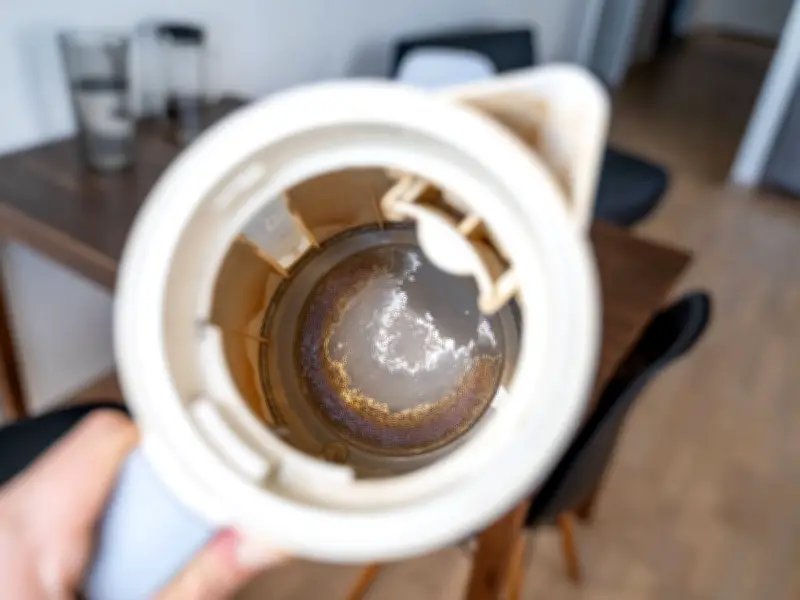
Cleaning expert Lucy Kalice has shared her trusted method for removing stubborn kettle limescale using citric acid, which she says works like "magic". The technique involves boiling a quarter-filled kettle with half a box of citric acid, then letting it cool completely.
Why limescale forms
Limescale accumulates when hard water, carrying elevated levels of minerals such as calcium and magnesium, evaporates and deposits chalky, white residue. Also known as calcium carbonate, it tends to worsen in hard-water areas.
The calcium carbonate remains in solution until the water is boiled, which is why flecks often appear in tea or coffee.
The citric acid method
In a recent video, Lucy explained: "My husband spat out the cup of tea that I made him the other day because it had limescale floating in it." Rather than using abrasive chemicals or traditional remedies like lemon juice or vinegar, she chose citric acid as the "best" approach.
She wrote in the caption: "I've tried and tested every single way and this is by far the most effective way! Also limescale happens when you have hard water so if you live in an area with soft water you probably won't get it!"
To descale, fill the kettle a quarter full with water, add approximately half a box of citric acid, boil, and allow to cool completely. Lucy said: "Every time. Every time, it amazes me how well it's come out." The citric acid dissolves all limescale, leaving "not a single bit" remaining.
Optional extra step
Lucy also suggested using a kettle descaler ball made of stainless steel wire mesh. Placed in the kettle, the coils attract and trap floating calcium particles while water boils, preventing heavy limescale from sticking to the heating element.
Citric acid is a natural acid that rapidly dissolves tough calcium and magnesium deposits without leaving an unpleasant odour. Experts at Good Food tested various descaling methods and found citric acid-based products most successful, noting: "The results pictured really speak for themselves, and we felt this method proved the most successful, leaving our previously neglected kettle looking almost brand new."




