The Quest for Youth: Testing the $400 Buccal Facial Massage
At 27 years old, I am unashamedly on a perpetual hunt for the fountain of youth. While I enthusiastically embrace wellness trends—from TikTok-famous vibration plates for lymphatic drainage to morning ice water face plunges—my current fixation is facials. I adore the resulting glass-skin glow and how certain treatments can mimic a facelift, sculpting jawlines and cheekbones.
Increasingly, Gen Z and others are reportedly substituting monthly facials for Botox, favouring a holistic approach to combat fine lines and wrinkles. Facials can boost collagen and hydrate skin, serving as preventative anti-aging measures. However, the beauty world is currently abuzz with the buccal facial—a nearly $400 treatment targeting the inside of the mouth, face, and jawline.
Celebrity Endorsements and the 'Facelift Without Surgery'
This technique is championed by Meghan Markle, Jennifer Lopez, Kristen Bell, and Gwyneth Paltrow, with Markle even using it before her 2018 wedding to Prince Harry. Promoted as a 'facelift without surgery,' it aims to open the facial and neck lymphatic system, stimulating and relaxing overused muscles like the masseters in the jaw, thereby tightening and lifting by flushing out waste.

Samantha McLaughlin, a Licensed Esthetician at Dr Paul Afrooz in Coral Gables, Florida, explained to the Daily Mail: 'Buccal massage is unique because it involves both external and intra-oral manipulation of the facial tissues. A trained practitioner uses gloved hands to access the inside of the mouth while simultaneously working the outer cheek, allowing for direct engagement of deeper facial muscles not easily reached otherwise.'
McLaughlin added that the technique focuses on kneading, lifting, and releasing tension in these muscles, particularly around the midface and jawline, improving circulation and encouraging lymphatic movement.
Putting the $350 Treatment to the Test
Is this buccal massage truly a non-surgical facelift, or is it too good to be true? I decided to find out, booking a 60-minute, $350 buccal massage facial at the Equinox Hotel spa in New York City's Hudson Yards (a 90-minute session costs $470). My 10am appointment was ideal, as I often wake up puffy after long workdays and events, rarely getting the recommended eight hours of sleep.
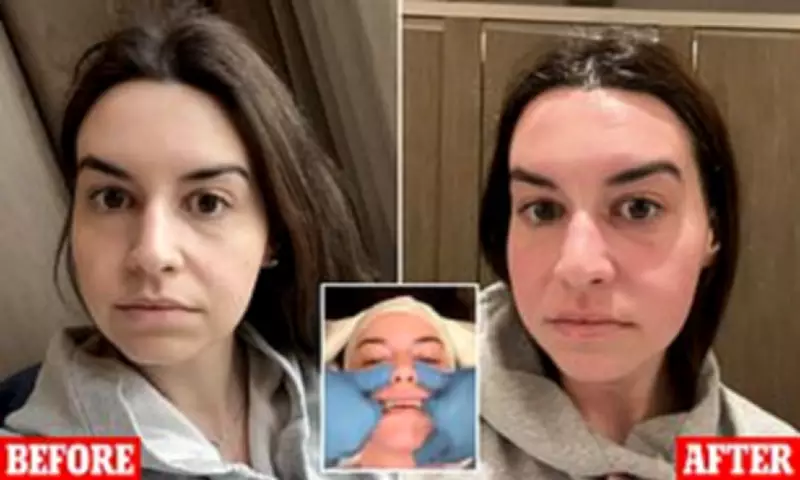
Before the facial, I felt tired, with heavy eyes and dull, slightly sallow skin. The treatment was unlike anything I had experienced. The esthetician outlined four sections: opening the lymph, outer facial massage, inner facial massage involving fingers inside my mouth, and finishing with cooling cryotherapy sticks and Biologique Recherche moisturising elixirs.
The Experience: Fluid Movement and Jaw Tension Relief
Lying on the spa table, the initial massage of my face, neck, and upper back to activate lymph nodes was relaxing. However, deeper work became more intensive and occasionally jarring. The most uncomfortable part was feeling—and hearing—fluid move around my face near my ears, causing me to wince. I also swallowed frequently, which the esthetician said indicated an activated lymphatic system and parasympathetic response, promoting relaxation.
The intra-oral massage was nerve-wracking due to my jaw tension, but it did not hurt as expected. Massaging the masseter muscle from inside felt good for stress relief, though not particularly relaxing.
Dr Paul N. Afrooz, an award-winning facial plastic surgeon based in Coral Gables, told the Daily Mail: 'The primary benefits of buccal massage lie in its ability to relieve tension in the facial muscles, particularly the masseter and buccinator muscles, often overactive in patients who clench or grind their teeth. It can also promote lymphatic drainage, helping reduce facial puffiness and improve overall skin tone by enhancing blood flow.'
Dr Afrooz noted that many patients report a more sculpted appearance along cheekbones and jawline immediately after treatment, though this is temporary, and the massage can indirectly benefit skin health by relieving stress—a benefit I felt almost immediately.

Results: Immediate Glow but Temporary Sculpting
To conclude, the esthetician applied frozen cryotherapy sticks for a cooling refresh. Post-facial, using a hand-held mirror, I was shocked: puffiness had melted away, leaving a sculpted jawline, noticeable brow lift, and less puffy cheeks, though cheekbone changes were minimal. My skin glowed, and colleagues later commented on how refreshed I looked.
I definitely appeared different—sculpted and 'snatched'—but not as dramatically as Kris Jenner's facelift. Some redness lasted about 30 minutes, which the esthetician attributed to increased blood flow. She recommended multiple sessions for real results, noting many clients come weekly.
In my view, this is not a replacement for cosmetic work unless done every few days. It could be a great pre-event treat for weddings or parties, but not a substitute for Botox injections. The next morning, I saw substantial reduction in facial swelling and puffiness, but two days later, my face structure seemed back to normal. My skin had a clear, 'glass-skin' effect, though not as if I had visited a plastic surgeon.
Dr Afrooz clarified that sculpting effects are often short-lived, but other benefits can last: 'It works in that it can improve lymphatic drainage, reduce muscle tension, and temporarily enhance facial contour by decreasing fluid retention. However, it does not alter underlying anatomy or provide permanent lifting or fat reduction. Patients should understand any sculpting effect is subtle and short-lived, largely related to decreased puffiness and improved circulation. In the right context, it can be beneficial, but it should not be confused with surgical or energy-based treatments that create structural change.'