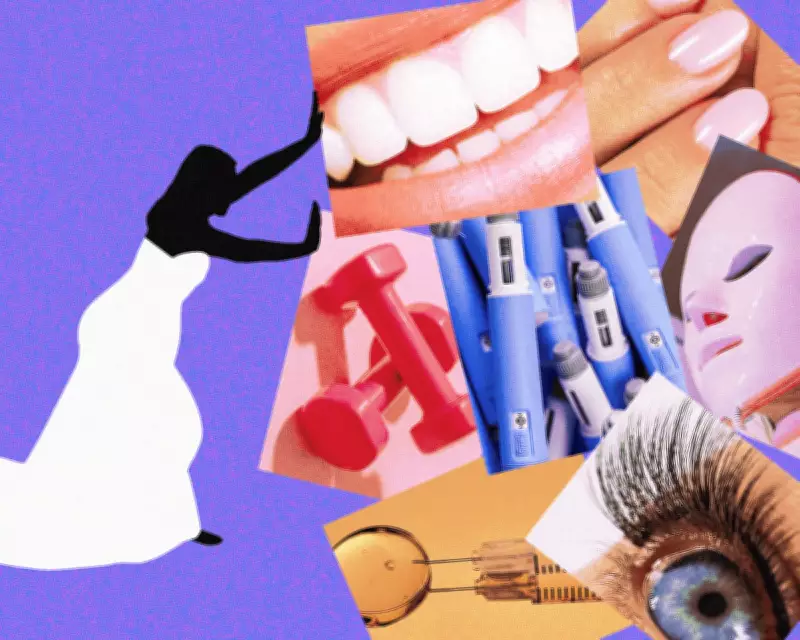
Getting engaged often sparks visions of a transformed self for the wedding day, but a growing number of brides are questioning the need for costly and extensive beauty overhauls. In an era dominated by Botox, Ozempic, and injectables, some women are choosing to show up as themselves, rejecting the notion that they must undergo a physical metamorphosis to be worthy of celebration.
The Pressure to Transform
After getting engaged last summer, one writer found herself imagining a wedding-day version of herself with different hair, different teeth, and a completely different body. Social media algorithms flooded her with recommendations: dieting rebranded as “eating clean,” five-times-a-week workouts, laser treatments, facials, red light therapy, lymphatic drainage massage, teeth whitening, Russian manicures, eyelash extensions, and multi-step hair routines. She read an essay by a woman who spent $30,000 on her appearance, treating her body like a design project. Quoting a local med spa, she learned that a single session of BroadBand Light laser costs $550, plus $1,200 for microneedling, typically sold in packs of three or five.
“Like many people – including, increasingly, men – I treat my appearance like a hobby, the way a car fanatic might daydream about ways to improve their Porsche,” she writes. “But when it comes to adding thousands of dollars of treatments on top of my already-extensive hair care and skincare routine for my wedding, I have to ask: who would all of this be for? Presumably, every attendee likes me, regardless of my skin luminosity or upper arm circumference.”

She concludes that conforming to 2026 bridal beauty standards is such an endless task that it might actually be easier to accept herself as she is.
Stories of Resistance
Jackie Wegner, 29, prepared for her Cape Cod wedding last summer without changing her beauty routine. When a friend asked if she planned to use a GLP-1 weight-loss drug, Wegner, who has dealt with an eating disorder, was confused. “My husband chose to marry me. Nobody was coming to my wedding because they wanted to see if I had lost weight or done something different with myself,” she said. “Why would I need to change?”
Natalie Craig, 34, curated a social and digital life that decenters thinness, but engagement triggered videos of women saying, “When I walk down the aisle I want to be so thin that you don’t even see me.” At a plus-sized bridal boutique, an attendant told her while she was naked: “This is going to suck you right up!” The rise of weight-loss drugs has made this rhetoric harder to avoid. “Thirty years from now, will [I] be looking at [my] wedding pictures and being like: ‘I should have lost five pounds?’ Maybe! But that’s so miserable. I just want to be exempt from that experience.”
Julia van der Hoeven, 32, scrolled TikTok for wedding planning inspiration before her December wedding in Australia but found “brides live-vlogging their injections into their faces.” She felt pressure to do the same. A Zola survey found nearly 80% of couples felt pressure to change their appearance, spending an average of $1,100 on beauty preparations. Helen Grace, a critic of “the insecurity industry,” says advertisers have unprecedented access to make women feel worried or insecure about their wedding day.
The Ethical Ideal of Beauty
Philosopher Heather Widdows argues in her 2018 book Perfect Me that the endless “journey towards the imagined self” makes beauty not just a social standard but an “ethical ideal,” where appearance becomes a proxy for character and value. A person with clear skin and shiny hair may telegraph that she is more worthy of being chosen and celebrated.
Molly Scullion, 30, initially thought, “OK, I have X amount of months to make it to this weight,” but decided to put the thought aside. Guilt crept in, but after taking time away from social media, she decided: “I don’t owe anyone anything except for myself on my wedding day.” She got facials and a spray tan but didn’t worry about her body shape. On the day, she was so happy she had let go of expectations and could just be present.

Van der Hoeven went to a dermatologist for Botox and filler, and her injector advised a chemical peel for smoother makeup application. “It was a disaster. It made me break out three weeks before the wedding, so I was beside myself.” She didn’t regret the other treatments but admitted, “Maybe I built up my expectations a little bit too high as a result of getting so much done to my face.”
Widdows acknowledges that simply telling individuals to reject beauty standards is unfair and unrealistic, as failing to uphold them comes with costs from external and internal forces. Craig, getting married this September, says, “I think anyone should be able to do anything they want with their body, but I just wish we were all so much nicer to ourselves and less critical of ourselves on a day that’s meant to be about celebrating the love you found. I think we diminish it all by trying to turn ourselves into something different.”
Wegner, who dodged questions about GLP-1s and arm liposuction, looks back at her wedding photos with satisfaction. “I look back on pictures and I’m smiling and I look like me. I felt so beautiful. I felt like myself.”