The Unlikely Appeal of Barefoot Hiking: A Primal Connection to Nature
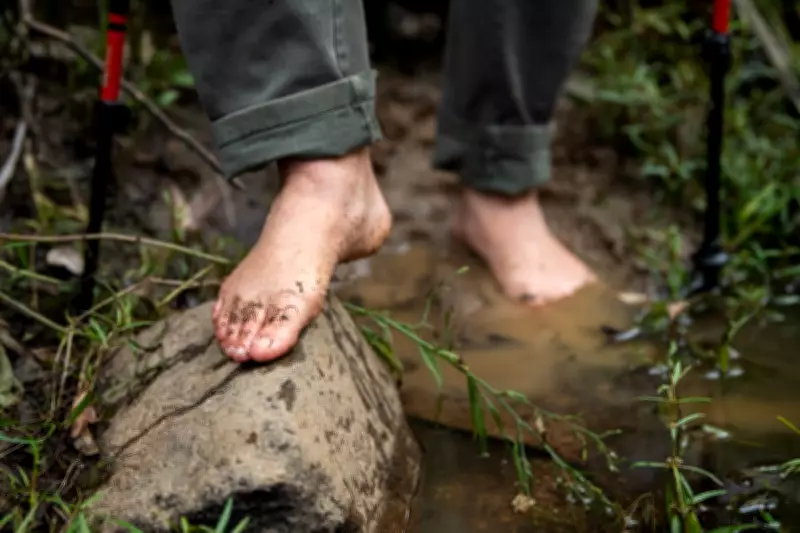
From the clay trails of Seoul to the remote coastlines of Australia, a small but increasing number of hikers are shedding their shoes to experience the ground beneath their feet directly. This trend, often described as enlivening and massage-like, offers a unique blend of sensory engagement and physical challenge.
Global Footprints: From Urban Parks to Wild Shores
Gen Blades, an outdoor education lecturer from Castlemaine, Victoria, encountered barefoot hiking unexpectedly on South Korea's Namsan Dulle-gil trail. When the path transitioned to a damp clay stretch known as "hwangto," designed for barefoot walking, she eagerly participated. "There's something about that direct contact of the sole of your foot in the clay. It almost feels like mud," Blades explains. "But then you realise, 'Oh yeah, it's oozing up between my toes!'"
In South Korea, barefoot walking is widely embraced for its health benefits, with over 150 parks in Seoul alone featuring designated areas. These trails often include amenities like foot-washing stations, shoe lockers, and safety handrails, making them accessible in busy urban settings.

In contrast, Australian enthusiasts like Dale Noppers, a 37-year-old health and safety superintendent from Perth, typically forge their own paths. Noppers has been barefoot hiking for about seven years, starting as a curiosity linked to bush survival skills. "It makes you feel quite primal," he says, "being in nature and slowing everything down." He now organizes group hikes around Perth, attracting small but diverse groups, including his five-year-old son Achille.
Health Perspectives and Practical Advice
Podiatrist Dr. George Murley notes that the science behind barefoot hiking is mixed. "It's really person-specific," he states, warning that both overly cushioned footwear and going barefoot without proper conditioning can lead to injuries. However, he acknowledges benefits such as improved balance and coordination. "Our feet are one of the most sensitive parts of the body. If you place an interface like a shoe with soft cushioning between your skin and the ground, you reduce the neural input into the body."
Murley advises easing into barefoot hiking gradually, treating it like a gym session for the feet. This cautious approach helps avoid common hazards like ants, spiders, snakes, or broken glass, which Noppers mentions as part of the territory, though he reports only one minor incident with a broken bottle.
Personal Journeys and Environmental Awareness
For Uralla Luscombe-Pedro, a 32-year-old conservation researcher from Western Australia, barefoot walking began in childhood on a farm and evolved into extensive coastal hikes. She has walked hundreds of kilometres along wild coastlines, such as from Batemans Bay to Mallacoota, navigating sand, granite, and scrub without traditional trails. "Your feet are sensory organs," she says. "You can feel with your feet as you can with your hands."
Blades highlights how barefoot hiking enhances environmental awareness. "When walking barefoot, awareness of the ground opens up. I notice the ants and step aside," she notes. This slower pace allows her to notice small details like orchids or cobwebs, fostering a deeper connection to the living world. "Walking barefoot allows you to sink into country. You're perceiving not just with your eyes, but with your body."
Ultimately, barefoot hiking offers a radical slowdown in modern life, blending physical adaptation with sensory richness. As Blades concludes, "Walking is already a radical act in our modern world. You choose to slow down – going barefoot slows things down further still. Your senses become more attuned to what's around you."