
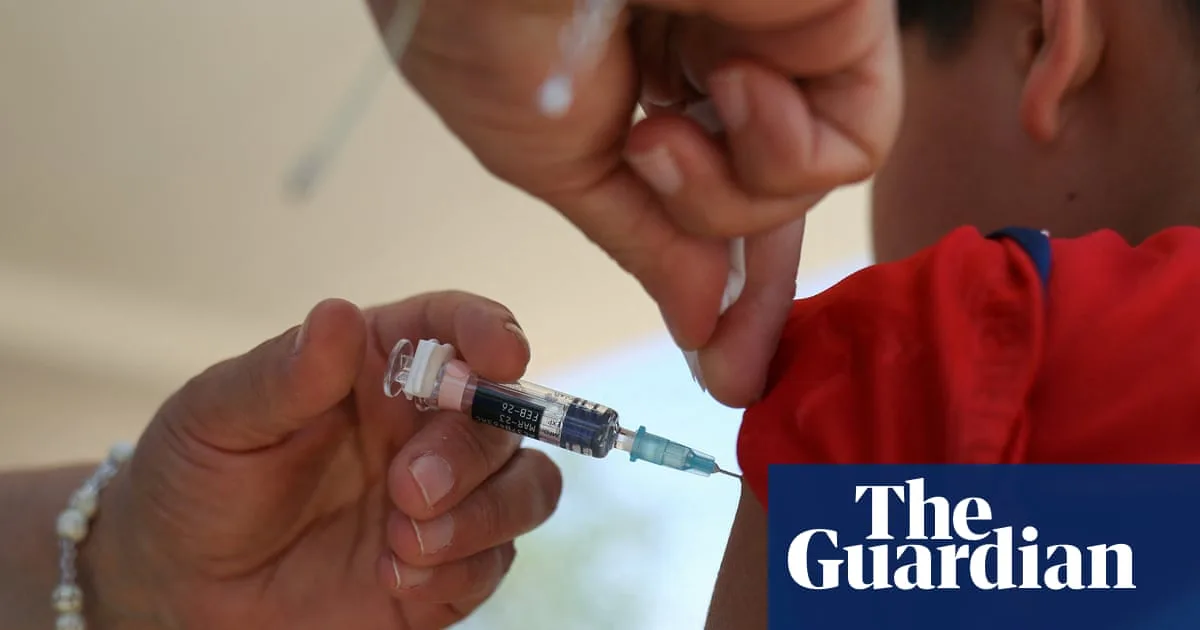
Millions of children worldwide are at risk of preventable diseases as vaccine coverage stalls or declines in many countries, according to the largest study of its kind, published in the Lancet. The analysis, led by the University of Washington, found that while 154 million child deaths have been prevented over the past 50 years, progress has slowed or reversed since 2010, exacerbated by the Covid-19 pandemic, health inequalities, and rising vaccine misinformation and hesitancy.
Measles vaccination rates have fallen in 100 of 204 countries, while coverage for at least one dose of vaccines against diphtheria, tetanus, whooping cough, measles, polio or tuberculosis has declined in 21 of 36 high-income countries, including the UK, US, France, Italy and Japan. The number of unvaccinated 'zero-dose' children dropped from 58.8 million in 1980 to 14.7 million in 2019, but this long-term progress masks recent setbacks.
Senior author Dr Jonathan Mosser from the Institute for Health Metrics and Evaluation warned that 'large numbers of children remain under- and un-vaccinated', increasing the risk of outbreaks of diseases such as measles, polio and diphtheria. Lead author Dr Emily Haeuser called for more efforts to tackle vaccine misinformation, noting that 'successful vaccination programmes are built on understanding and responding to people's beliefs, concerns and expectations'.
The study highlights growing outbreaks: wild-type polio cases have risen in Afghanistan and Pakistan, and there is a polio outbreak in Papua New Guinea. In 2024, Europe saw a nearly tenfold increase in measles infections, and the US recorded over 1,000 confirmed measles cases in 30 states by May 2025. Researchers say urgent action is needed to meet global immunisation targets for 2030.
Professor Helen Bedford of University College London, not involved in the study, said reasons for declining uptake are 'numerous and complex', requiring action on social inequity, misinformation and public confidence. 'Vaccination remains one of our most powerful tools for protecting child health,' she added.




