

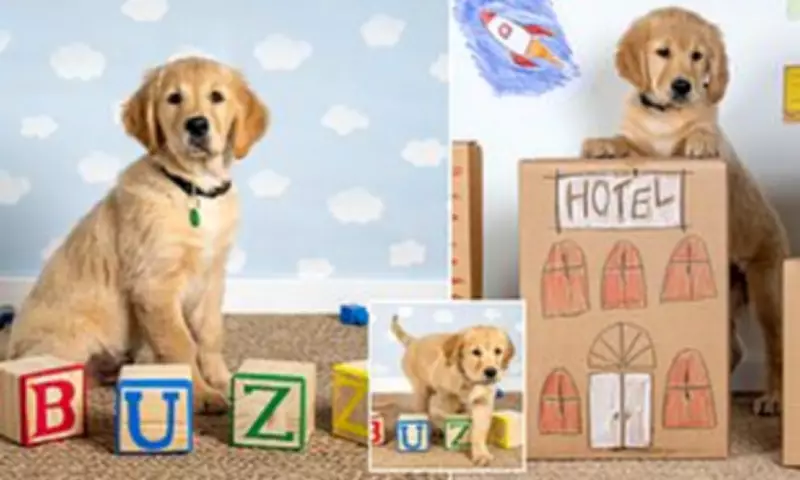
A 12-week-old Labrador puppy named Buzz, after the Toy Story character Buzz Lightyear, has begun his training to become a guide dog for the blind or partially sighted. The young pup is navigating a miniature city made of cardboard boxes, complete with hotels, pubs, schools, and banks, as part of his early development.
Training and Cost
Training a guide dog costs approximately £77,000, covering all stages from puppyhood to ensuring the dog can keep its owner safe. Buzz is training alongside fellow puppies Sunny and Stanley, and will be assessed to determine if he has the qualities needed to become a fully-fledged guide dog.
Impact of Guide Dogs
Research by Guide Dogs shows that 95% of guide dog owners say their dog helps them travel independently. Additionally, 85% of around 100 adults surveyed report socialising more since getting a guide dog, meeting friends at pubs, parks, and community groups. A further 85% said they could go shopping without needing another person, and 80% enjoy exploring their neighbourhood. Some 70% noted they see family and relatives more often, and 36% have started a new job since having a guide dog.

A spokesman for Guide Dogs said Buzz's name was inspired by the upcoming release of Toy Story 5, hitting cinemas in June. He stated: 'As a beloved space ranger superhero gears up for a return to the big screen, we want to introduce Buzz, a guide dog puppy with star potential. His journey could one day help someone with sight loss go beyond what they once thought possible.' He added that Buzz is already showing early signs of curiosity, courage, and loyalty.
Steph Potter, puppy sponsorship manager at Guide Dogs, said: 'Buzz is already bringing plenty of character to the role, and is at the start of an exciting adventure that will hopefully one day see him become a true life changer. Guide dogs open up the world for people with sight loss, giving infinite possibilities. By sponsoring a puppy, people can become part of a story they are proud to share, providing guide dog puppies like Buzz all the care and training they need to succeed.'






