
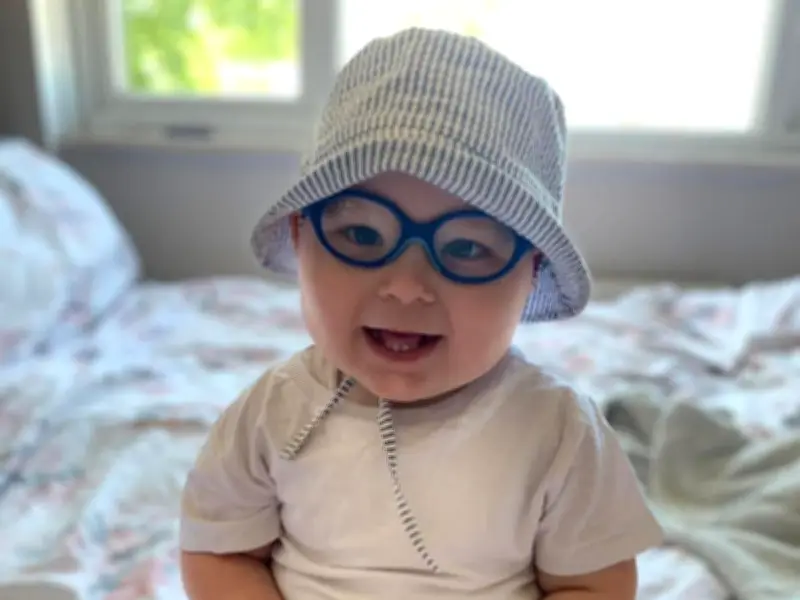
A five-year-old boy from Canterbury, Kent, has been diagnosed with an exceptionally rare genetic condition after his parents noticed he was not laughing or sitting up. Bertie Napier Roberts was diagnosed with Beta-propeller Protein-associated Neurodegeneration (BPAN) when he was four years old. BPAN is caused by mutations in the WDR45 gene on the X chromosome, leading to iron accumulation in the brain and cognitive decline in adulthood. Boys are more severely affected due to having only one X chromosome.
Symptoms and Diagnosis
Bertie's mother, Emilee Napier, a stay-at-home mum, first grew concerned when Bertie was nine months old. He failed his nine-month check, and health visitors suggested global development delay. Bertie also experienced absent seizures, described by his mother as daydreaming episodes during play. After initial genetic testing came back clear, full sequencing revealed a mutated WDR45 gene, leading to a BPAN diagnosis from a specialist at Great Ormond Street Hospital (GOSH).
Impact of BPAN
If Bertie reaches the second stage of the disease, he will develop dementia, Parkinson's, and dystonia. Emilee explained: "The downside is the second degree of the disease is dementia, Parkinson's and loss of life. There are fewer than 500 cases in the world and only 10% are boys." Bertie can currently shuffle but cannot walk or speak. His mother fears losing his smile, which he uses to reassure the family. "It's what he uses to reassure us and that's my biggest fear, waking up and not seeing him smile," she said.
Gene Therapy Hope
The family is pinning hopes on gene therapy replacement at GOSH, which could prevent progression to the second stage. Emilee said: "Gene therapy is there to stop the second degree happening – the second degree is when they start getting too much iron build-up." The Action for BPAN charity is raising £2.3 million to fund human trials by 2027. Emilee added: "For kids with BPAN it's not managed with medication – it's the unmanageable epilepsy which scares me."
Family's Journey
Emilee and her husband Grant Roberts, 32, have four children. They knew early on that Bertie was not meeting milestones. After the diagnosis, Emilee researched BPAN herself, finding that his specific mutation matched the condition. She contacted a neurologist and eventually a specialist professor at GOSH, who confirmed the diagnosis in February. The family is now awaiting gene therapy, which they hope will halt the disease's progression.




