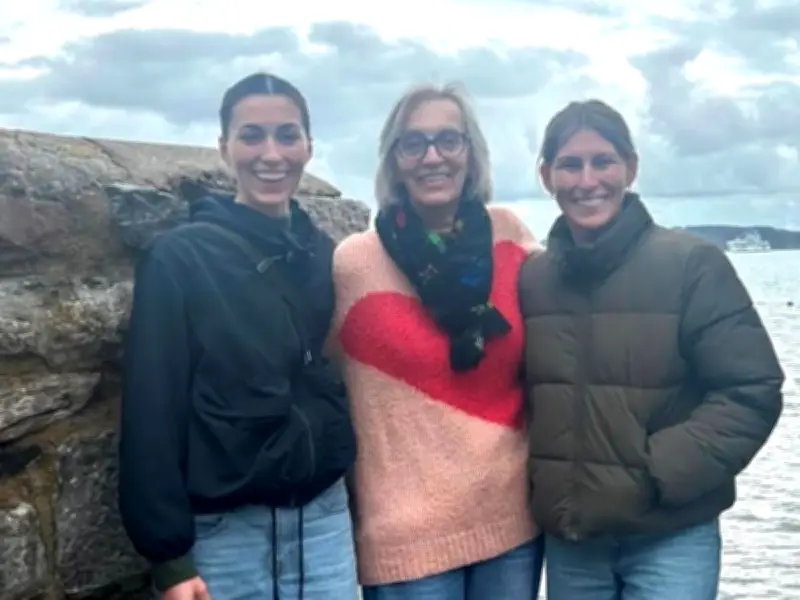
A woman from Merseyside has become the first patient in the world to receive a new vaccine designed to improve lung cancer treatment. Chris Jones, 68, was given the jab at the Clatterbridge Cancer Centre in Liverpool as part of an early-stage clinical trial.
The vaccine uses cells from her own tumour to create synthetic DNA, aiming to make immunotherapy more effective. Jones has advanced non-small cell lung cancer, which accounts for more than 80% of all lung cancers. Her immunotherapy has helped to some extent but not enough.
Personal tragedy motivates trial participation
Jones said she volunteered in the hope of extending her life and helping future patients. Speaking to the BBC, she revealed that just under 10 years ago her eldest daughter Alex died from secondary breast cancer. “If there'd been something for her like this, maybe things would have been different. I think trials are amazing,” she said.
In six weeks, scans will show how the vaccine is working. Jones said: “I'm not ready to go yet. I’ve got things to do.”
How the vaccine works
The vaccine was made specifically for her. Scientists used a biopsy from her tumour to map the DNA of her cancer and then engineered the vaccine using synthetic DNA. That DNA is known as “doggybone” because of its unusual shape. Researchers say it is faster and cheaper to produce than normal bacterial DNA, making individually tailored vaccines potentially more achievable for the NHS.
Medical Oncology Consultant Dr Carles Escriu said that about half of patients initially respond to immunotherapy but the cancer eventually becomes resistant. “So what we want to do is boost the immune system, hoping that we can achieve this long-term response,” he said.
Collaboration and trial details
The University of Liverpool, the Clatterbridge Cancer Centre, NHS Blood and Transplant, and specialist genetics and immunotherapy firms worked together for months. Only 10 people will take part in this early stage trial, receiving seven doses over 24 weeks.
Dr Escriu added: “This is a very complex study that requires a lot of co-ordination, and few centres worldwide would consider doing a study like this. So it's fantastic to be a part of it.”
The two professors jointly leading the trial, Christian Ottensmeier and Natalia Savelyeva, hope it will improve care for more than half of patients with advanced lung cancer. Prof Ottensmeier said the aim was to help the immune system recognise and fight tumours that have previously evaded detection. He said: “I hope this research will contribute to new ways of thinking about cancer vaccine use in advanced lung cancer.”