Scientists Uncover Evolutionary Reason for Permanent Breast Tissue in Human Women
Scientists have made a groundbreaking discovery explaining why human women possess large, permanent breast tissue compared to other female mammals. While all female mammals have mammary glands for milk production, most animals lack permanent breast tissue and instead deliver milk through teats or nipples. A new study from the University of Oulu in Finland reveals that this unique human trait likely evolved to protect newborns from hypothermia.
Thermal Imaging Study Reveals Key Findings
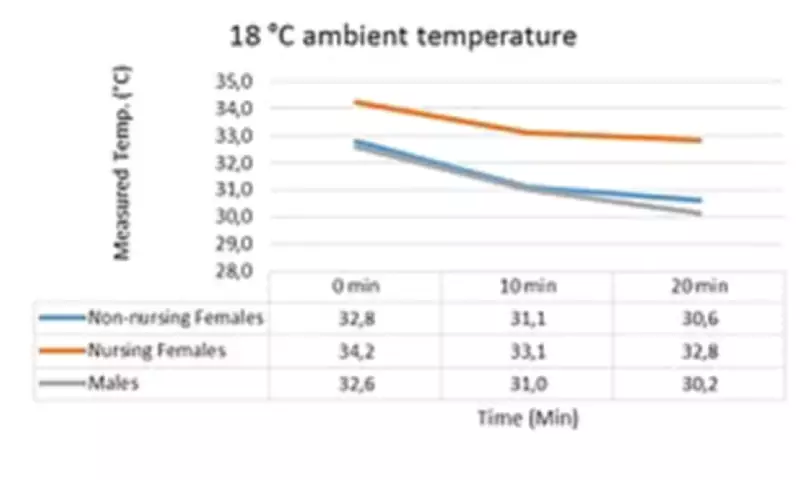
The research team enlisted 27 participants, including non-breastfeeding women, breastfeeding women, and men. Volunteers were exposed to three different temperatures—32°C, 27°C, and 18°C—for 20 minutes each, while thermal imaging cameras monitored changes in breast temperature. The results were striking: breastfeeding women maintained higher breast temperatures than non-nursing women and men. Moreover, breastfeeding women demonstrated a distinct resilience against cooling environments, losing an average of just 2.5°C in mammary surface temperature, compared to 4.3°C in men and 4.7°C in non-nursing women.
Evolutionary Advantages of Breast Size and Shape
According to the study, published in Evolutionary Human Sciences, the elevated temperature of human breasts serves a critical function. Dr. Juho-Antti Junno, the study author, explained, "This could improve a newborn's chances of survival and provide an evolutionarily grounded explanation for the development of external breasts in humans." The researchers noted that shared body heat has been a reliable heat source since before the invention of fire or protective clothing. The morphology of the female breast, with its prominent shape and elasticity, creates a broad contact surface, enhancing heat transfer from mother to child.

Addressing a Long-Standing Mystery
The distinct size and shape of women's breasts have long puzzled scientists, as they seemingly lack an anatomical or physiological function and are associated with health issues like back pain. The study highlights that while there is considerable variation in breast tissue volume, this trait is uniquely human from an evolutionary perspective. The findings suggest that breasts evolved not just for milk production but as a thermal regulation mechanism for infants.
Future Research and Bro Implications
The researchers plan to extend their study to other mammals, such as breastfeeding and non-breastfeeding female chimpanzees, to further test their theory. They aim to shed light on the role of breastfeeding in chest temperatures and the origin of perennially enlarged breasts. This research opens new avenues for understanding human evolution and the adaptive significance of physical traits.
In summary, the study provides compelling evidence that permanent breast tissue in human women evolved as a survival mechanism to keep newborns warm, offering a fresh perspective on human anatomy and evolutionary biology.